
A Celestial Dress Rehearsal
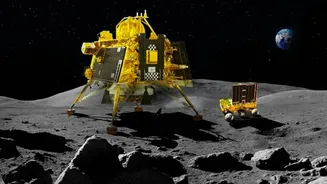
To ensure the Chandrayaan-3 lander and rover could withstand the harsh lunar environment, ISRO’s engineers needed to simulate it as closely as possible. This involved a series of rigorous ground-based trials. At a special facility in Challakere, Karnataka,
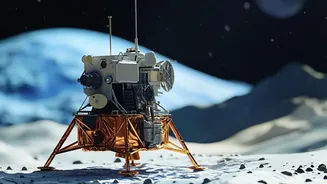
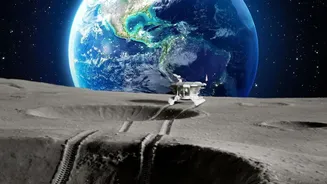
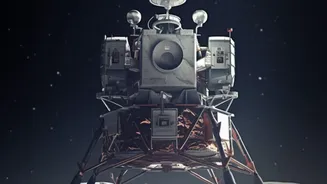
ISRO created an artificial lunar surface, complete with craters and soil simulant. Here, they put the lander's leg mechanisms and the rover's mobility systems through their paces, testing their ability to handle different touchdown conditions and navigate challenging terrain. To validate the lander's complex navigation and control systems, engineers conducted 'integrated cold tests' using helicopters and 'integrated hot tests' with tower cranes to simulate the powered descent phase of the landing. These Earth-bound experiments were critical for identifying and ironing out potential issues, embodying a philosophy of thorough preparation to minimise risks millions of kilometres from home.
Turning the Gaze Back Home
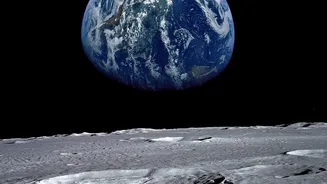
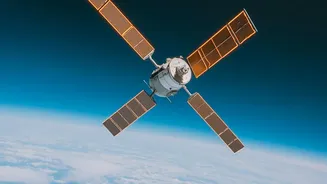
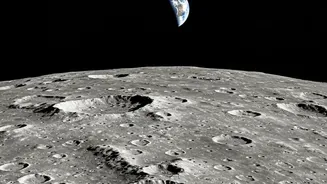
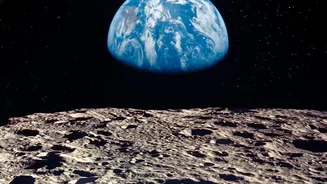
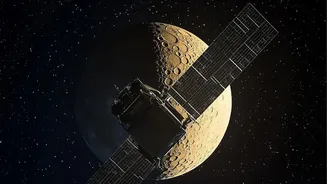
One of the most innovative aspects of the mission involved a scientific instrument that wasn't designed to study the Moon at all. The Propulsion Module, whose main job was to carry the lander to lunar orbit, was fitted with a special payload called SHAPE, which stands for Spectro-polarimetry of HAbitable Planet Earth. After releasing the Vikram lander, the Propulsion Module didn't just become space debris. Instead, from its vantage point in lunar orbit, it turned its scientific eye back towards our home planet. This bonus experiment was a clever piece of value addition, allowing ISRO to conduct unique scientific research long after the module's primary task was completed.
Earth as a Proxy 'Exoplanet'
The purpose of the SHAPE experiment was to study Earth as if it were a distant, potentially habitable exoplanet. By observing the light reflected from our world, the instrument collected data on its spectral and polarimetric signatures. These signatures are like fingerprints, revealing information about a planet's atmosphere, cloud cover, and surface features like oceans and continents. The goal was to build a detailed reference model of what a life-bearing planet looks like from afar. This data is invaluable for future missions that will search for exoplanets beyond our solar system. By understanding Earth's unique characteristics, scientists will be better equipped to identify other planets that might harbor life. It was a brilliant use of an existing asset, turning our own planet into a benchmark for one of the most profound quests in science.
A Second Life in a New Orbit
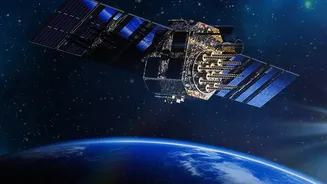
The ingenuity didn't stop there. After its observations from lunar orbit, ISRO realised the Propulsion Module still had over 100 kg of fuel remaining—a testament to the mission's incredibly efficient trajectory. Instead of letting it eventually crash on the Moon, the team decided to bring it home. In a series of complex manoeuvres, they guided the module out of lunar orbit and placed it into a high orbit around Earth. This impromptu journey served as a crucial test for future sample-return missions, providing real-world experience in planning and executing the complex trajectory from the Moon back to Earth. The SHAPE payload continues to operate, gathering data whenever Earth comes into its view, proving that even after its main mission is over, a well-designed spacecraft can keep contributing to science.