





Your Window to the Universe
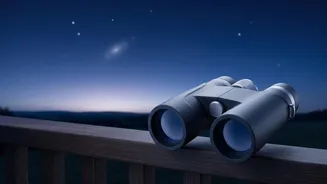
The secret to unlocking the night sky is a good, but not necessarily expensive, pair of binoculars. For beginners, a pair of 7x50 or 10x50 binoculars is an excellent starting point. The first number (7x or 10x) refers to the magnification, while the second
number (50) is the diameter of the main lenses in millimeters. A larger lens gathers more light, which is crucial for viewing faint celestial objects. Models like the Celestron UpClose G2 10x50 or Nikon Prostaff P3 8x42 are often recommended for their balance of power, clarity, and affordability. Unlike telescopes, which can be complex to set up, binoculars are intuitive, portable, and provide a wide field of view, making it easier to locate your targets.
Preparing for a Night of Discovery
Successful stargazing begins before you even look up. First, find the darkest location you can, away from the glare of city lights. Even a local park can be a significant improvement over your backyard. Give your eyes at least 20 minutes to adapt to the darkness; this will dramatically increase your ability to see faint objects. It's also wise to check the weather forecast and the Moon's phase. A clear, moonless night is ideal, as a bright moon can wash out fainter targets like galaxies. Finally, consider using a stargazing app on your phone (in night mode to preserve your dark adaptation) to help you get oriented with the constellations.
Finding Jupiter and its Family of Moons
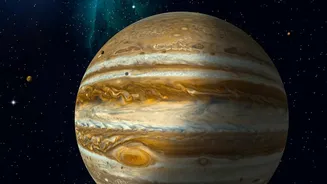
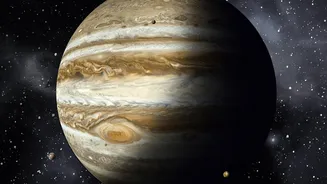
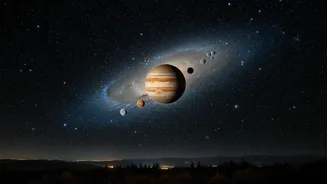
During the autumn of 2026, Jupiter will be a brilliant object in the pre-dawn sky, making it an easy first target. It will appear as an exceptionally bright, steady star in the eastern sky. Once you have it in your sights, the key is to hold your binoculars as steady as possible. Brace them against a fence, car roof, or use a tripod if you have one. Look closely at Jupiter, which will appear as a small, distinct disc rather than a pinpoint of light. Flanking the planet, you should be able to spot up to four tiny pinpricks of light arranged in a nearly straight line. These are the Galilean moons: Io, Europa, Ganymede, and Callisto, discovered by Galileo in 1610. If you observe them over a few nights, you will notice their positions change as they orbit the giant planet.
Hunting for a Distant Galaxy
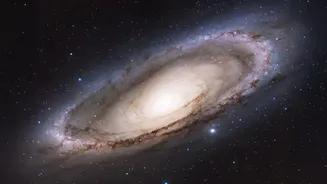
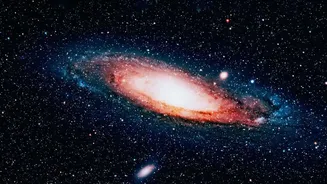
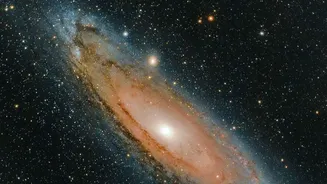
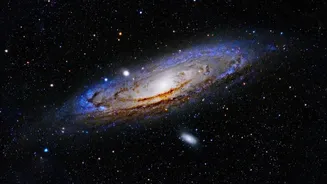
The Andromeda Galaxy, also known as M31, is the most distant object you can see with the naked eye under dark skies, and it is a stunning sight in binoculars. To find it, first locate the Great Square of Pegasus, a prominent autumn constellation. From the corner of the square closest to the 'W' shaped constellation Cassiopeia, you can star-hop your way to the galaxy. It will appear not as a star, but as a faint, fuzzy, oval-shaped smudge of light. This ghostly glow is the combined light of over a trillion stars, located an astonishing 2.5 million light-years away. Don't be discouraged if you don't find it immediately; sweeping the area slowly with your binoculars is part of the adventure.
Beyond the Main Attractions
Once you've successfully spotted Jupiter's moons and the Andromeda Galaxy, don't stop there. The autumn sky is rich with other binocular-friendly targets. Look for the Pleiades star cluster, also known as the Seven Sisters, which looks like a tiny, shimmering dipper. It's a breathtaking cluster of young, hot stars that truly comes alive through binoculars. Another fantastic target is the Double Cluster in the constellation Perseus, which appears as two brilliant, dense patches of stars located near Cassiopeia. These objects, along with the changing positions of Jupiter's moons, offer a new show every night, reminding us of the dynamic and accessible universe waiting to be explored.