




The Challenge with Current E-Bike Batteries
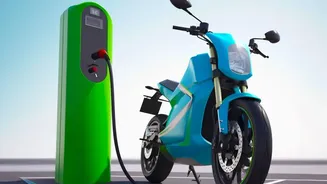
Lithium-ion batteries have been the undisputed champion of personal electronics and electric vehicles for years, offering a good balance of energy density and portability. They are the engine behind the e-bike revolution in India and around the world.
However, they aren't perfect. The mining of lithium and cobalt, key ingredients, is often environmentally damaging and concentrated in a few countries, creating fragile supply chains. These batteries also have a limited lifespan and present recycling challenges, leading to a growing e-waste problem. For e-bike users, they can also be prone to safety issues like thermal runaway if damaged.
Nature’s Unexpected Power Source
Enter the world of biomass. Researchers have discovered that the waste products from farming and forestry can be transformed into key components for next-generation batteries. The star of the show is often lignin, a complex polymer that gives plants their rigidity and is a major byproduct of the paper and pulp industries. Traditionally discarded or burned, lignin is now being recognised for its high carbon content and robust structure, making it an ideal, low-cost raw material for creating battery anodes. Scientists convert this biomass—which can also include rice husks, bamboo, or straw—into a stable form of carbon called 'hard carbon'. This material is particularly well-suited for sodium-ion batteries, a promising and cheaper alternative to lithium-ion technology.
How They Outperform: A Closer Look
The claim that these new batteries "outperform" traditional units isn't about one single metric, but a combination of advantages. While some may not yet match the sheer energy density of the best lithium-ion cells, they excel in other critical areas. Firstly, safety is a major win. Sodium-ion chemistries are generally more stable and less prone to fire than their lithium counterparts. They can often be fully discharged to zero volts for safer transportation and handling, something not possible with lithium-ion. Secondly, cost and sustainability are huge benefits. The raw materials—sodium from salt and carbon from agricultural waste—are incredibly abundant and inexpensive, unlike lithium and cobalt. This drastically reduces production costs and reliance on contentious mining practices. Some Indian startups are already pioneering this, turning local crop residue into biodegradable battery components to tackle both pollution and energy needs.
Charging Speed and Lifespan
Another area where farm waste batteries show immense promise is in charging speed and durability. The unique, porous structure of hard carbons derived from biomass allows ions to move more freely, enabling significantly faster charging times. Certain prototypes have demonstrated the ability to charge in minutes rather than hours. Furthermore, these batteries can often endure a greater number of charge and discharge cycles before their performance degrades. This longer lifespan not only provides better value for the consumer but also further enhances the battery's environmental credentials by reducing the frequency of replacement. While a lab breakthrough is one thing, companies are already working to extend this cycle life for commercial use, with some guaranteeing 5,000 cycles or more.
The Road Ahead for India and the World
For a country like India, which is both a major agricultural powerhouse and a massive market for two-wheeled vehicles, this technology is a perfect fit. It offers a path to create a circular economy: turning farm waste that might otherwise be burned into a high-value product that powers the nation's push towards electric mobility. The technology is not just theoretical; research institutes and companies are actively developing these batteries. While widespread commercial availability in e-bikes is still on the horizon, the progress is rapid. The initial applications may be in stationary storage, where size is less of an issue, but as the technology matures and energy density improves, their role in transportation will grow. This represents a move toward a truly green transport solution, one that is sustainable from creation to operation.