

Indian street food is a universe of bold flavours, and one of its most uniquely named stars is Paneer Ghotala. It’s a messy, buttery, spicy dish that has won hearts, especially in Gujarat. But what exactly is this delightful 'scam' for your tastebuds?
What's in a 'Ghotala'?
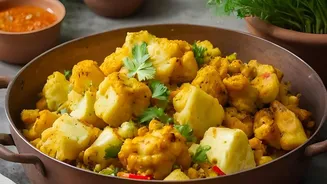
First, let's break down the name. In Hindi and Gujarati, the word 'Ghotala' translates to 'mess', 'chaos', or even 'scam'. It's a fitting name, as the dish is a glorious, mashed-up scramble of ingredients cooked together on a large flat griddle, or tawa. Unlike a neat curry, its charm lies in its chaotic texture where soft, grated paneer, tangy tomatoes, onions, and a rich gravy all merge into one. The name is a playful nod to its appearance and the delightful trick it plays on your senses, delivering an unexpectedly complex flavour from a simple-looking mash-up.
A Vegetarian Twist on a Surti Classic
Paneer Ghotala is a brilliant vegetarian adaptation of another famous street food from Surat, Gujarat: Anda Ghotala, or Egg Ghotala. The original dish involves a similar 'messy' preparation using boiled, scrambled, and sometimes fried eggs, all mashed into a spicy gravy. As Gujarat has a large vegetarian population, inventive street food chefs swapped the eggs for grated paneer, creating a dish with a similar hearty and textural feel. This clever innovation made the beloved 'Ghotala' accessible to everyone, cementing its place in the vibrant Surti street food scene.
The Street-Food Spice Signature
While it may look a bit like paneer bhurji, Paneer Ghotala has a distinct flavour profile that sets it apart. The key difference often lies in the use of pav bhaji masala. This specific spice blend, famous from another street food icon, gives Ghotala its signature tangy, savoury, and deeply aromatic character. This is combined with basics like turmeric, red chilli powder, and coriander powder, but the pav bhaji masala is what screams street food. An unapologetic amount of butter is also non-negotiable, lending the dish its rich, glossy finish. Many vendors also add grated processed cheese, which melts into the gravy, making it even more indulgent.
More Than Just Grated Paneer
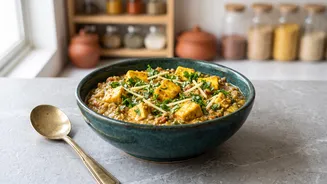
The texture is a crucial part of the Ghotala experience. Unlike paneer bhurji, where paneer is simply crumbled, the paneer in Ghotala is typically grated. This allows it to break down and meld more seamlessly with the tomato-onion base, creating a creamier, more cohesive dish. The base itself is often mashed thoroughly on the tawa, breaking down the tomatoes and capsicum into a smooth, thick gravy. Some recipes even call for spinach or boiled potato to be mashed in, adding another layer of texture and binding the dish together. The result is a semi-liquid scramble that is perfect for scooping.
How to Enjoy It
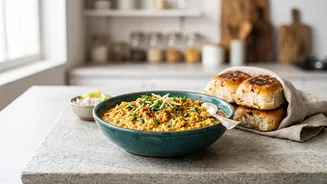
The classic way to serve Paneer Ghotala is piping hot, straight off the tawa. It's traditionally served with soft, fluffy pav (bread rolls) that have been generously buttered and toasted on the same griddle, often with a smear of the same masala. A garnish of fresh coriander, a squeeze of lemon, and sometimes a final dollop of butter or a sprinkle of cheese finishes the dish. While pav is the traditional companion, its versatile nature means it also pairs wonderfully with roti, paratha, or even dosa. It’s a meal that’s meant to be hearty, satisfying, and enjoyed with gusto.