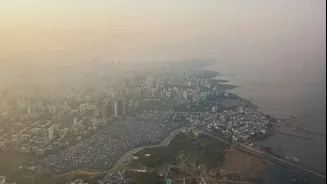





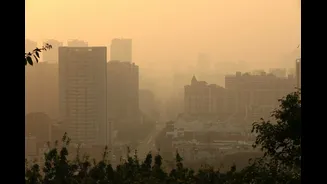
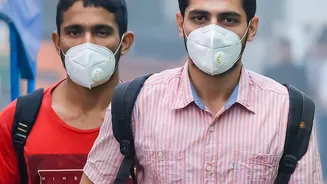
The joyous lights of Diwali often give way to a familiar, hazy aftermath: a blanket of smog that chokes our cities. But this isn't just about firecracker smoke. A key scientific phenomenon, the temperature inversion, makes it dramatically worse.
The Atmosphere's Invisible Lid
Normally,
the air closer to the ground is warmer than the air above it. This warm air rises, carrying pollutants with it and dispersing them high into the atmosphere. It's the planet's natural ventilation system. But during cooler months in India, especially on clear, calm nights, this process flips on its head. The ground rapidly loses heat after sunset, cooling the layer of air directly above it. This results in a layer of cool, dense air getting stuck beneath a layer of warmer air—a phenomenon known as a temperature inversion. This warm upper layer acts like an invisible lid, preventing the cooler air below from rising and trapping everything within it.
A Perfect Storm for Pollution
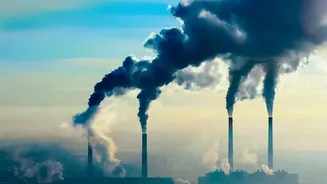
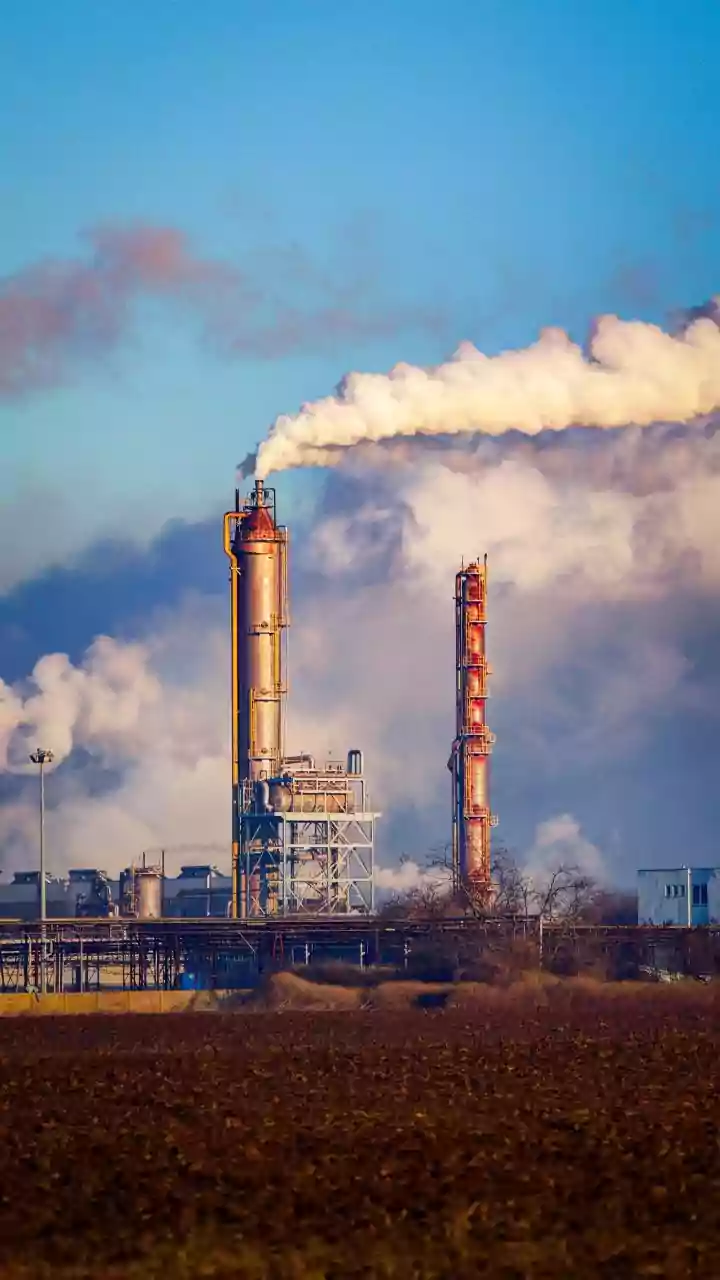
Diwali often coincides with the onset of autumn and winter, when conditions are ripe for temperature inversions. The festival's evening celebrations—marked by firecrackers, increased traffic, and other combustion activities—release huge volumes of pollutants like fine particulate matter (PM2.5 and PM10), sulfur dioxide, and nitrogen oxides directly into this trapped layer of cool air. With low wind speeds common during this season and no vertical air movement to clear them out, these pollutants have nowhere to go. They accumulate close to the ground where we breathe, leading to a rapid and dramatic spike in pollution levels overnight and into the early morning. This is why air quality often feels significantly worse the morning after Diwali.
Why Geography Matters
The impact of temperature inversions is not uniform across India. It is particularly severe in the landlocked Indo-Gangetic plains. Cities like Delhi are situated in a natural bowl-like geography, flanked by the Himalayas to the north. This topography further restricts the dispersal of air masses, effectively locking in the polluted air. In contrast, coastal cities may get some relief from sea breezes, which help disperse pollutants. The combination of seasonal weather, festival emissions, and regional geography creates a perfect storm for hazardous air quality episodes in northern India.
Making Sense of the AQI Numbers
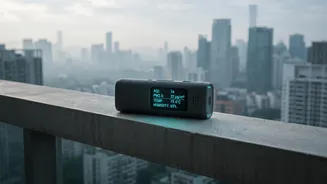
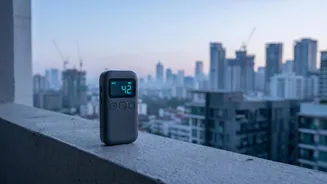
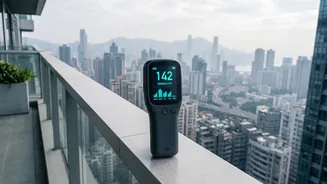
The Air Quality Index, or AQI, is a tool that translates complex pollutant data into a single, easy-to-understand number. It measures key pollutants like PM2.5, which are fine enough to enter the bloodstream and pose serious health risks. The AQI scale in India runs from 0 to 500 and is divided into six categories, from 'Good' to 'Severe'. During a temperature inversion event following Diwali, it's common to see AQI values jump from 'Moderate' (51-100) to 'Very Poor' (301-400) or even 'Severe' (401-500) overnight. An AQI in the 'Severe' category indicates emergency conditions that can seriously impact healthy people and pose a major risk to those with existing respiratory or cardiovascular conditions.