





The Invisible Farmhands Under Our Feet
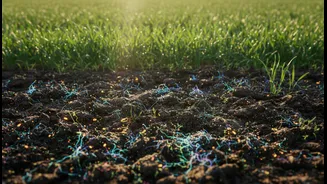
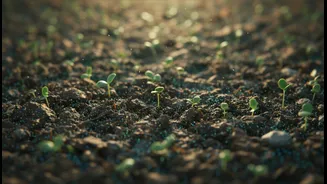
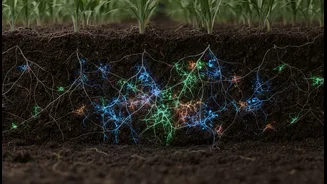
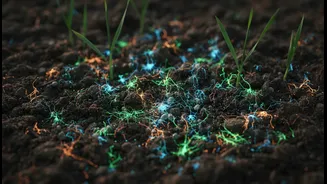
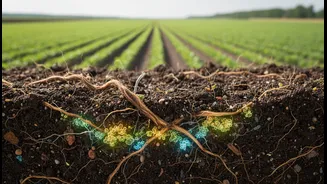
Beneath every farm and field lies a bustling, invisible ecosystem teeming with life. A single spoonful of healthy soil can contain billions of microorganisms, including bacteria, fungi, and other life forms. For centuries, their role was largely a mystery,
but scientists now understand that these microbes are not just passive residents; they are active partners in plant health. These organisms form what is known as the soil microbiome, a complex community that breaks down organic matter, cycles nutrients, and protects plants from disease. They are, in essence, nature's microscopic farmhands, working constantly to create a fertile and resilient environment for crops to thrive in.
How Microbes Help Plants Grow
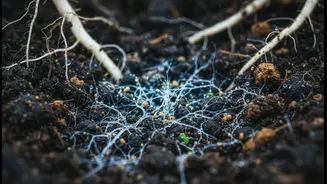
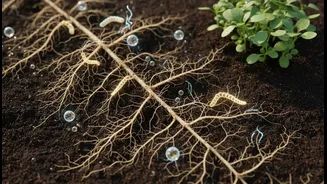
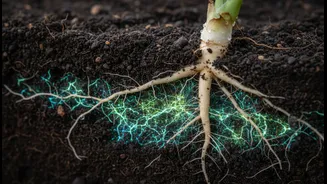
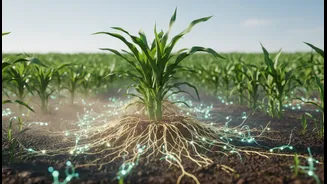
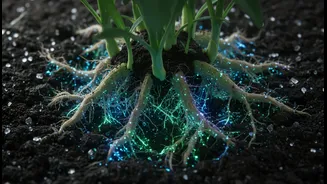
The partnership between plants and microbes is a powerful one, built on mutual benefit. Many microbes, known as Plant Growth-Promoting Rhizobacteria (PGPR), colonise the area around a plant's roots, called the rhizosphere. Here, they perform several crucial tasks. Some bacteria can 'fix' nitrogen from the atmosphere, converting it into a form that plants can easily absorb, reducing the need for synthetic nitrogen fertilisers. Others are experts at solubilising phosphorus, unlocking this vital nutrient from the soil so plants can use it. Fungi, particularly mycorrhizal fungi, form vast networks that extend a plant's root system, drastically improving its ability to absorb water and nutrients, which is especially helpful during periods of drought. These microbes can also produce substances that act like vitamins for plants, stimulating growth and boosting their natural defences against pests and diseases.
A Greener Alternative to Chemicals
For decades, intensive agriculture has relied heavily on chemical fertilisers and pesticides. While these have boosted yields, their excessive use has led to soil degradation, water pollution, and increased costs for farmers. Microbial solutions, often called biofertilisers or biostimulants, offer a sustainable alternative. By harnessing nature's own processes, these products can enhance crop productivity while rebuilding soil health. Using microbial inoculants—products containing specific beneficial microbes—can improve soil structure, increase its ability to hold water, and foster a diverse, healthy microbial community. This approach not only has the potential to increase yields but also reduces the environmental footprint of farming, contributing to a more resilient and sustainable food system.
The Path from Lab to Farm
Despite the immense potential, turning these microbial allies into widely used agricultural products has its challenges. One major hurdle is consistency. A microbe that performs well in a lab may struggle to compete with the native microorganisms already present in a farmer's field. The effectiveness of an inoculant can vary based on soil type, climate, and the specific crop. Furthermore, these are living products, which means they have a limited shelf life and require careful formulation and storage to remain viable. Overcoming these obstacles requires continued research to identify robust microbial strains and develop stable formulations that deliver reliable results in diverse agricultural settings across India. Education and outreach will also be crucial to help farmers understand how to best integrate these new biological tools into their existing practices.
The Future of Farming in India
The push for microbial solutions is gaining momentum in India. Institutions like the Indian Council of Agricultural Research (ICAR) have been developing microbe-based technologies for decades, and the government is promoting their use to improve soil health under initiatives like the National Mission on Sustainable Agriculture. At the same time, a growing number of agri-tech startups across the country are innovating in this space, developing new microbial products tailored for Indian farms. These efforts are part of a larger vision for a 'Viksit Bharat' where technological innovation drives sustainable growth. By embracing these tiny but powerful allies, Indian agriculture can move towards a future that is not only more productive but also more profitable for farmers and healthier for the environment.