
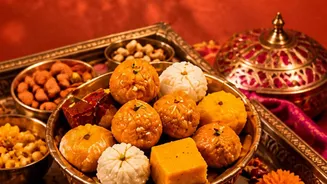
A Sweet with Divine Origins
The story of the Mathura peda is inseparable from the city's identity as the birthplace of Lord Krishna. For centuries, the Braj region has been a hub of dairy culture, with milk, butter, and other products forming the core of its cuisine. Legend and local
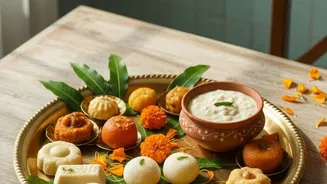
folklore suggest that milk-based sweets have been a part of life here for ages, and the peda is believed to be a favourite of Lord Krishna himself. This divine association elevated the peda from a simple sweet to a sacred offering, or 'prasad'. In temples across Mathura and Vrindavan, pedas are offered to the deities daily before being distributed to devotees, making the act of eating one a spiritual experience. This sacred role is a key reason why the tradition has been preserved with such reverence.
The Art of the Brown Peda
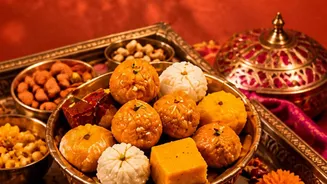
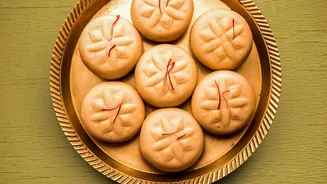
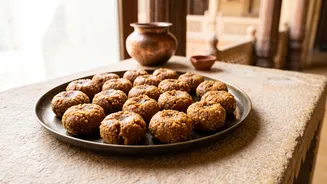
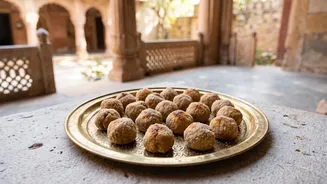
What makes a Mathura peda distinct from its countless cousins across India is its signature brownish hue and slightly grainy texture. The process begins with khoya, or mawa, which is made by simmering milk for hours until only the milk solids remain. While many pedas are made from this white khoya, the artisans of Mathura take it a step further. They roast the khoya, often with a little ghee, patiently stirring it until the milk sugars caramelise. This slow roasting, known as 'bhoonna', is a meticulous art. If rushed, the khoya can burn and turn bitter; done correctly, it develops a deep, nutty, caramel-like flavour and a rich brown colour that is the hallmark of an authentic Mathura peda.
More Than Just Sugar
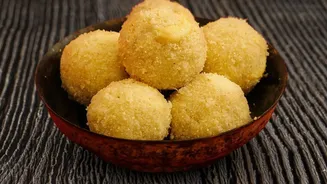
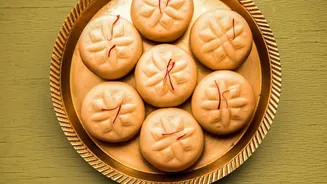
The uniqueness of the peda also lies in its choice of sweetener. Traditionally, instead of standard powdered sugar, artisans use 'tagar' or 'boora'. This is a type of unrefined sugar with a fine, crystalline texture that doesn't completely dissolve into the warm khoya. This contributes to the peda’s characteristic grainy, melt-in-your-mouth feel. After mixing the roasted khoya with tagar and flavourings like cardamom, the pedas are hand-shaped into their familiar disc form. Often, they are then rolled in a final coating of tagar, adding a slight crunch to the exterior that contrasts with the soft, fudgy interior.
From Holy Offering to Economic Mainstay
While its roots are spiritual, the peda is also the backbone of Mathura's local economy. Generations of families have perfected the craft, with famous shops like Brijwasi sweets becoming synonymous with the city itself. For the millions of pilgrims and tourists who visit Mathura each year, taking home a box of pedas is an essential part of the experience, a delicious souvenir that carries the essence of the holy city. This demand has transformed peda-making from a temple-centric activity into a thriving industry that employs thousands. Recognizing its cultural and economic importance, efforts have been underway to secure a Geographical Indication (GI) tag for the Mathura peda, which would legally protect its name and authenticity against imitations.