







What Exactly Is a Cloud Kitchen?
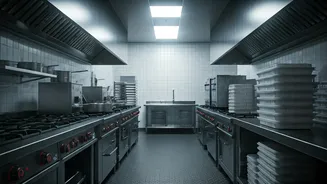
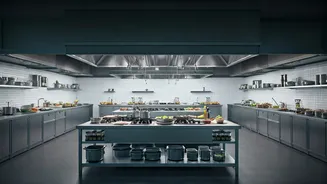
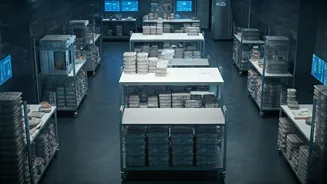
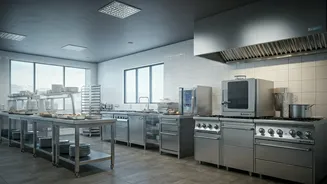
A cloud kitchen—also known as a ghost kitchen, virtual kitchen, or dark kitchen—is a professional food production facility set up exclusively for delivery. There is no dining room, no storefront, and no front-of-house staff. Instead of relying on foot
traffic, these kitchens receive orders through online platforms like Zomato and Swiggy, or their own websites and apps. The entire business model is built around digital discovery and efficient delivery, fundamentally changing the cost structure of launching a food business. This delivery-only focus allows entrepreneurs to sidestep some of the biggest expenses associated with a traditional restaurant.
The Recipe for Lower Risk
The primary appeal of the cloud kitchen model is its significant cost advantage. A traditional restaurant requires massive capital for a prime location, interior design, furniture, and service staff. In contrast, a cloud kitchen can operate from a low-rent commercial space, drastically reducing real estate expenses. This alone can lower the initial investment by 60-70% compared to a dine-in establishment. With no need for waiters or hosts, labour costs are also considerably lower. For aspiring food entrepreneurs in India, this means a startup cost can be as low as ₹5-15 lakhs, a fraction of what a full-scale restaurant would demand. This lower financial barrier makes the dream of starting a food business accessible to a much wider pool of talent, including many home cooks who turned their passion into a business.
Designed for Digital-First Growth
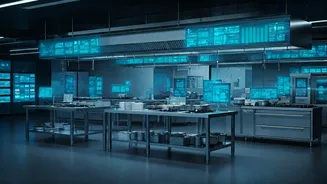
Beyond lower costs, the true power of cloud kitchens lies in their scalability. The model is inherently flexible and built for rapid growth. One of the most effective strategies is the multi-brand approach, where a single kitchen produces food for several different virtual brands. For example, the same kitchen space and staff can prepare biryani for one brand, pizza for another, and healthy bowls for a third, all listed separately on delivery apps. This maximizes the kitchen's capacity and creates multiple revenue streams without additional rent.Furthermore, because the business is digital-first, operators have access to vast amounts of data. They can analyze ordering patterns to engineer their menus, promote high-margin items, and quickly drop dishes that don't sell. This data-driven approach allows for quick adaptation and experimentation with minimal risk. Expanding to a new city doesn't require finding another prime retail spot; it means replicating a successful kitchen setup in a new delivery zone.
India's Booming Ghost Kitchen Scene
The Indian cloud kitchen market is experiencing explosive growth, projected to reach nearly USD 3.69 billion by 2034. This boom is fuelled by high smartphone penetration, rapid urbanisation, and a growing consumer preference for convenient, delivered meals. The COVID-19 pandemic acted as a major catalyst, accelerating the shift towards online food ordering. Today, India is home to thousands of cloud kitchens, from solo entrepreneurs to large, venture-backed companies. Major players like Rebel Foods, which operates brands like Faasos and Behrouz Biryani, have become global success stories, demonstrating the model's potential by running hundreds of kitchens across the country. Food aggregators have also played a key role, with platforms like Swiggy launching initiatives that provide ready-to-use kitchen spaces for restaurant partners.
Challenges Behind the Curtain
Despite the advantages, the cloud kitchen model is not a guaranteed recipe for success. The low barrier to entry has created intense competition. A major challenge is brand visibility; without a physical storefront, kitchens are heavily dependent on food delivery platforms. This often means paying high commission fees—sometimes up to 30% of revenue—which can severely squeeze profit margins. Customer acquisition and retention are also significant hurdles. Standing out in a crowded digital marketplace requires savvy marketing and a strong, unique brand identity. Operational discipline is critical, as even small inefficiencies in portion control or inventory management can lead to major losses when scaled. In fact, reports suggest that 25-30% of cloud kitchens in India shut down within their first year.