

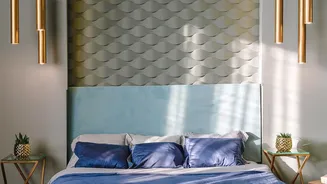
The Great Unsubscribe from Scandi-Style
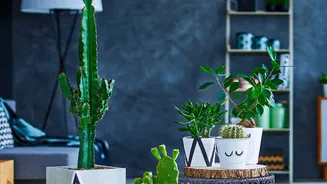
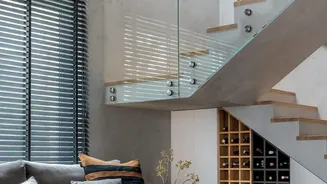
The sleek, clean lines of Scandinavian minimalism dominated urban Indian homes for the better part of a decade. Inspired by global magazines and social media, an aesthetic of grey walls, uncluttered surfaces, and functional-only objects became the default
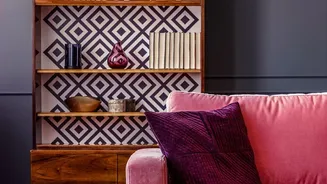
for modern living. But this style, born in the soft light of Northern Europe, often felt cold and impractical in the context of India’s vibrant culture and intense sunlight. Now, a collective shift is underway. Homeowners are moving beyond the 'safe' neutral palette, seeking warmth, personality, and a space that feels uniquely their own. This isn't about creating clutter; it's a mindful move toward curated abundance, where every object has meaning and contributes to a home's identity.
Lighting as the New Centrepiece
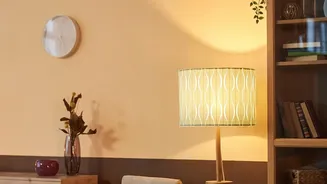
Historically, lighting in Indian homes was a practical affair, often limited to a single bright ceiling fixture. Today, it’s being reimagined as a primary decorative element, capable of transforming a room's entire mood and character. Interior designers now approach lighting with a layered strategy, combining ambient, task, and accent lights to create depth and atmosphere. Within this framework, the statement lamp has emerged as a crucial player. It's no longer just a source of light but a sculptural piece of art that functions as a room's focal point, demanding attention even when switched off. These fixtures are chosen not just for their glow, but for their form, material, and the story they tell.
A Return to Roots and Self-Expression
This trend is more than just a stylistic pivot; it reflects a deeper cultural shift. For many, the move away from minimalism is a rediscovery of India's inherently maximalist roots—a culture rich with colour, texture, and intricate detail. Indian homes have traditionally been layered with heirlooms, textiles, and brass artefacts that tell a family's history. The embrace of expressive decor is a modern interpretation of this legacy. It’s also a powerful form of self-expression. In a world of uniform trends, creating a home filled with unique objects is a way to showcase individuality, travels, and personal taste. A handcrafted lamp becomes more than a purchase; it's a conversation starter and a piece of a larger personal narrative.
The Styles Defining the Trend
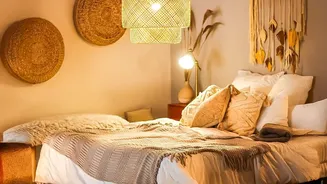
The lamps taking centre stage are as diverse as the homes they inhabit. Sculptural and abstract forms are a major trend, with designers creating fixtures that resemble art installations. These often feature mixed materials, pairing warm metals like brushed brass and copper with elements of fluted glass, marble, or stone. There's also a strong movement towards artisanal and handcrafted pieces. Lamps made from natural fibres like jute and cane, hand-painted fabric shades featuring Pattachitra art, and ceramic bases with tactile glazes bring texture and a human touch into a space. Another popular style draws inspiration from tradition, with modern lamps subtly referencing the geometry of temple architecture or the form of classic 'diya' lamps, crafted in copper and brass.
How to Make a Statement
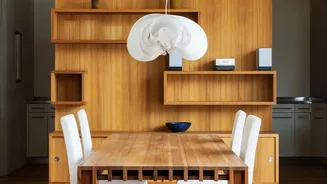
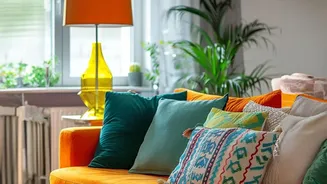
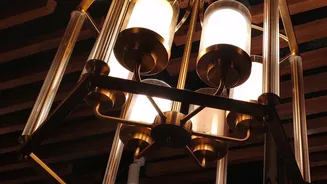
Incorporating this trend doesn't require a complete overhaul. The key is to choose a lamp that acts as a focal point. An oversized, sculptural chandelier can anchor a dining room or a double-height living area. In a more compact space, a single floor lamp with a unique silhouette can transform an empty corner into a cosy reading nook. Don't be afraid to play with contrast. A lamp with a bold colour or a metallic finish can pop against a neutral wall, making it a deliberate design feature. And remember to choose warm-toned light (around 3000K) to enhance the welcoming, atmospheric feel that this trend is all about. The goal is to choose a piece that you love, one that adds personality and elevates the room from a simple space to a curated home.