



1. The Gaganyaan Test Flights
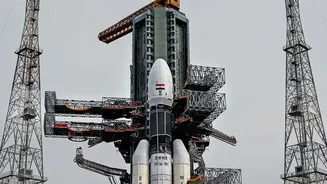
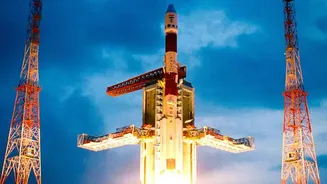
A major focus for the year is India's ambitious human spaceflight program, Gaganyaan. ISRO has slated two uncrewed test missions, Gaganyaan G1 and G2, for the latter half of 2026. The G1 mission is a critical first step, designed to test the orbital module,
life support systems, and re-entry procedures to ensure astronaut safety. Following that, the G2 mission will launch with Vyommitra, a humanoid robot, on board. Vyommitra's role is to simulate human functions, monitor spacecraft parameters, and provide valuable data before the first crewed flight, which is anticipated in 2027. These missions are fundamental to validating the technology and procedures for safely sending Indian astronauts into orbit.
2. Sharpening Our Vision from Above
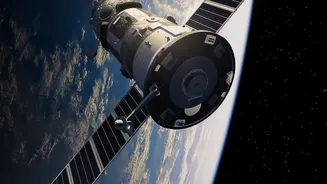
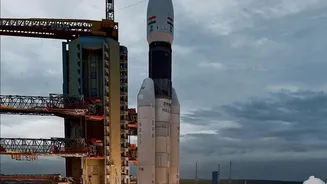
Earth observation remains a cornerstone of ISRO's mandate, with several satellites planned to enhance India's monitoring capabilities. One of the key launches is the EOS-05, also known as GISAT-1A, expected to fly on a GSLV Mk II rocket. This geostationary satellite will provide near real-time imaging of the Indian subcontinent, a crucial asset for rapid disaster management during events like cyclones and floods, as well as for agriculture and border monitoring. Another satellite, Cartosat-3B, is also in the pipeline, continuing the legacy of India's high-resolution imaging satellites that serve both civilian and strategic purposes.
3. Boosting National Communication
To support India's growing digital infrastructure, ISRO is planning to launch the GSAT-32 communications satellite. This mission aims to augment the country's telecom network, promising improved broadband connectivity and better services, especially in remote and hard-to-reach areas. By expanding its constellation of communication satellites, ISRO plays a vital role in bridging the digital divide and enabling a more connected India. These satellites are the backbone of everything from television broadcasting and ATM services to internet connectivity and weather forecasting.
4. Mastering an Essential Space Skill
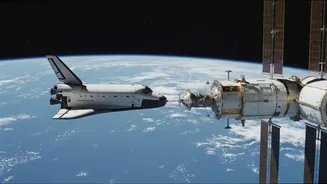
The Space Docking Experiment (SPADEX) is a crucial technology demonstration mission for ISRO. It involves launching two small spacecraft that will perform autonomous rendezvous and docking in orbit. This technology is a prerequisite for building a future Indian space station (Bharatiya Antariksh Station), conducting in-space satellite servicing, and undertaking complex missions like sample returns from the Moon. Mastering space docking would make India only the fourth country in the world with this capability, opening up a new frontier for its space ambitions.
5. A New Hub for Smaller Rockets
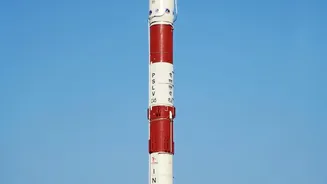
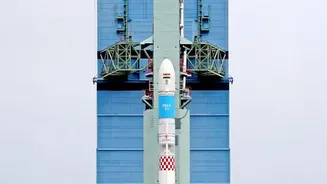
In a significant boost to its operational capacity, ISRO expects to commission its second launch complex at Kulasekarapattinam in Tamil Nadu within this fiscal year. While the main hub at Sriharikota remains the primary launch site, the new complex is specifically designed for smaller rockets like the Small Satellite Launch Vehicle (SSLV). This development will make launching smaller satellites more efficient and cost-effective, freeing up the larger launch pads at Sriharikota for bigger missions like the PSLV and GSLV. It’s a strategic move to cater to the booming global market for small satellite launches.