





The Fact That Breaks Your Brain
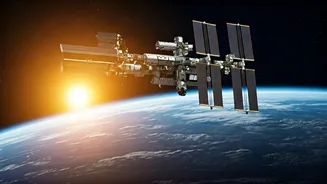
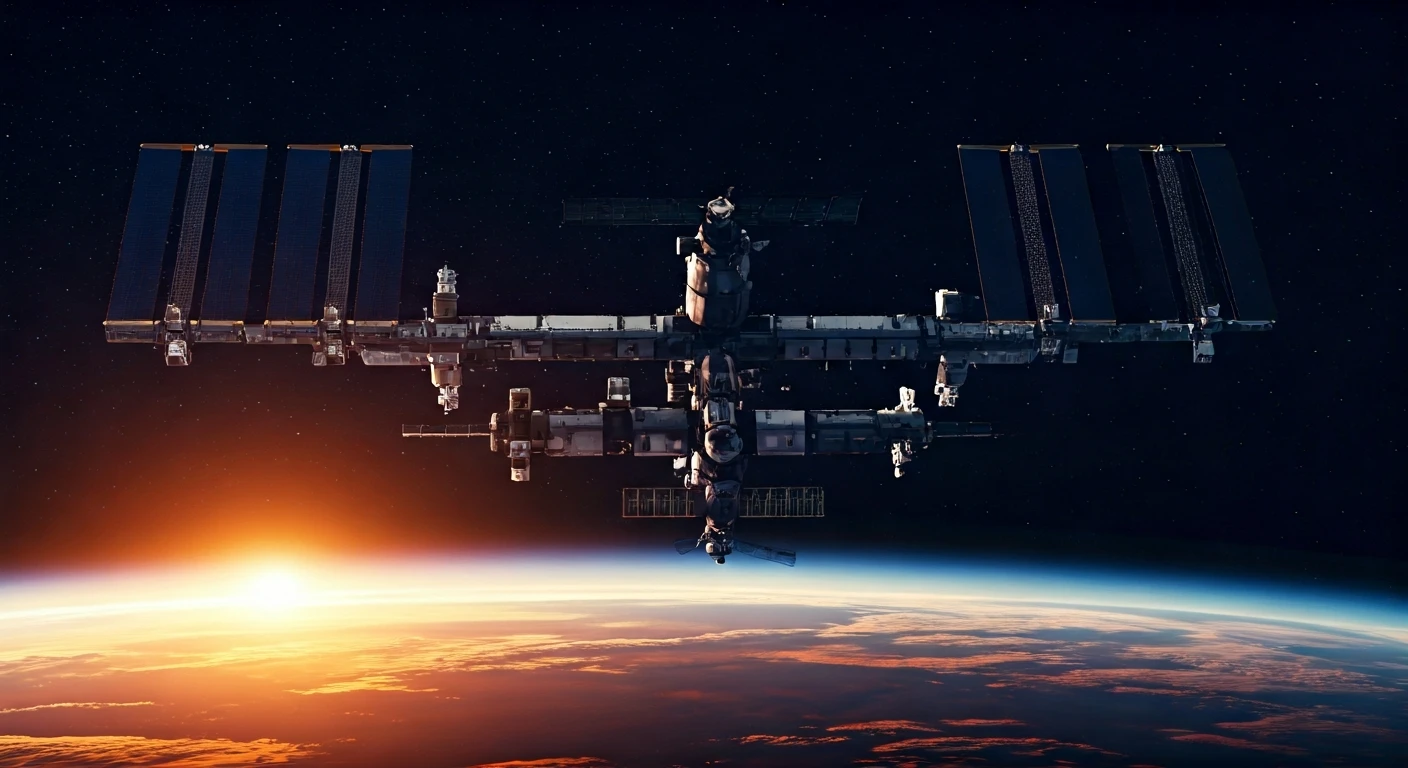
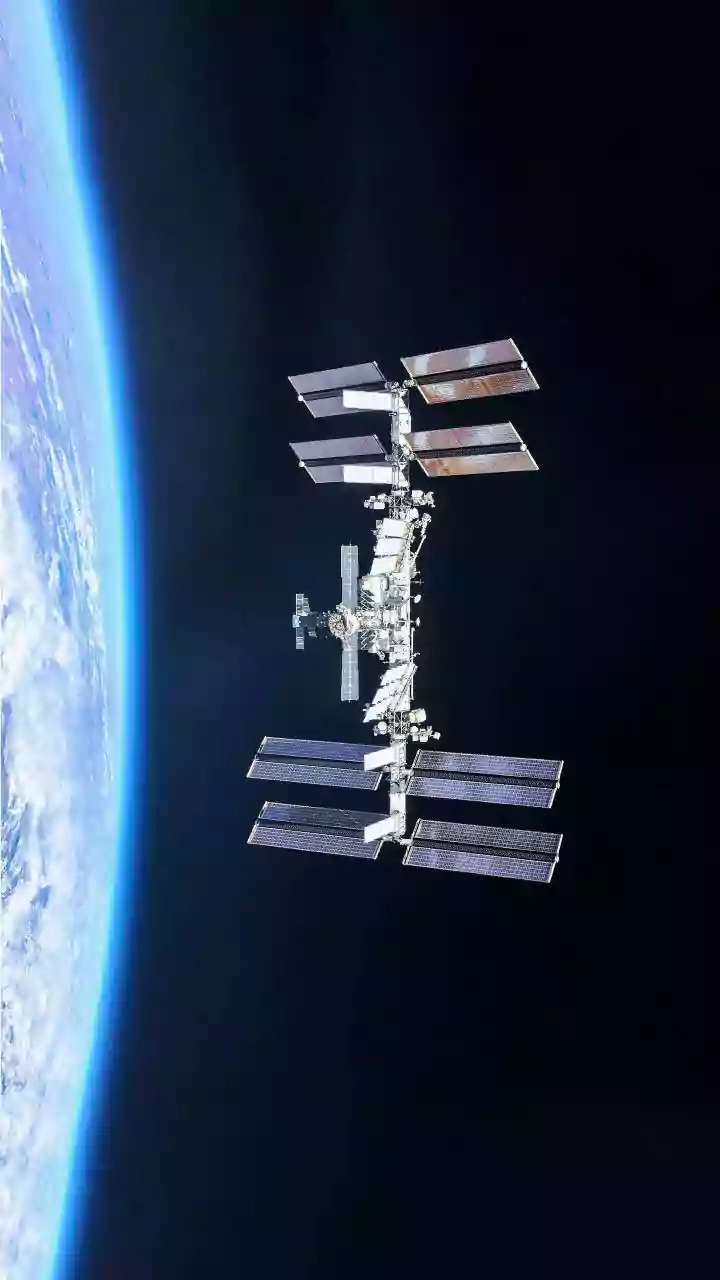
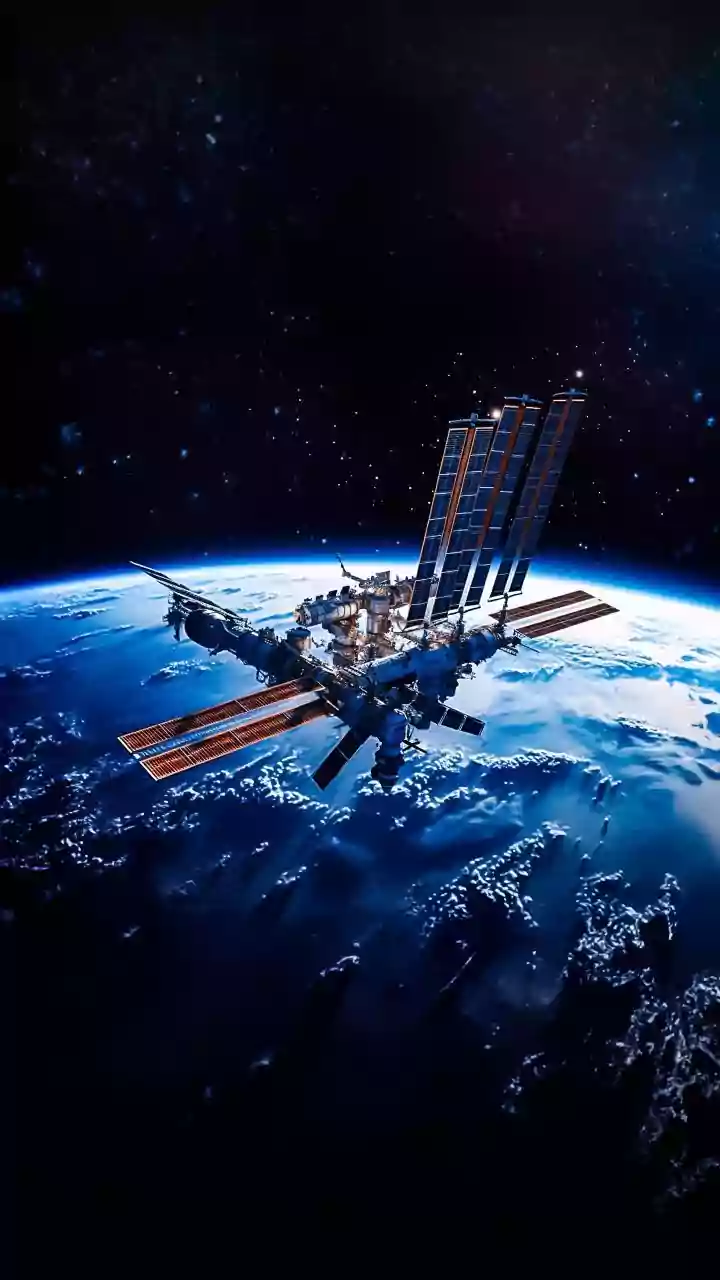
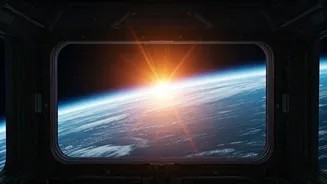
Here it is: the International Space Station travels at a staggering 28,000 kilometres per hour. Because of this immense speed, it completes a full orbit of Earth approximately every 90 to 92 minutes. For the astronauts on board, this means they witness
16 sunrises and 16 sunsets every single 24-hour period. While you go about your single day, the crew of the ISS experiences a complete day-night cycle in the time it takes to watch a feature film. This single, easily digestible fact has become a favourite because it so vividly illustrates the alien nature of living just 400 kilometres above our planet's surface.
What 28,000 km/h Really Means
It’s hard to grasp a speed that fast. It’s roughly 7.8 kilometres every second. For context, that's more than 20 times faster than a speeding bullet. If you could travel at that speed on the ground, you could go from Delhi to Mumbai in about three minutes. This incredible velocity isn't for thrill-seeking; it's a requirement of physics. To stay in low Earth orbit, the ISS must travel fast enough to constantly 'fall' toward Earth but always miss because the planet's surface curves away beneath it. This balance between the station's forward momentum and Earth's gravitational pull is what creates a stable orbit, allowing it to function as a permanent laboratory in space. Without this speed, gravity would win, and the station would plummet back into the atmosphere.
Living Life on Fast-Forward
Experiencing 16 sunrises a day sounds poetic, but it presents significant biological challenges. The human body is wired for a 24-hour cycle, known as the circadian rhythm, which regulates sleep, hormone release, and body temperature. The station's rapid cycling of light and dark completely disrupts this natural clock. Astronauts describe a sunrise that lasts less than a minute, as the sun leaps above the horizon rather than slowly rising. To cope, the ISS operates on Coordinated Universal Time (UTC), and the crew follows a strict schedule for waking, working, and sleeping, completely ignoring the chaotic light show outside. The station itself helps by using an advanced LED lighting system that shifts in colour and brightness throughout the artificial 'day' to mimic a normal Earth-bound cycle, promoting alertness in the morning and preparing the body for sleep in the evening.
Why This Fact Resonates So Deeply
The '16 sunrises' fact is sticky because it's both a feat of human engineering and a deeply human story. It connects us directly to the astronauts' experience, making their otherworldly existence tangible. It’s a number that defies our earthly intuition, sparking a sense of awe and wonder. Seeing countless pictures and videos of Earth from the station is one thing, but understanding the speed and frequency of that view adds another layer of appreciation. This phenomenon is also linked to the 'overview effect', a cognitive shift reported by many astronauts who see Earth from space. This perspective often fosters a profound sense of connection to the planet and humanity as a whole, reminding them of Earth's beauty and fragility. In a way, sharing this fact is a way for people on the ground to share a tiny piece of that awe.