






Moving Beyond Basic Calorie Counting
Many people begin tracking food with a single goal: counting calories. While this provides a basic sense of energy intake, it’s a limited view. Research has consistently shown that simply logging your food increases self-awareness and accountability,
often doubling weight loss results for those with that goal. However, a simple calorie count doesn't tell you about nutrient quality, how a meal made you feel, or why you chose to eat it. To transform your food log from a simple diary into a powerful tool for change, you need to add layers of detail. Moving beyond the 'what' to include 'how much,' 'when,' and 'why' provides the data you need to understand your body's unique patterns and needs.
The Critical Role of Amounts and Portions
It’s easy to log “a bowl of pasta,” but the wellness impact of that meal depends entirely on whether the bowl was 1 cup or 3 cups. Most people struggle to estimate portion sizes accurately, which can lead to significant under-reporting of calories and nutrients. Tracking amounts forces a more honest look at your consumption habits. You don’t need to carry measuring cups everywhere, but spending a week or two weighing or measuring common foods can be an eye-opening exercise that recalibrates your sense of a standard serving. Over time, you'll get better at eyeballing portions, making your log more accurate and your understanding of your intake more precise. This focus on portion control is a cornerstone of managing weight and ensuring a balanced diet.
Harnessing the Power of Timing
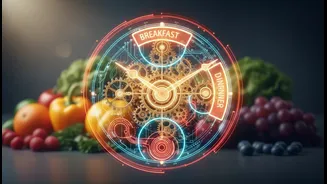
When you eat can be just as important as what you eat. This is the central idea behind chrononutrition, a field of study exploring how meal timing interacts with our body's internal clocks, or circadian rhythms. These internal clocks regulate everything from sleep to metabolism. Research suggests that eating in alignment with our natural rhythms—typically, consuming more of our calories earlier in the day—can improve metabolic health, insulin sensitivity, and weight management. Logging your meal times helps you see your patterns clearly. Do you skip breakfast and eat a large meal late at night? Do long gaps between meals lead to intense hunger and overeating? By noting the 'when,' you can identify opportunities to shift your eating schedule for better energy and metabolic function.
Why Context Is the Key to Lasting Change
This is perhaps the most overlooked but crucial element of food tracking: context. Context answers the question of why you ate. Were you truly hungry, or were you bored, stressed, or lonely? Were you eating at your desk, in front of the TV, or mindfully at a table with family? Tracking these details transforms your food log into a behavioral journal. It helps you identify emotional eating triggers and unconscious habits that may be sabotaging your goals. Noting your mood, location, who you were with, and your hunger level before eating provides powerful insights. Over time, you’ll see patterns emerge—like reaching for sugary snacks after a stressful meeting—that you can then work to change with healthier coping strategies.
Making Detailed Tracking a Sustainable Habit
The idea of logging this much detail might seem overwhelming, but it doesn't have to be. The goal is awareness, not perfection. Start small. For one week, focus only on adding portion sizes. The next week, add meal times. Use the 'notes' feature in your tracking app to quickly jot down your mood or location. The key is consistency, not entering every detail flawlessly every single day. Remember, this isn't about judgment or creating restrictive rules; it's about gathering information to better understand yourself. A detailed food journal is a short-term tool for building long-term, intuitive habits that serve your health and well-being.