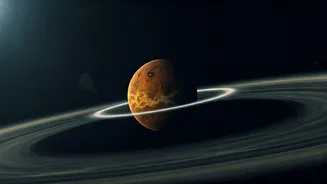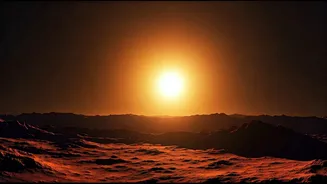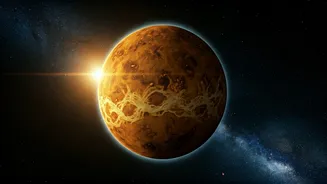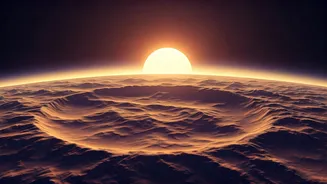




The Basic Numbers Are Baffling
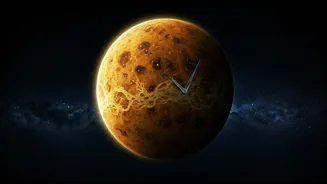
Let’s get the mind-bending facts out of the way first. An Earth year is about 365 days long. An Earth day is 24 hours. Simple. Now, let's look at Venus. A year on Venus—the time it takes to complete one orbit around the Sun—is approximately 225 Earth days.
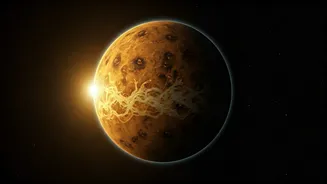
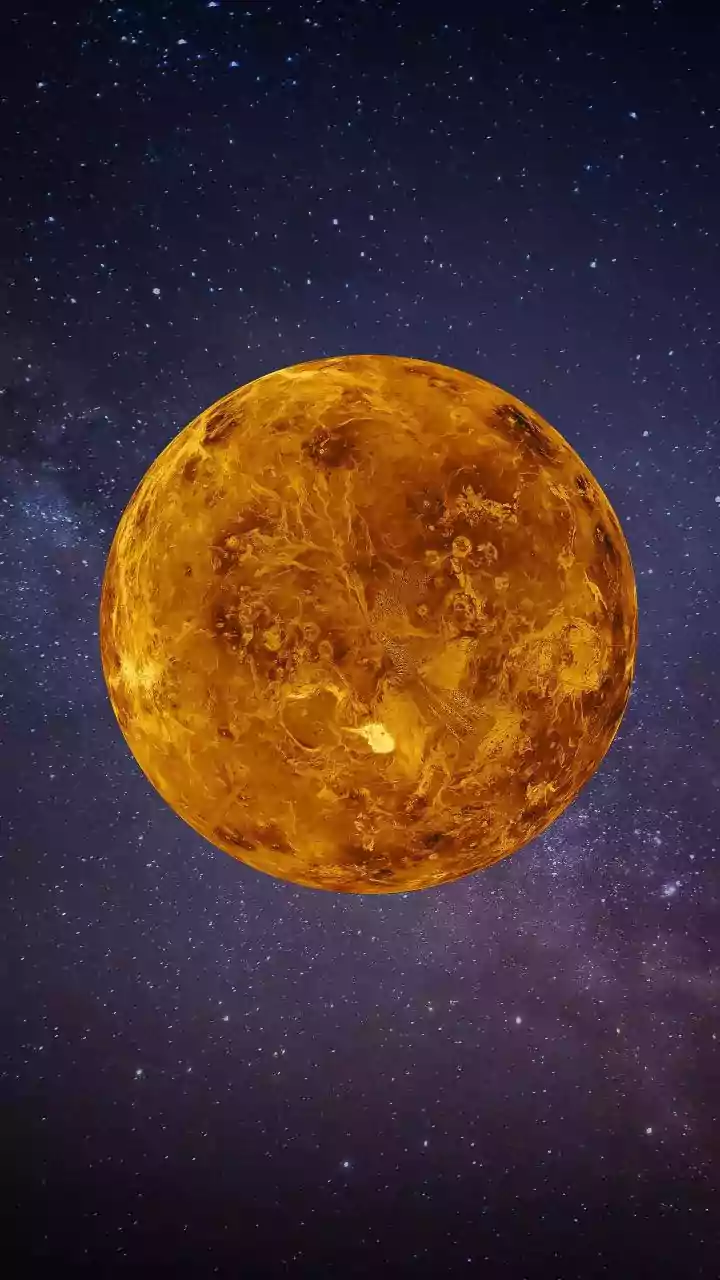
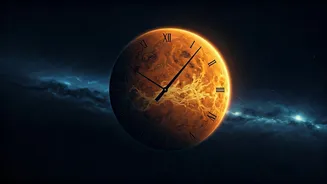
But a single day on Venus—the time it takes for the planet to rotate once on its axis—is a sluggish 243 Earth days. Yes, you read that right. On Venus, a day is longer than a year. If you were standing on its surface, you would complete a full trip around the Sun before the planet beneath you had even finished a single spin. It’s a concept that breaks our Earth-based intuition about how time and celestial motion are supposed to work.
The Crucial Twist: Sidereal vs. Solar Day
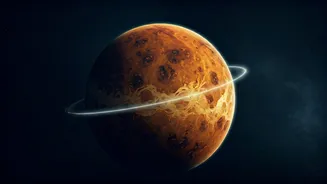
To unravel this paradox, we need to understand that there are two ways to measure a 'day'. The first is a sidereal day, which is the time it takes for a planet to complete one 360-degree rotation relative to the distant stars. For Venus, this is the 243-Earth-day figure. This is its true rotational period. The second, and more familiar to us, is the solar day—the time it takes for the Sun to return to the same position in the sky (e.g., from one noon to the next). On Earth, these two are very close: a sidereal day is 23 hours and 56 minutes, while our solar day is 24 hours. That four-minute difference is caused by Earth moving along its orbit. But on Venus, the difference is gigantic and completely counterintuitive.
Retrograde Motion Changes Everything
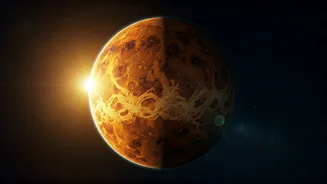
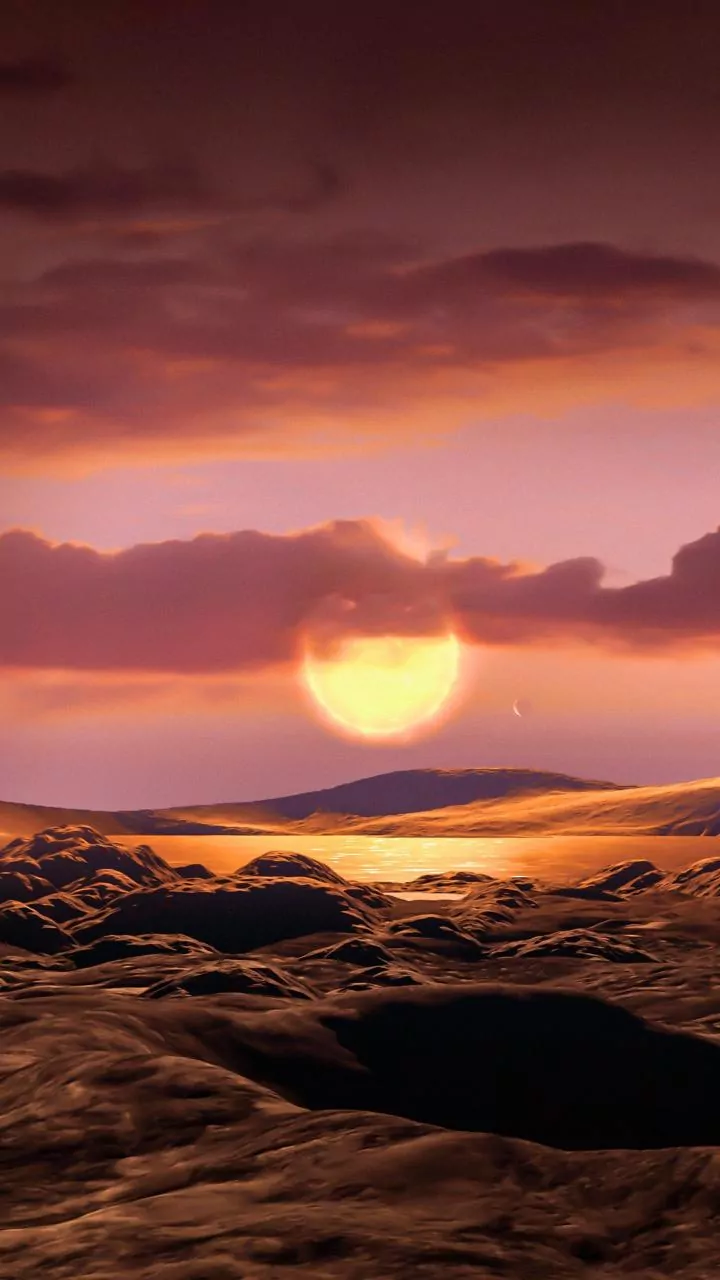
Here's the real kicker: Venus spins backwards. Unlike Earth and most other planets in our solar system, which spin counter-clockwise on their axis (prograde motion), Venus spins clockwise (retrograde motion). Because it rotates so slowly and in the opposite direction of its orbit, the length of its solar day gets dramatically altered. As Venus orbits the Sun, its backward rotation works *against* its orbital motion from the perspective of an observer on the surface. The result is that the Sun appears to move across the sky much faster than the planet's actual spin would suggest. This bizarre combination means a solar day on Venus—the time from one sunrise to the next—is only about 117 Earth days. So, while its rotational period is 243 days, you’d actually experience about two sunrises and sunsets in a single Venusian year. It’s still weird, but it makes a little more sense: a rotational day is longer than a year, but a solar day is not.
Why Is Venus So Strange?
So, what made Venus the solar system's odd one out? Scientists aren't 100% certain, but there are two leading theories. The first involves a colossal, planet-altering impact. Early in the solar system's history, a massive asteroid or protoplanet could have slammed into Venus with enough force to not just slow its rotation but actually reverse it completely. The second, more recent theory points to Venus's incredibly thick and heavy atmosphere. This dense blanket of carbon dioxide, 90 times thicker than Earth's, is so powerful that it could have created strong atmospheric tides. Over billions of years, the friction between the solid planet and its churning, super-rotating atmosphere could have gradually slowed Venus's original spin to a halt and then slowly pushed it into its current, lazy, backward rotation.
A World Forged by Its Rotation
This strange rotation isn't just a fun fact; it has profound consequences for the planet. The long days and nights should, in theory, create extreme temperature differences between the day and night sides. However, Venus’s thick atmosphere is incredibly efficient at circulating heat. It acts like a global blanket, trapping solar energy and distributing it evenly, which is why the entire surface of Venus—day or night, pole or equator—hovers at a scorching 465 degrees Celsius, hot enough to melt lead. This runaway greenhouse effect, combined with its crushing atmospheric pressure and bizarre timekeeping, makes Venus a true vision of an alien world, and a cautionary tale of how planetary environments can evolve in dramatically different ways.