

A New Frontier for Private Enterprise
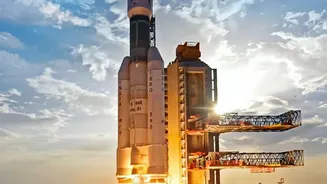
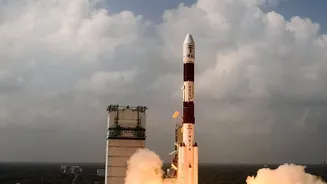
India's triumphant landing near the Moon's south pole did more than just make history; it created a launchpad for the nation's private space industry. With the government signalling a major policy shift, the final frontier is no longer the exclusive domain
of the Indian Space Research Organisation (ISRO). In a landmark move in 2020, the government opened up the sector, establishing the Indian National Space Promotion and Authorisation Centre (IN-SPACe). This single-window agency was created to promote, authorise, and supervise the activities of private space companies, effectively rolling out the welcome mat for innovators and entrepreneurs. The goal is to let ISRO focus on pioneering research and exploration, while private firms handle manufacturing, operations, and commercial services, boosting India's share of the global space economy. This has ignited a wave of ambition, with startups now aiming for the Moon.
The Innovators Building for the Moon
Several agile startups are leading this charge, developing everything from propulsion systems to full-fledged rovers. Bengaluru, India's tech hub, has become the epicentre of this new space race. One of the early pioneers was TeamIndus, a company born from the Google Lunar XPRIZE competition. Though the prize went unclaimed, the company, now known as Axiom Research Labs, developed significant expertise in landing and mobility systems. Its micro-rover platform continues to be a foundation for further development. Another key player is Bellatrix Aerospace, an IISc-incubated startup that began by focusing on advanced propulsion systems, including innovative green propellants and a unique water-based thruster. Their work on cost-effective orbital transfer vehicles is critical for deploying satellites and, potentially, lunar payloads more affordably. Newer entrants like Kepler Aerospace, co-founded by an engineer with experience on a lunar nano-rover project, further highlight the depth of talent entering the field.
The Secret to 'Low-Cost' Lunar Tech
The phrase 'low-cost' is central to the private space revolution, but it doesn't mean cutting corners on quality. Instead, these startups are rewriting the rules of space hardware development. A key strategy is adopting a frugal engineering mindset, a philosophy ISRO itself has famously used to achieve missions on shoe-string budgets. Startups are leveraging commercially available off-the-shelf components, agile development methodologies, and advanced manufacturing techniques like 3D printing to drastically reduce production time and costs. Unlike large government agencies with decades-long project cycles, startups can iterate quickly, testing and failing fast to arrive at a viable product. Bellatrix Aerospace, for example, focuses on making in-space transportation cheaper with its orbital transfer vehicles, which can reduce the cost of placing a satellite in orbit significantly. By focusing on specific niches like propulsion or mobility platforms, companies can achieve efficiencies of scale that were previously impossible.
More Than Just Rovers
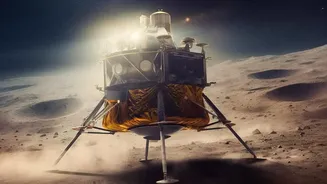
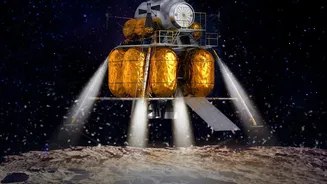
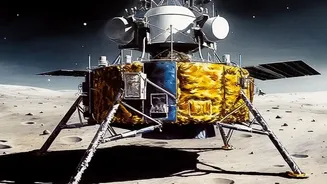
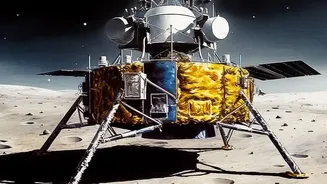
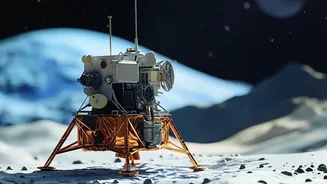
While rovers capture the public imagination, the opportunity extends across the entire lunar mission architecture. Startups are building a diverse range of critical technologies. This includes payload instruments for scientific analysis, communication systems to relay data back to Earth, and the landers themselves. US-based ORBITBeyond, for instance, has established a facility in Odisha to design and manufacture lunar landers and rovers, drawing on the local precision manufacturing ecosystem that has long supplied ISRO. The business case is compelling: a sustained presence on the Moon will require a constant stream of supplies, equipment, and services. This creates a market for everything from resource prospecting and data analysis to building infrastructure. The ultimate vision is to create a collaborative model for planetary exploration, where multiple customers can share the ride on a single mission, drastically lowering the barrier to entry for lunar science and commerce.
Challenges on the Lunar Horizon
The path to the Moon is not without obstacles. Space remains an incredibly harsh and unforgiving environment, and the technical challenges of designing hardware that can survive a rocket launch and the extreme temperatures of the lunar surface are immense. Funding is another significant hurdle. While seed rounds are growing, space ventures are capital-intensive, and securing long-term investment for missions that may not see a return for years is a constant struggle. Furthermore, navigating the regulatory landscape, even with the creation of IN-SPACe, takes time. Despite these challenges, the momentum is undeniable. The combination of government support, a deep pool of engineering talent, and a culture of frugal innovation has put Indian startups in a unique position to make their mark on the Moon.