



The Sun's Violent Outbursts
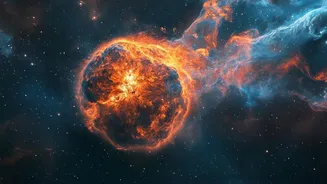
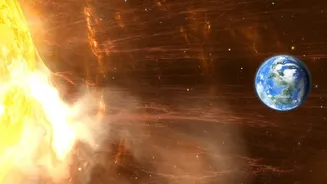
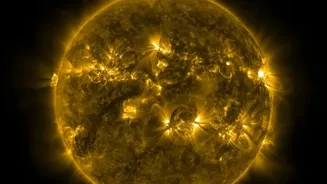
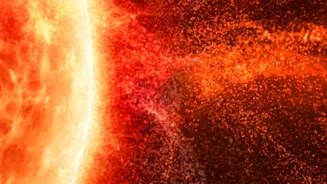
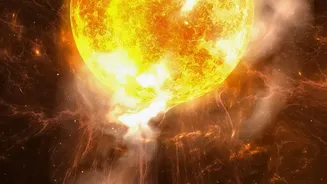
Our star is a dynamic and sometimes violent entity. A Coronal Mass Ejection, or CME, is one of its most powerful phenomena. It's a colossal eruption of magnetised plasma from the sun's outer atmosphere, the corona, hurtling into space. While solar flares
are intense bursts of radiation that reach Earth in about eight minutes, CMEs are like cannonballs of solar material travelling much slower, typically taking one to three days to cross the 150 million kilometres to our planet. Not all CMEs are aimed at Earth, but when one is, it can have profound consequences for our technology-dependent civilisation. The frequency of these events varies with the sun's 11-year cycle, with several CMEs occurring daily near the solar maximum.
From Space Storm to Ground Current
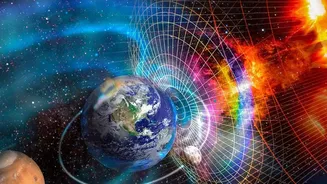
When an Earth-directed CME slams into our planet's magnetosphere—the natural magnetic shield that protects us—it triggers a major disturbance known as a geomagnetic storm. This interaction causes rapid, intense fluctuations in Earth's magnetic field. While this process creates the beautiful aurorae, it also has a hazardous side effect on the ground. Faraday's law of induction dictates that a changing magnetic field will induce an electrical current in any long conductor. Our sprawling high-voltage power lines act as giant antennas, picking up these disturbances and allowing powerful, uncontrolled, low-frequency direct currents (DC) to flow into the grid. These are called geomagnetically induced currents, or GICs.
Why Power Grids Are So Vulnerable
Modern power grids are designed to handle alternating current (AC), not the quasi-DC nature of GICs. When these unwanted currents enter the system, they can push the massive transformers at electrical substations into a state called 'half-cycle saturation'. This causes them to overheat dramatically, consume excessive power, and create harmonic distortions that can destabilise the entire grid. In a worst-case scenario, this overheating can physically damage or destroy the transformers, which are expensive, custom-built pieces of equipment that can take months or even years to replace. A widespread failure of multiple transformers could lead to cascading blackouts across vast regions, as happened in Quebec in 1989, when a geomagnetic storm left six million people without power.
The New Frontier of Forecasting
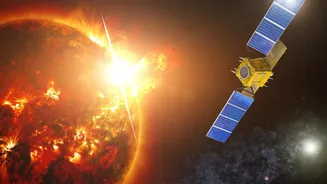
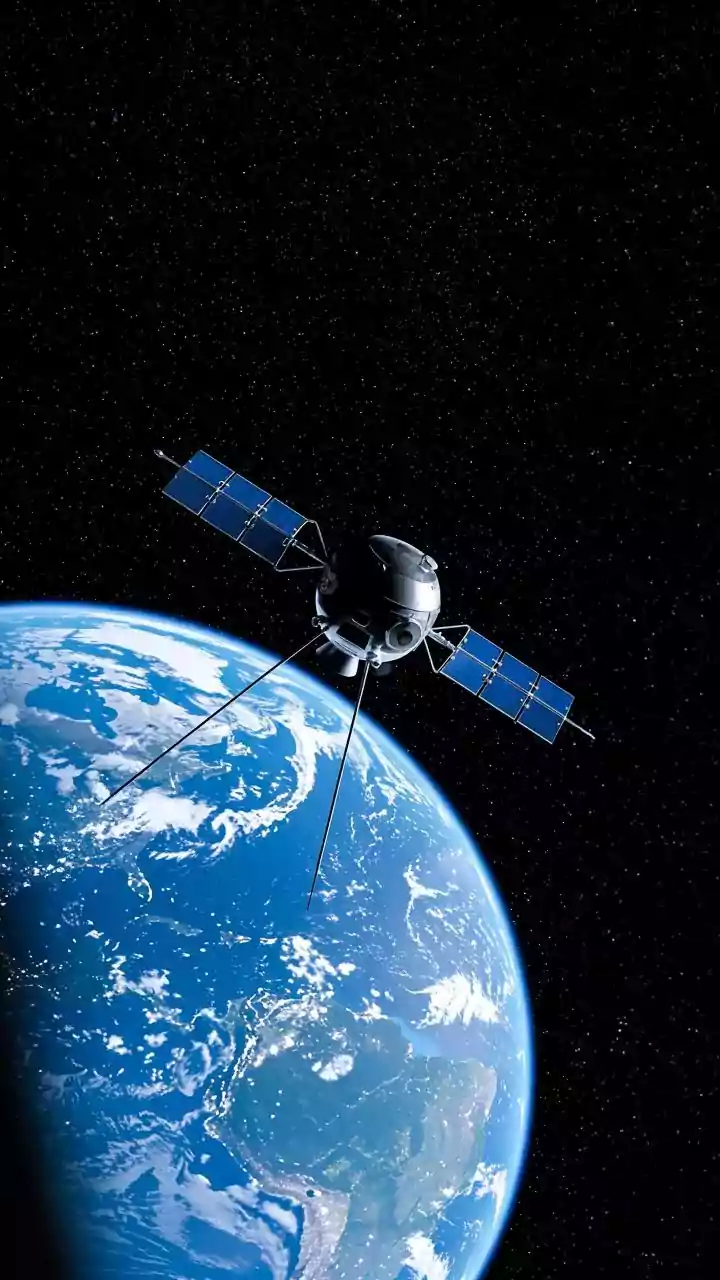
This is where advanced impact models come in. For years, predicting the specific terrestrial impact of a CME was a major challenge. Now, scientists are leveraging machine learning, artificial intelligence, and a wealth of new data from solar observatories like India's Aditya-L1 satellite to create sophisticated forecasting tools. These models, such as the ENLIL and EUHFORIA physics-driven simulations, don't just predict if a CME will hit Earth; they model its journey through space, its interaction with the solar wind, and, crucially, its likely geoeffectiveness—its ability to cause a geomagnetic storm. By combining solar wind data, observations of the CME itself, and information about the electrical conductivity of Earth's surface, these models can now provide more accurate, location-specific forecasts of where GICs are likely to occur and how intense they might be.
Turning Predictions into Protective Action
An accurate forecast is useless without a plan of action. The true value of these models lies in the lead time they provide—from hours to a few days—allowing grid operators to move from a reactive to a proactive stance. With a credible threat identified, power companies can take specific protective measures. They can reduce the load on vulnerable parts of the grid, strategically re-route power flows, or cancel non-critical maintenance to ensure all systems are available. In more extreme cases, operators may decide to temporarily take key transformers offline, effectively isolating them from the harmful GICs to prevent catastrophic damage. This might mean controlled, short-term blackouts for some, but it prevents the widespread, long-term outages that would result from destroyed hardware. These models provide the data needed to make these critical decisions with confidence.