






Stage 1: Brainstorming and Refining Your Topic
The first step is often the hardest: choosing a topic that is both interesting to you and academically viable. This is where generative AI models like ChatGPT or Google's Gemini can act as a tireless brainstorming partner. Instead of asking it to give
you a topic, use it to explore possibilities. You can input a broad area of interest, like 'urban sustainability in Indian cities,' and ask the AI to generate potential research questions, sub-themes, or controversial viewpoints within that field. Use prompts like, 'What are the current research gaps in the study of waste management in Tier-2 Indian cities?' or 'Generate 10 potential thesis titles related to digital payment adoption in rural India.' The goal is not to accept the AI's first answer, but to use its rapid-fire suggestions to stimulate your own thinking and help you narrow down your focus to a specific, manageable research question.
Stage 2: Supercharging Your Literature Review
The literature review is a marathon, not a sprint. Sifting through hundreds of academic papers can be draining. AI-powered research assistants like Elicit.ai, Scite.ai, and Perplexity are designed specifically for this task. Elicit can take your research question and find relevant papers, summarizing their key findings in an easy-to-read table. Scite goes a step further by showing you how a particular paper has been cited by others, indicating whether it was supported, contradicted, or simply mentioned. This helps you quickly gauge the academic conversation around a key study. Use these tools to identify seminal papers, discover related concepts you may have missed, and build a foundational understanding of your field far more efficiently than with a simple keyword search on its own.
Stage 3: Structuring and Outlining Your Argument
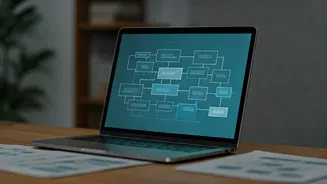
A strong thesis needs a strong skeleton. Once you have your research and your core argument, AI can help you build a logical structure. You can feed your main points and key evidence into a tool like ChatGPT or Notion AI and ask it to propose a chapter-by-chapter outline. For example, you could prompt it with: 'Create a detailed thesis outline for a study on the impact of social media on political participation among young voters in India. Include sections for introduction, literature review, methodology, findings, and conclusion.' The AI can help you organise your thoughts logically, ensuring each section flows smoothly into the next. This provides a clear roadmap for the writing process, preventing you from getting lost in the details later on.
Stage 4: Drafting, Polishing, and Citing
When it's time to write, AI can function as an enhanced editing assistant. Tools like Grammarly go beyond basic spell-checking to offer suggestions on tone, clarity, and conciseness. QuillBot can help you rephrase clunky sentences or find different ways to express the same idea, which is useful for avoiding repetition. However, this is where caution is most needed. Never ask an AI to write entire paragraphs or sections for you. Instead, use it to refine your own writing. Think of it as a helpful editor, not the author. For managing citations—another major headache—tools like Zotero or Mendeley are indispensable. Many now integrate AI features to help you automatically generate bibliographies in the correct format, saving you hours of tedious work.
The Ethical Tightrope: A Critical Warning
Using AI in your thesis requires navigating a new set of ethical rules. The most important rule is transparency and originality. Your thesis must be your own work. Using AI to generate text and presenting it as your own is plagiarism, plain and simple. Most universities are rapidly developing policies on AI usage. Before you even begin, check your institution's academic integrity guidelines. A good rule of thumb is to use AI as a tool for process, not for product. Use it to find information, organise your thoughts, and check your grammar. Do not use it to create the content itself. Always verify information generated by AI, as it can be inaccurate or 'hallucinate' facts and citations. Your critical thinking, analysis, and voice are what make the thesis yours—and that's something AI cannot replace.