




The Stark Reality of the Price Tag
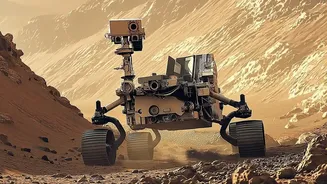
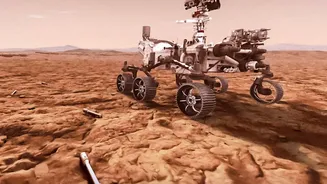
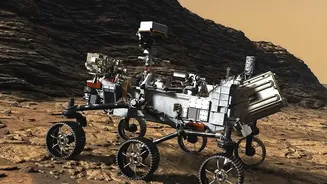
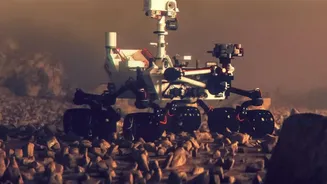
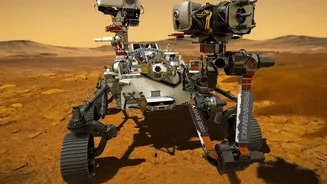
The most immediate and striking difference between robotic and human missions is the cost. Sending a sophisticated robot like the Perseverance rover to Mars is a monumental undertaking with a price tag to match, costing around $2.7 billion. While a staggering
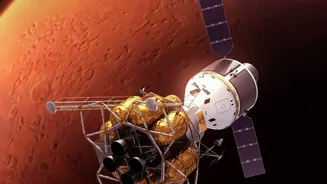
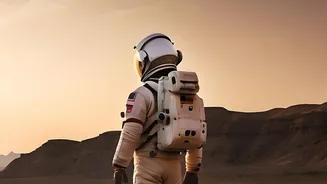
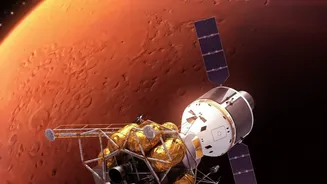
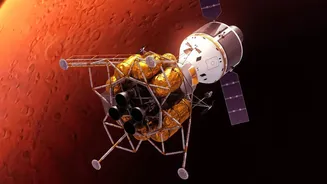
sum, it pales in comparison to the estimated cost of a crewed mission. Projections for sending humans to Mars often soar into the hundreds of billions of dollars, with some estimates suggesting a single program could be 10 to 100 times more expensive than our most advanced robotic explorers. The reason for this vast disparity is simple: keeping humans alive in space is incredibly complex and heavy. Every kilogram launched into space has a high price, and a human mission requires launching not just astronauts, but their food, water, air, living quarters, radiation shielding, and a vehicle capable of returning them safely to Earth—a logistical and financial mountain to climb.
Complexity: Keeping Humans Alive
Beyond the finances, the technical complexity of a human mission is orders of magnitude greater. Robotic missions, while challenging, do not have to worry about life support. Robots can endure the harsh radiation of interplanetary space, operate in extreme temperatures, and function for years without tiring. In contrast, a human mission must solve a host of life-threatening problems. Astronauts need constant protection from cosmic radiation, which poses a significant health risk. They must endure months of travel in a cramped environment, which carries psychological and social risks. Their bodies will be subjected to the bone and muscle-wasting effects of microgravity. Furthermore, the sheer weight of a human-rated lander, estimated to be 40 to 50 times heavier than the one-ton Perseverance rover, presents an unprecedented entry, descent, and landing challenge in Mars's thin atmosphere.
The Case for Robotic Vanguards
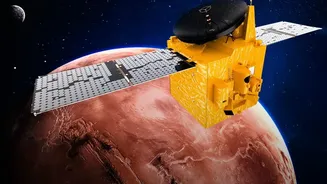
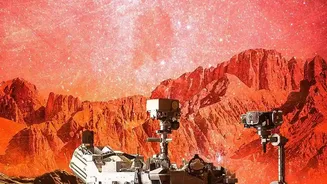
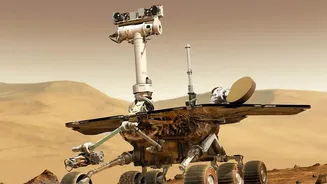
Proponents of robotic exploration argue that machines offer a safer, more economical way to conduct science. Robots can be sent to more dangerous and scientifically interesting locations without risking human lives. They have proven to be incredibly durable, with rovers like Curiosity and Perseverance far outlasting their initial mission timelines and returning a wealth of data. Advances in artificial intelligence and robotics promise to make them even more capable, able to perform more complex tasks and make limited on-the-spot decisions without human intervention. For the cost of one human mission, dozens of robotic probes could be dispatched across the solar system, vastly expanding our scientific reach. They are the workhorses of planetary science, patiently mapping surfaces, analyzing atmospheres, and searching for the building blocks of life.
The Human Advantage: Speed and Adaptability
Despite the undeniable advantages of robots, they have significant limitations. Rovers are slow, with a maximum speed far slower than a crawling human. What might take a rover months or even years to investigate—like drilling a core sample or navigating a tricky patch of terrain—an astronaut could potentially accomplish in minutes or hours. The most significant advantage humans bring is adaptability and intuition. An astronaut geologist can instantly recognize an interesting rock formation, make an intuitive leap based on visual cues, and adapt the mission's goals in real-time to investigate an unexpected discovery. Robots, by contrast, are largely limited to their pre-programmed instructions and suffer from significant communication delays with Earth, which can be up to 40 minutes for a round-trip signal. This makes real-time control impossible and problem-solving a slow, painstaking process.
A Partnership for the Future
Ultimately, the debate is not a simple 'either-or' choice. The modern consensus is that human and robotic exploration are not mutually exclusive but are two parts of a single, integrated strategy. Robotic missions serve as essential precursors, scouting landing sites, testing technologies, identifying resources like water ice, and mapping the very real dangers that await human explorers. They do the groundwork, reducing the risk and increasing the efficiency for the eventual arrival of astronauts. The future of Mars exploration likely involves humans and robots working side-by-side. Astronauts on the surface could tele-operate a fleet of robotic assistants in real-time, sending them into areas too dangerous for humans or having them perform routine tasks while the human crew focuses on complex science and analysis. This hybrid approach leverages the strengths of both, combining robotic endurance and precision with human intellect and adaptability.