






A National Shift Away from Staples
For the first time, the average Indian household is spending less than half of its food budget on food, a clear marker of rising prosperity. Data from the latest Household Consumption Expenditure Survey (2022-23) highlights a significant trend: a steady
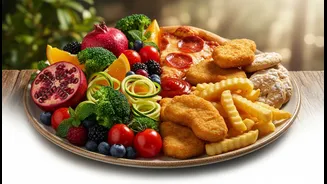
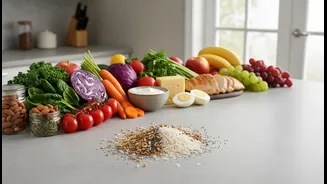
decline in the consumption of cereals like rice and wheat. This doesn't mean Indians are eating less, but rather that their food basket is diversifying. With rising incomes, there's a growing appetite for what are often called high-value foods: milk and dairy products, eggs, meat, fish, and fresh fruits. This dietary diversification points to a major 'nutrition transition', a phenomenon where economic development alters lifestyles and eating habits. However, this transition is also marked by an increased intake of fats and processed foods, signaling a complex shift with both positive and negative implications.
The Urban-Rural Dietary Divide
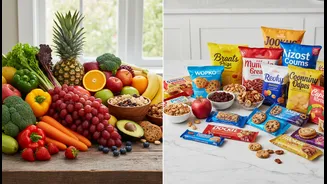
Where you live in India significantly influences what's on your plate. Urban households, on average, have a more diverse diet and spend more on non-cereal items like fruits, vegetables, and animal products compared to their rural counterparts. Recent data from 2022-23 shows that while the share of spending on cereals has dropped for everyone, it remains a larger part of the rural food budget. Urban areas also lead in the consumption of processed foods and beverages. Conversely, rural households, while also diversifying, still rely more heavily on staple grains, partly due to availability and government food security programs that primarily distribute cereals. This gap is narrowing, but access to markets and income levels continue to create distinct urban and rural eating patterns.
The Persistent North-South Pattern
India's vast geography and cultural diversity have always been reflected in its regional cuisines, a reality that persists today. Broadly, a 'Milk and wheat-rich diet' is more common in the northern states, while a 'Rice and meat-rich diet' is more prevalent in the southern and eastern parts of the country. These traditional patterns are influenced by climate and local agriculture. For example, studies show that while dairy consumption is higher than national recommendations in many areas, it is particularly pronounced in the North. Similarly, meat and fish consumption has distinct regional strongholds. While the overall trend is toward a more homogenous, diversified diet, these foundational regional preferences continue to shape the Indian food basket.
How Income Dictates the Dinner Table
More than any other factor, income determines the quality and diversity of an Indian family's diet. As household incomes rise, the proportion of the budget spent on food decreases, and the spending within that food budget shifts dramatically. Wealthier households consume significantly more fruits, vegetables, dairy, and protein-rich foods. The poorest households, on the other hand, spend a much larger share of their income on food, with a heavy reliance on cereals. While government subsidies for grains provide a crucial safety net, they can also indirectly discourage dietary diversity among the poor. This creates a paradox where rising incomes can improve nutrition, but economic disparity ensures that millions are still unable to afford a consistently healthy and balanced diet.
The Double-Edged Sword of Nutrition
This ongoing transformation of the Indian diet presents a major public health challenge known as the 'double burden of malnutrition'. While undernutrition, stunting, and micronutrient deficiencies remain serious problems, especially in rural areas and among low-income groups, obesity and related non-communicable diseases like diabetes are rising at an alarming rate. The shift towards energy-dense, processed foods, fats, and sugars is a key driver of this trend. Essentially, different parts of the population are facing opposite, yet equally dangerous, nutritional problems. This dual challenge requires a nuanced policy response that not only addresses hunger but also promotes healthy eating habits to prevent a future epidemic of lifestyle diseases.