

Putting Indians in Space
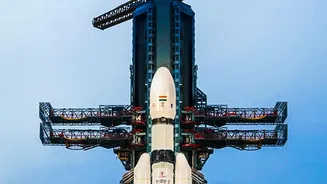
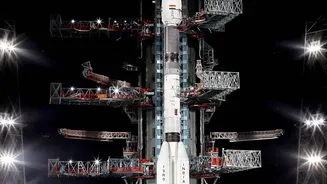
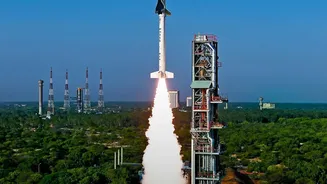
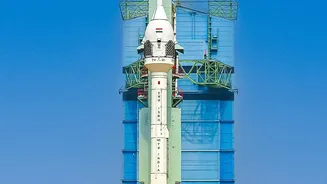
The most anticipated mission is Gaganyaan, India's inaugural human spaceflight program. After a series of successful tests, including for its crew escape system and solid motors, the first uncrewed flight, G1, is slated for 2026. This will be a crucial
test of the crew module and life support systems. It will be followed by another uncrewed flight, G2, carrying the humanoid robot Vyommitra to simulate astronaut functions before the first crewed mission in 2027 or 2028. For students, Gaganyaan is more than a mission; it's a signal that careers in spaceflight operations, astronaut training, and bio-astronautics are becoming a reality within India.
Journey to Earth's Neighbors
Following the monumental success of its first Mars mission, ISRO is planning a far more ambitious sequel. Mangalyaan-2, or the Mars Lander Mission, aims not just to orbit the red planet but to land on it. Tentatively scheduled for launch after 2028, the mission plans to deploy a rover and a helicopter, putting India in an elite club of nations to have operated vehicles on the Martian surface. Simultaneously, plans for Shukrayaan-1, an orbiter mission to Venus, are firming up. Formally approved in late 2024, the mission is targeting a 2028 launch to study the dense atmosphere and surface of Earth's 'twin'. These interplanetary voyages offer a treasure trove of research opportunities for students in planetary science, geology, and atmospheric studies.
Building a Home in Orbit
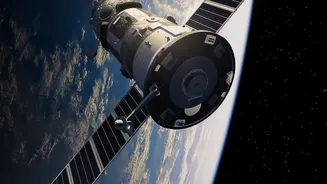
Perhaps the most futuristic element of ISRO's roadmap is the Bharatiya Antariksha Station (BAS), India's very own space station. This modular station, planned for completion by 2035, will serve as an orbital laboratory for long-duration experiments in microgravity. It will allow Indian astronauts to stay in space for months, conducting research in fields like materials science and pharmaceuticals. A critical precursor is the Space Docking Experiment (SPADEX), a mission designed to master the complex technology of connecting two spacecraft in orbit. This capability is fundamental to assembling and servicing the future space station. For aspiring engineers and scientists, the BAS project represents a long-term vision they can build their careers around, from robotics to life support systems.
Advanced Eyes on Earth and Sun
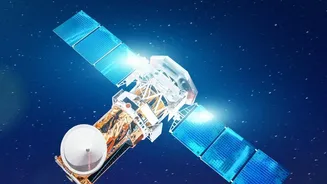
While deep space missions capture the headlines, ISRO's work in Earth's orbit continues to expand. The joint NASA-ISRO Synthetic Aperture Radar (NISAR) satellite provides invaluable data on our planet's changing ecosystems and surfaces. Upcoming Earth Observation Satellites like EOS-05 and Cartosat-3B will provide higher-resolution, near real-time imaging for disaster management, agriculture, and urban planning. Meanwhile, the Aditya-L1 mission, India's first solar observatory, is already in orbit studying the Sun from a unique vantage point. These missions provide students with vast datasets and practical applications, showing the direct impact of space technology on improving life on Earth.
From Classroom to Cosmos
This ambitious roadmap directly fuels student interest in STEM fields. Recognizing this, ISRO and other agencies are actively creating pathways for student participation. Through the Indian National Space Promotion and Authorisation Center (IN-SPACe), student-designed satellites and payloads are being mentored and launched. Competitions for designing model rockets and small CanSats give students hands-on experience, turning theoretical knowledge into practical skills. ISRO’s Student Satellite Programme provides technical guidance and launch opportunities for projects developed in universities. The message to students is clear: India's future in space is not just something to watch, but something they can actively build.