



History and Royal Patronage
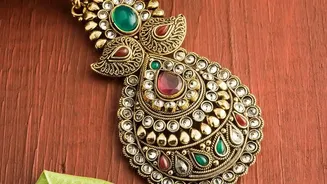
Much of India's jewellery diversity is a direct legacy of its rulers. In the North, the Mughal empire left an indelible mark, blending Persian aesthetics with Indian craftsmanship. They perfected techniques like Kundan (setting uncut gems in gold foil)
and Meenakari (vibrant enamelling), which flourished in the royal courts of Rajasthan and Delhi. These styles are characterised by their opulent use of uncut diamonds (polki), emeralds, and rubies, reflecting a history of imperial grandeur. In contrast, the jewellery of South India was shaped by dynasties like the Cholas and the rulers of Vijayanagara, who were great temple patrons. This led to the development of Temple Jewellery, originally crafted to adorn deities and later worn by royalty and classical dancers. Even today, Hyderabadi jewellery is famous for its pearls, a legacy of the Nizams who had a great fondness for them and sourced the finest Basra pearls from the Persian Gulf.
Geography and Local Materials
The natural environment and available resources play a crucial role in shaping regional jewellery traditions. In the Northeast, tribal communities in states like Nagaland, Arunachal Pradesh, and Meghalaya craft stunning ornaments from locally sourced materials like bamboo, cane, boar tusks, shells, seeds, and colourful glass beads. These pieces are not just decorative but act as markers of tribal identity, social standing, and connection to the land. In coastal Odisha, the ancient art of Tarakasi, or silver filigree, flourishes in the city of Cuttack. This delicate, lace-like work using twisted silver wires is a testament to the region's skilled artisans and has been a tradition for over 500 years. Similarly, in West Bengal, the use of Shankha (conch shell) and Pola (red coral) bangles for married women is directly linked to its riverine and coastal geography.
Spirituality and Symbolic Meanings
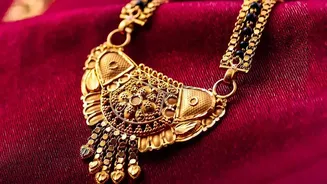
Across India, jewellery is deeply intertwined with faith and spiritual beliefs. South India's Temple Jewellery is the most direct example, with designs featuring gods, goddesses, lotus flowers, peacocks, and other sacred motifs. These pieces are not just beautiful but are considered auspicious, worn during weddings and festivals to invoke blessings and reflect cultural pride. In many Hindu communities, specific pieces carry profound meaning, such as the Mangalsutra, a necklace of black beads worn by married women as a symbol of their union and for protection. Likewise, toe rings (bichiya) often signify a woman's marital status. Even tribal jewellery is rich with symbolism; among the Naga tribes, certain beads or pendants could signify a warrior's courage or a family's social status.
Community and Cultural Identity
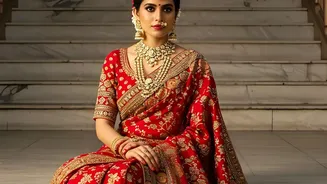
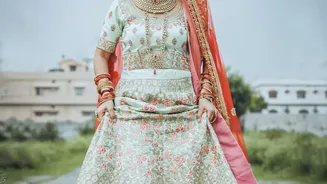
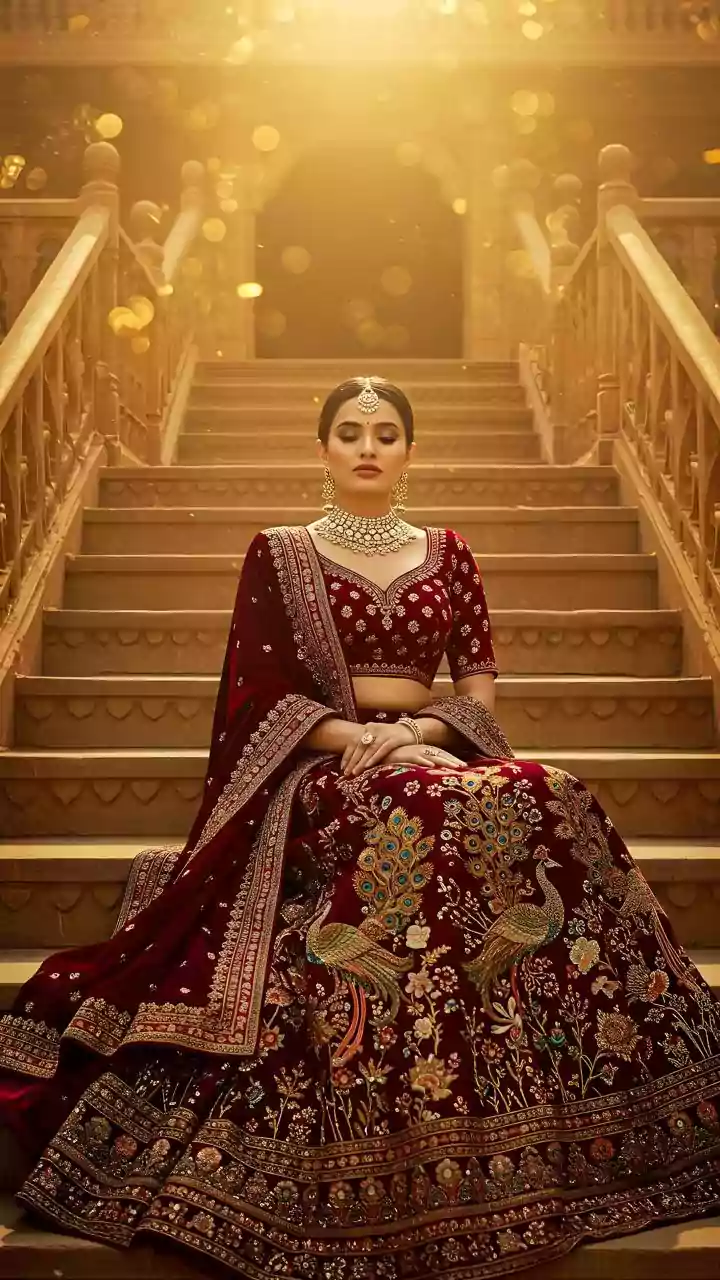
Jewellery often serves as a visual marker of one's community, caste, or social standing. In Gujarat, the bold, chunky silver jewellery of its tribal communities is distinct from the more colourful Meenakari work popular in its merchant communities. The designs worn by a bride can instantly signal her regional and communal origins. A Punjabi bride's Chooda (red and white bangles) and Kalire (dangling ornaments) are instantly recognisable. A Maharashtrian bride might wear a Kolhapuri Saaj, a necklace with 21 symbolic pendants. An Assamese bride is often adorned with jewellery inspired by local flora and fauna, such as the pigeon-shaped Loka-Paro pendant. These distinct traditions are passed down through generations, becoming cherished heirlooms that carry the story of a family's roots.