

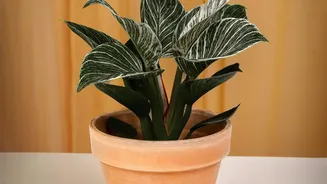
The Myth's Green Roots
The idea that houseplants are nature's air filters stems from a landmark 1989 NASA study. Faced with the challenge of purifying air in sealed space stations, NASA researchers studied common indoor plants to see if they could remove volatile organic compounds
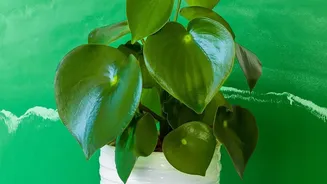
(VOCs) like formaldehyde and benzene from the air. The study, led by scientist B.C. Wolverton, found that in a sealed chamber, certain plants were remarkably effective at absorbing these harmful chemicals. The list of hero plants, including species like the Spider Plant, English Ivy, and Peace Lily, became a go-to guide for health-conscious homeowners, and the belief in their purifying power took firm root in popular culture.
A Flaw in the Terrarium
The problem, as recent analyses have pointed out, is that our homes and offices are nothing like the hermetically sealed chambers used in the NASA experiments. A 2019 review of several decades of research, published in the Journal of Exposure Science & Environmental Epidemiology, highlighted this crucial difference. In a typical home, air is constantly being exchanged with the outside, a process known as ventilation. This natural air turnover dilutes indoor pollutants far more rapidly and effectively than a few potted plants can absorb them. The original studies simply didn't account for the ventilation rates of a real-world building, which significantly changes the equation.
The Sheer Scale of the Problem
To match the air-cleaning rates seen in those lab studies, the numbers become staggering. The 2019 Drexel University study calculated that you would need anywhere from 10 to 1,000 plants per square meter to have a meaningful impact on indoor air quality. To put that in perspective, a small 500-square-foot room would require at least 500 plants to even begin to compete with the air-cleaning effect of simply opening a window. For an average 1,500-square-foot home, you might need as many as 680 plants. This transforms the dream of a lush, clean-air oasis into an impractical indoor jungle for the average person to maintain.
So, Are Houseplants Pointless?
Absolutely not. While their role as significant air purifiers has been debunked, the benefits of having indoor plants are numerous and well-documented. Their value simply lies elsewhere. Research has consistently shown that interacting with indoor plants can reduce psychological and physiological stress. Studies have found that having greenery in your home or office can lower blood pressure, improve mood, and increase feelings of comfort and relaxation. They can also boost focus and productivity, making them a valuable addition to any workspace. The aesthetic beauty and the connection to nature they provide are powerful wellness tools in their own right.
A Breath of Fresh Air
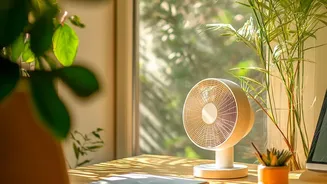
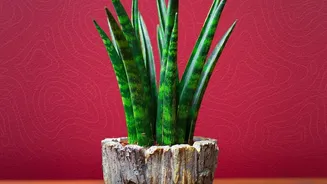
If your primary goal is to improve indoor air quality, the science points to more effective solutions. The most powerful tool is ventilation—regularly opening windows and doors to allow fresh air to circulate. For homes in areas with high outdoor pollution or for those with allergies, a high-efficiency particulate air (HEPA) filter is a far more effective and reliable method for removing airborne pollutants. While your snake plant may not be scrubbing the air clean, it is still contributing to a healthier and more pleasant living environment. Think of your houseplants as partners in well-being, not as microscopic janitors. Their job is to bring life, beauty, and a sense of calm into your space—and that’s a benefit well worth cultivating.