






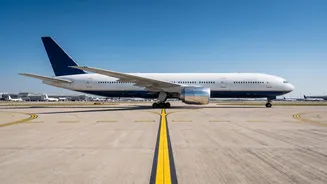

The moment arrives in every travel plan: two itineraries, one destination. One is a straight shot, the other a winding path with a stop. Choosing between a direct flight and a connecting journey is more than a simple matter of time or money.
The All-Important Price Tag
For most travellers,
the decision begins with cost. Connecting flights are often significantly cheaper, sometimes by 25-30%, because airlines know passengers will pay a premium for convenience. This price difference can be substantial, especially for international travel or when booking for a family. However, the sticker price isn't the full story. A long layover might introduce extra costs for meals, and an overnight connection could require a hotel stay, potentially eating into your savings. It's crucial to compare the total cost, not just the initial airfare. Sometimes, depending on the route and demand, a direct flight can be surprisingly competitive, so it always pays to compare both options thoroughly.
The Equation of Time and Convenience
A direct (or non-stop) flight is the undisputed champion of speed and simplicity. It minimizes total travel time and eliminates the stress of navigating an unfamiliar airport, rushing to another gate, or facing a tight connection. This is a huge advantage for those on a tight schedule, business travellers, or anyone travelling with children or elderly parents. A connecting journey, by definition, takes longer. The layover can add several hours to your trip. You must be realistic about your tolerance for a longer travel day. For a short weekend trip, a four-hour layover can feel like a significant loss of valuable vacation time. On a longer, more flexible holiday, the extra hours might be a worthwhile trade-off for a lower fare.
Assessing the Risk of Disruption
Every connection is a potential point of failure. Connecting flights introduce a higher risk of travel-day chaos. A delay on your first leg could cause you to miss your second flight. While airlines will typically rebook you on the next available flight if you're on a single ticket, this can still lead to long, unplanned waits. Checked baggage also faces a higher risk of being delayed or lost when it has to be transferred between planes. A direct flight, with fewer variables, is inherently more reliable. If getting to your destination on time and with all your belongings is your top priority, the simplicity of a direct journey offers peace of mind that a multi-leg trip cannot.
The Unexpected Perk: The Layover Experience
While often seen as a downside, a layover doesn't have to be wasted time. Many travellers reframe it as an opportunity. A layover of a few hours is a chance to stretch your legs, enjoy a proper meal outside of a cramped cabin, or explore the amenities of a world-class airport. Some hubs like Singapore's Changi or Doha's Hamad International are destinations in themselves, with gardens, swimming pools, and museums. With a longer layover (six hours or more), you might even be able to leave the airport for a quick tour of a new city. Some airlines, like Turkish Airlines and Qatar Airways, even offer free city tours or discounted hotel stays for passengers with long connections, effectively turning one trip into two.
Making the Right Choice for You
So, how do you decide? It boils down to a simple self-assessment of your priorities. Create a mental checklist. Are you travelling on a strict budget where every rupee counts? A connecting flight is likely your best bet. Is your time limited, or are you travelling for an important event like a wedding? The speed and reliability of a direct flight are probably worth the extra cost. Are you an anxious flyer or travelling with dependents? The convenience of a single flight is invaluable. Are you an adventurous traveller with a flexible schedule? A long layover could be a bonus adventure. There is no single 'best' answer; there is only the best answer for your specific trip.