


A Land of Paradoxical Thirst
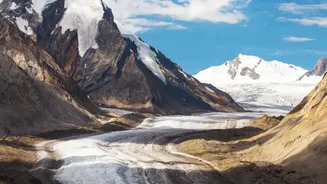
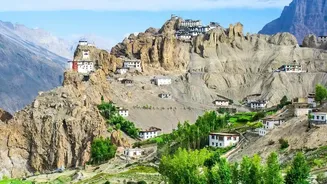
Ladakh, a cold desert in the Indian Himalayas, faces a peculiar and worsening crisis. For centuries, its communities have relied on the seasonal meltwater from glaciers to irrigate their fields of barley and wheat. However, climate change is disrupting
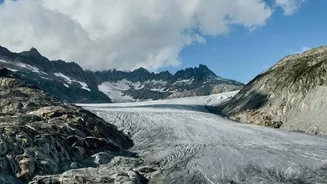
this ancient rhythm. Glaciers are receding to higher altitudes, and winter snowfall has become unpredictable. This leads to a critical mismatch: glacial streams, which once provided water during the crucial spring sowing season from April to May, now often run dry during this period. The water that does flow in winter is largely unusable as farming is impossible in the frozen landscape. This creates a 'dry spring' that threatens the livelihoods and food security of the entire region.
The Birth of a Simple, Brilliant Idea
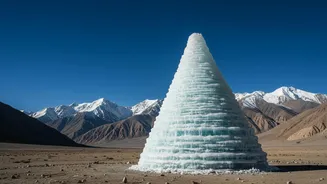
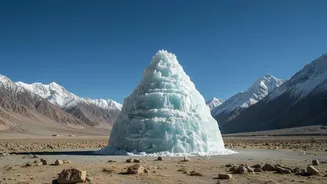
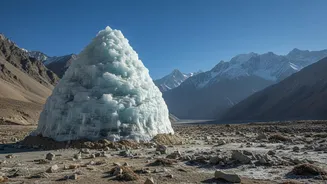
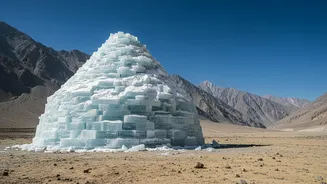
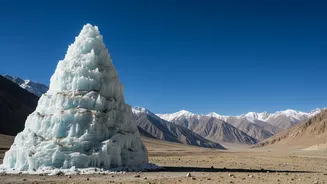
The solution emerged not from a high-tech lab, but from the mind of a local engineer and innovator, Sonam Wangchuk. Inspired by earlier, horizontal 'artificial glaciers' pioneered by engineer Chewang Norphel, Wangchuk conceived of a more efficient design in 2013. He observed that ice in the shade of a poplar grove lasted longer. Since shading an entire glacier was impossible, he thought about the geometry of ice. Wangchuk realised that a cone shape offered the minimum surface area for sun exposure while maximizing the volume of ice stored. This vertical structure, resembling the sacred Buddhist monuments dotted across Ladakh, was aptly named the 'ice stupa.'
How to Build a Glacier
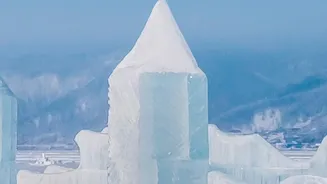
The engineering behind an ice stupa is remarkably simple and elegant, requiring no pumps or external power. The process begins by diverting water from an upstream source during the winter months through a network of pipes. Gravity provides all the necessary pressure. As the water travels to a lower altitude, the pipe directs it vertically upwards, creating a fountain-like spray. In Ladakh’s sub-zero winter air, the fine water droplets freeze almost instantly as they fall, gradually building up a massive cone of ice around a basic frame. These man-made glaciers can tower up to 40 metres high, storing millions of litres of water that would have otherwise flowed away unused.
From Concept to Lifeline
The first prototype, built in 2014, was a resounding success. The six-metre stupa stored 150,000 litres of water and lasted well into May, melting slowly to provide irrigation just when farmers needed it most. The slow melt of the conical shape proved far more effective than flat ice fields, which melt too quickly. Since that initial experiment, the concept has been embraced by local communities. Dozens of ice stupas have been built across Ladakh, often through community efforts and even competitions designed to spur innovation. The project, managed by Wangchuk's NGO, the Students' Educational and Cultural Movement of Ladakh (SECMOL), has become a symbol of community-led climate adaptation.
A Beacon of Hope for Mountain Regions
The ice stupa is more than just a clever piece of engineering; it is a powerful symbol of hope. It demonstrates how indigenous knowledge and appropriate technology can create effective, low-cost solutions to some of climate change's most pressing challenges. While not a permanent fix for melting glaciers, the stupas provide a crucial buffer, empowering communities to adapt to changing water cycles. The idea is so powerful that it has spread beyond India, with similar projects being trialled in mountain regions from Pakistan to the Chilean Andes and Switzerland. It serves as a global lesson in resilience, proving that simple ideas, deeply rooted in their environment, can make a world of difference.