


Seeing the Invisible Universe
Our eyes can only perceive a tiny fraction of the light that exists in the universe. We see what is called the 'visible spectrum'—the familiar rainbow of colors from red to violet. But light comes in many other 'colors' our eyes can't detect, from low-energy
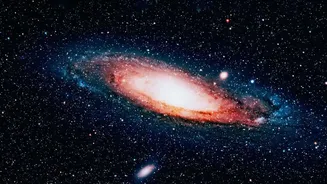
radio waves and infrared to high-energy ultraviolet, X-rays, and gamma rays. Different celestial objects and events shine most brightly in these different types of light. A galaxy might look calm and steady in visible light, but an X-ray view could reveal a supermassive black hole at its center violently consuming matter. To get the full story of a galaxy, astronomers need to observe it across this entire electromagnetic spectrum. This practice is known as multi-wavelength astronomy, and it's essential for a complete understanding of the universe.
Different Telescopes, Different Jobs
Each type of telescope is engineered to detect a specific range of light, providing a unique piece of the cosmic puzzle. Visible light telescopes, like the Hubble Space Telescope, show us where stars are and the overall shape of a galaxy, similar to what our own eyes would see with a massive boost. Infrared telescopes, like the James Webb Space Telescope (JWST), are masters of peering through cosmic dust. This allows them to see cooler, dimmer stars and the birth of new stars hidden inside thick dust clouds. X-ray observatories, such as NASA's Chandra X-ray Observatory, detect extremely hot and energetic phenomena. They can spot material superheating as it falls into a black hole or the remnants of an exploded star. Finally, radio telescopes trace vast clouds of cold gas—the raw material from which stars will eventually form—and can detect jets of material shot out from galactic centers.
A Tale of Two Telescopes: The Phantom Galaxy
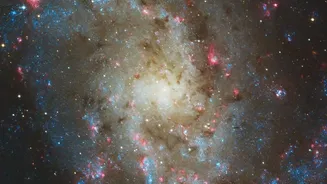
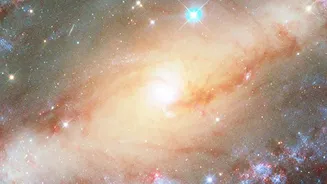
A perfect example of this synergy is the observation of the Phantom Galaxy (also known as M74) by both the Hubble and James Webb space telescopes. Hubble's view, captured in visible and ultraviolet light, highlights the galaxy's grand spiral arms and pinpoints bright pink regions of intense star formation. However, dark lanes of dust obscure what's happening within those arms. When Webb pointed its infrared eye at the same galaxy, it pierced through that dust, revealing a delicate, web-like structure of gas and stars that was previously hidden. Webb's image brought the galaxy's 'bones' into focus, showing the underlying structure that Hubble couldn't see. Neither image was complete on its own; together, they provide a much richer, more detailed understanding of how the galaxy lives and breathes.
Creating a Complete Picture
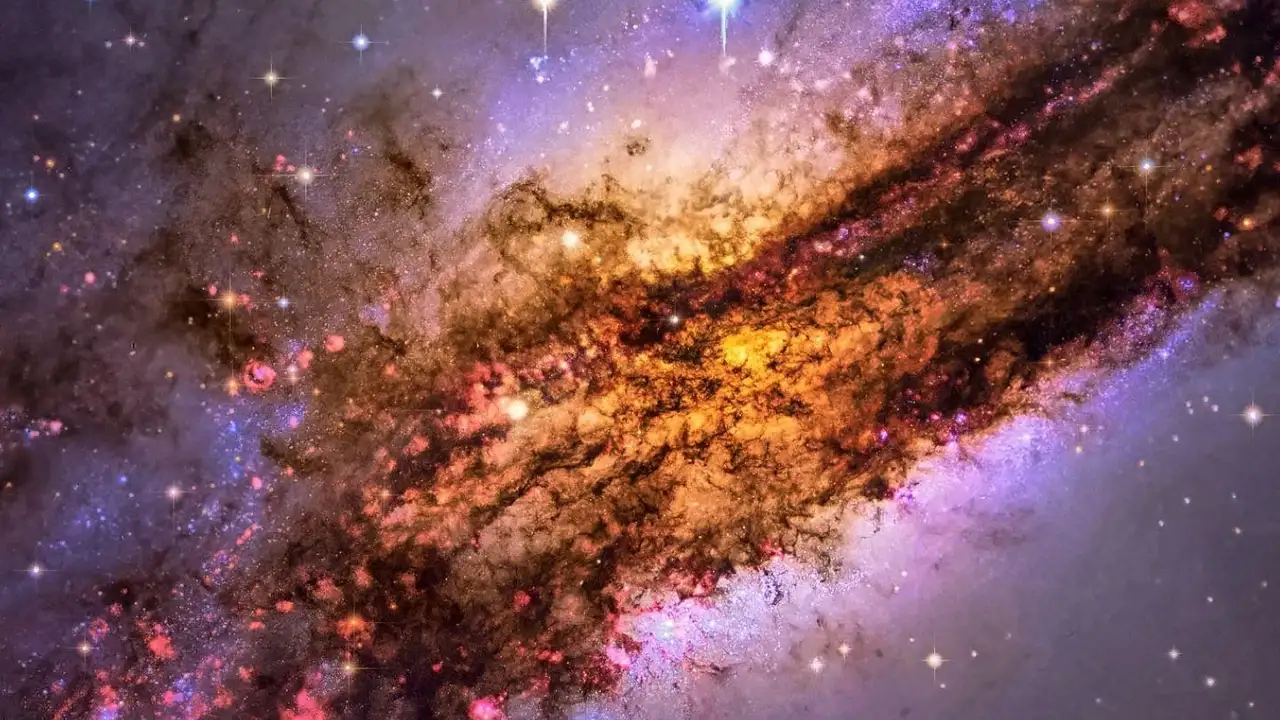
The final, breathtaking step is combining all this data. Scientists take the individual images from different telescopes—the radio, infrared, visible, and X-ray views—and assign different colors to each layer of information. The result is a single, stunning composite image. These colorful portraits of galaxies are more than just beautiful; they are dense maps of information, showing how hot gas, cold dust, young stars, and old stars all interact within a single cosmic system. What might look like an empty patch in one wavelength could be glowing brightly in another, revealing a crucial part of the galaxy's life cycle. By combining these views, astronomers can build a comprehensive model of a galaxy's structure, composition, and evolution.