







Beyond Maps: What Is Sustainability Mapping?
When you hear ‘mapping,’ you might think of Google Maps or old-school atlases. But in the world of sustainability, it’s a far more powerful concept. Sustainability mapping is the science of using geospatial data—information tied to a specific location—to
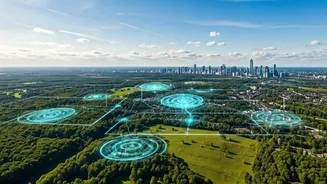
analyse, monitor, and solve environmental challenges. It’s not just about drawing borders; it’s about visualising complex problems. Think of it as creating a living, data-rich portrait of our planet. This field primarily uses two key technologies: Geographic Information Systems (GIS), which are software tools for analysing spatial data, and remote sensing, which involves gathering data from a distance using satellites or drones. Together, they allow experts to see patterns that are invisible to the naked eye, such as the rate of deforestation in a protected forest, the impact of urban heat islands, or the risk of flooding in a coastal community.
Why This Skill Is In Demand Now
The demand for sustainability mapping hasn't appeared out of thin air. It’s being driven by several powerful trends converging in India and globally. Firstly, corporate India is now under immense pressure to track and report on its Environmental, Social, and Governance (ESG) performance. Companies need specialists who can quantify their environmental impact, from water usage to carbon footprint, and mapping is a critical tool for this. Secondly, government initiatives like the Smart Cities Mission and national climate action plans rely heavily on geospatial data for effective urban planning, resource management, and disaster preparedness. Finally, as climate change intensifies, the need for accurate monitoring and predictive modelling has become urgent. We need experts who can map climate risks and help create resilient infrastructure. In short, passion for the environment is no longer enough; the industry now demands the technical ability to back it up with hard data.
The Core Skills That Get You Hired
A degree in environmental science is a great start, but to truly gain an edge, you need to layer it with specific technical competencies. Employers are looking for a unique blend of scientific knowledge and data proficiency. The most sought-after skill is fluency in GIS software like ArcGIS and the open-source alternative, QGIS. This is the bedrock of any sustainability mapping role. Beyond software, you need strong analytical skills to interpret the data you're processing. This includes an understanding of statistics and data visualisation. Knowledge of remote sensing—how to process satellite imagery to detect changes in land use, vegetation health, or water quality—is another high-value skill. Finally, domain knowledge remains crucial. Understanding the principles of ecology, hydrology, or urban planning allows you to ask the right questions and derive meaningful insights from the data. It's this combination of technical prowess and environmental expertise that makes a candidate truly stand out.
Where to Gain Your Competitive Edge
Fortunately, educational institutions in India have recognised this growing demand and are offering a range of programs to build these skills. For those seeking in-depth expertise, a Master's degree in Geoinformatics, Remote Sensing & GIS, or Environmental Science with a geospatial specialisation is the gold standard. Reputed institutions like the Indian Institutes of Technology (IITs), the Indian Institute of Remote Sensing (IIRS), and the TERI School of Advanced Studies offer robust postgraduate programs. For professionals looking to upskill or students wanting a focused qualification, one-year postgraduate diplomas or short-term certificate courses are excellent options. These often focus on practical, software-based training and can be a faster route into the industry. Don’t discount online platforms either; many global universities and tech companies offer certifications in GIS and data analysis that are well-regarded by employers.
The Careers That Await
With these qualifications, graduates are no longer limited to traditional environmental roles. They become data scientists for the planet, opening doors to a variety of dynamic and well-paying careers. Common job titles include GIS Analyst, Environmental Consultant, and Conservation Scientist, where you might work for NGOs or private firms on projects like wildlife corridor mapping or environmental impact assessments. In the corporate world, you could become an ESG Analyst or a Sustainability Manager, helping companies meet their green targets. Government bodies and urban planning authorities hire Geospatial Analysts and Planners to work on smart city infrastructure and climate resilience projects. The opportunities are diverse, spanning sectors from agriculture and renewable energy to disaster management and public health. This specialisation transforms you from a generalist into a sought-after expert.