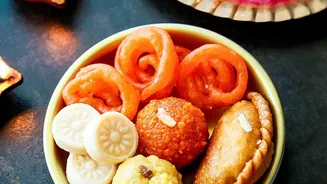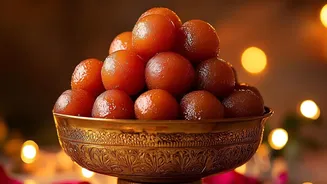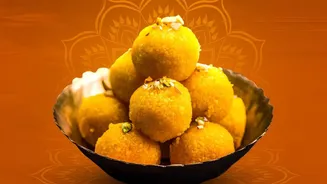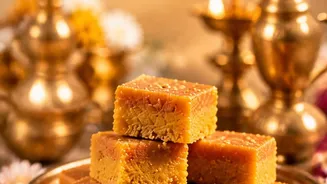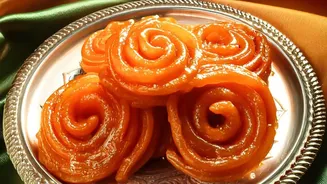

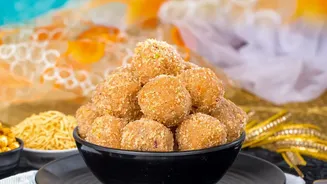
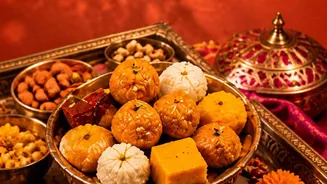
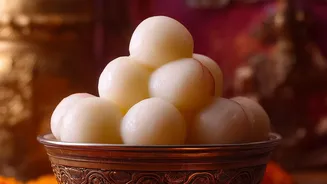
As diyas light up homes and fireworks paint the night sky, another essential element of Diwali fills the air: the aroma of mithai. These sweets are more than just treats; they are symbols of joy, prosperity, and togetherness.
The Sweetness of Tradition
In India, no celebration is
complete without sweets, and Diwali is the grandest of them all. Offering and exchanging mithai is a cornerstone of the festival, a tradition that signifies sharing happiness and goodwill. This act is deeply woven into the cultural fabric, representing the victory of good over evil and the welcoming of prosperity. For many, the taste of a particular sweet is inseparable from the memories of family gatherings and festive rituals, making it a powerful emotional anchor to childhood and home. While modern chocolates and confections have their place, traditional mithai connects people to their heritage, with recipes passed down through generations.
A Journey Through Regional Flavours
India's culinary diversity shines brightly during Diwali, with each region boasting its own signature sweets. These delicacies tell a story of local ingredients and age-old techniques. In Rajasthan, the disc-shaped Ghewar, a porous cake made from flour and ghee soaked in sugar syrup, is a festive favourite, though its exact origins are debated by food historians. From Bihar comes Thekua, a hard, biscuit-like sweet made from whole wheat flour and jaggery, often prepared as a sacred offering during Chhath Puja, which follows Diwali. Down south in Tamil Nadu, Adhirasam, a fried pastry of rice flour and jaggery, is a traditional staple for the festival. And from Karnataka, the famous Mysore Pak, a rich confection of gram flour, ghee, and sugar, has a history that traces back to the royal kitchens of the Mysore Palace.
The Heartbeat of Local Economies
The enduring popularity of these regional sweets is also a testament to the resilience of local 'halwais' (sweet makers). These artisans, whose skills are often passed down through families, go into overdrive during the festive season. Choosing to buy from local sweet shops over mass-produced corporate brands helps sustain these small businesses and preserves an intricate art form. In a world of globalisation, these handcrafted sweets offer a taste of authenticity that cannot be replicated. They are made with time-tested ingredients like pure ghee, nuts, and high-quality milk, which many families see as more nourishing than processed alternatives.
Tradition Meets the Modern Age
While tradition is key, the world of Indian mithai is not static. Younger generations and a growing Indian diaspora are finding new ways to connect with these flavours. The internet and e-commerce platforms have made it easier than ever to order regional specialities from anywhere in the world, ensuring that distance is no barrier to enjoying a taste of home. Furthermore, many sweet makers are innovating by creating healthier versions with natural sweeteners like jaggery or offering fusion flavours that appeal to a modern palate without losing the essence of the original. This blend of authenticity and adaptation ensures that these beloved sweets continue to find a place on the Diwali platter for generations to come.