

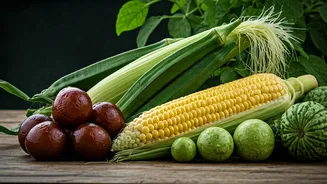


Jamun (Java Plum)
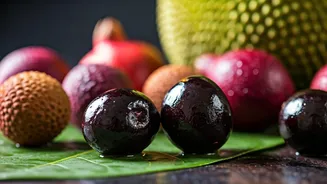
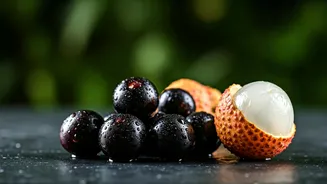
Imagine a fruit that looks like a large, dark olive but tastes like a tart, astringent grape with a sweet finish. That's jamun. This deep purple berry is the quintessential monsoon fruit in India, so iconic that its arrival is synonymous with the rainy
season itself. The flavor is complex and unforgettable, starting with a pucker-inducing sourness that mellows into a floral sweetness, leaving your tongue tinged with purple. It’s often eaten raw, sprinkled with a little black salt to balance its tartness, transforming it into an addictive snack. The single seed inside is easily discarded, making it perfect for eating by the handful while walking through a rainy street. **Find it in the U.S.:** Fresh jamun is incredibly rare stateside, but you can find its essence. Look for jamun juice, pulp, or vinegar in well-stocked Indian grocery stores. The juice, often marketed for its health benefits, gives you a great sense of its unique flavor profile.
Mangosteen
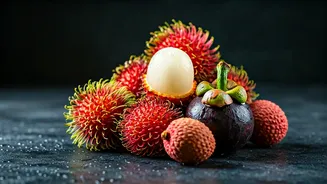
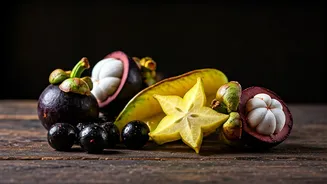
Don't let the name fool you; it has nothing to do with a mango. The mangosteen is known as the "Queen of Fruits," and for good reason. On the outside, it's a small, round fruit with a hard, woody, deep purple rind. The magic is inside. Break it open to reveal pristine, snow-white segments of flesh that look like a head of garlic. The texture is soft and delicate, melting in your mouth. The flavor is a sublime trifecta of sweet, tangy, and floral, often described as a mix of lychee, peach, strawberry, and pineapple. It’s a sophisticated, perfectly balanced taste that feels like a true luxury. **Find it in the U.S.:** Previously banned from import, fresh mangosteens are now available (though pricey) in many Asian supermarkets and specialty produce stores during their summer season. You can also find them canned in syrup, which preserves their sweetness, if not their perfect texture.
Rambutan
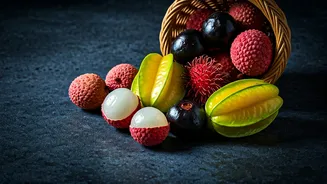
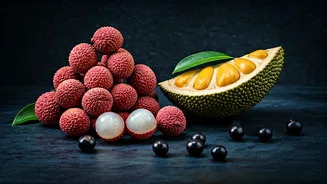
If a fruit ever looked like it came from another planet, it's the rambutan. This cousin of the lychee is covered in a hairy, spiky-looking red or yellow peel (the name comes from the Malay word for hair, *rambut*). But don't be intimidated by its wild appearance. The flexible spines are soft, and the peel is easy to tear open with your fingers or a knife. Inside, you'll find a translucent, whitish orb that’s juicy, sweet, and mildly acidic, like a more floral and fragrant grape. It's incredibly refreshing and fun to eat. **Find it in the U.S.:** Fresh rambutans are increasingly common. You can find them in most Asian grocery chains and even some mainstream supermarkets like Whole Foods or Wegmans when they are in season (typically summer and early fall). They are usually sold in plastic-wrapped trays.
Longan
Often called the "Dragon's Eye" because of its translucent flesh surrounding a dark, central seed, the longan is subtler than its flashy cousins, lychee and rambutan. Its thin, brittle, light-brown skin cracks off easily, revealing a juicy, sweet, and slightly musky pulp. The flavor is less perfumed than a lychee, offering a clean, refreshing sweetness with earthy undertones. They are highly snackable and often sold on the stalk in huge bunches. During the rainy season, they offer a perfect little burst of sweetness. **Find it in the U.S.:** Fresh longans are readily available in Asian markets, often in the same section as lychees and rambutans. They are also widely available canned in syrup, which makes a great addition to fruit salads, desserts, or cocktails.
Jackfruit
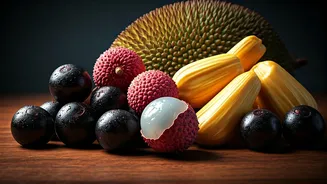
The world’s largest tree-borne fruit, a single jackfruit can weigh up to 80 pounds. When unripe, its stringy, starchy flesh is a popular vegan meat substitute with a neutral flavor. But during the monsoon, ripe jackfruit is the real star. The reward for breaking through its bumpy green exterior is a collection of bright yellow, fleshy pods. Each pod surrounds a large seed and delivers an intensely sweet, almost bubblegum-like flavor—a potent mix of banana, pineapple, and mango. The aroma is powerful and can fill a room, signaling that a sweet, sticky treat is ready. **Find it in the U.S.:** Finding a whole, ripe jackfruit is a commitment, but many Asian and specialty stores sell it pre-cut in trays. Even more accessible are canned jackfruit in syrup (for the sweet, ripe experience) or brine (for the unripe, savory version).