



Peeking Through the Dust
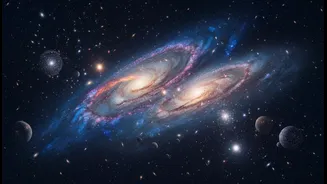
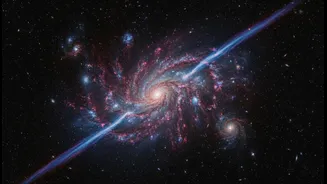
One of the most stunning new portraits is of Centaurus A, a galaxy relatively close to us at 11 million light-years away. For years, astronomers knew it was special and active, but thick lanes of cosmic dust blocked our view of its heart. Now, the James
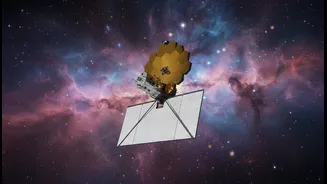
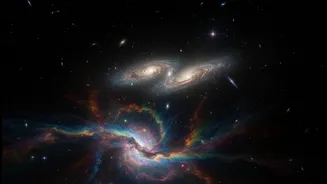
Webb Space Telescope (JWST), a joint project of NASA, ESA, and the Canadian Space Agency, has used its infrared vision to pierce through that dusty veil. The result is an astonishingly clear image showing millions of individual stars packed into the galaxy's core. This new view allows scientists to see the aftermath of a massive collision Centaurus A had with another galaxy billions of years ago. By separating stars of different ages, astronomers can now reconstruct the galaxy's dramatic history, seeing which stars existed before the crash and which were born from the chaos.
A Laboratory for Cosmic Forces
Centaurus A is more than just a pretty picture; it's a nearby laboratory for studying how galaxies and the supermassive black holes at their centers grow together. At the heart of Centaurus A lies a black hole actively feeding on gas and dust. As it feeds, it spews out powerful jets of energy that shape the entire galaxy. Webb's new observations help scientists explore one of astronomy's biggest questions: how does a black hole influence its host galaxy? The answer appears to be complex. The black hole can trigger the birth of new stars by compressing gas, but it can also halt star formation by blasting material away. These images show this cosmic push-and-pull in unprecedented detail, revealing a warped, parallelogram-like structure of glowing dust and a mysterious S-shaped feature that scientists are still working to understand.
Mapping Our Galactic Home
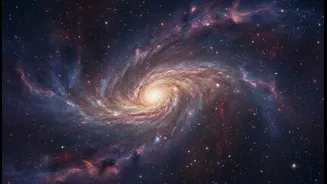
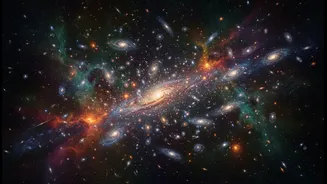
While Webb looks deep into other galaxies, ESA's Euclid telescope, with NASA contributions, has been focused on our own. It recently captured the largest and most detailed visible-light image ever taken of the Milky Way's heart. The dazzling shot is packed with over 60 million stars, revealing the crowded central region, known as the galactic bulge, with incredible clarity. Previously, this area was so dense that individual stars were hard to separate. This image acts as a treasure map for another purpose: finding planets outside our solar system. It will help astronomers study exoplanets using a technique called microlensing, where a nearby star acts like a 'cosmic magnifying glass' for a star behind it, revealing the presence of orbiting planets. This new data is expected to dramatically increase the number of known worlds and help us understand our place in the galaxy.
A Glimpse of Our Solar System's Future
The telescopes are also providing glimpses into the distant future. In another groundbreaking observation, JWST studied a Jupiter-sized planet named WD 1856 b, which orbits a white dwarf—the tiny, hot core left behind after a star like our Sun dies. The planet orbits its dead star every 34 hours, a journey that should have been impossible. When its star swelled into a red giant, it should have been completely engulfed and destroyed. Yet, it survived. Webb’s data revealed the planet is much warmer than expected and helped scientists determine how it likely migrated into its tight orbit after its star’s death. This discovery gives us our first real look at what might happen to planets like Jupiter billions of years from now, after our own Sun has run out of fuel.