


More Than Just a Flood
When we think of floods, we typically picture overflowing riverbanks. But the events unfolding in Nepal are a different, more violent phenomenon. A debris flow is not just water; it's a fast-moving slurry of sediment, boulders, and ice, often with the consistency
of wet concrete. This mixture makes it incredibly destructive, capable of obliterating buildings, bridges, and hydropower plants. Unlike rainfall-induced floods, these events can strike with little to no warning, triggered by a cataclysm high in the mountains. The sheer force comes from a combination of water and the immense weight of the solids it carries, creating a powerful, erosive force that carves through the landscape.
The Initial Trigger: A Glacier's Collapse
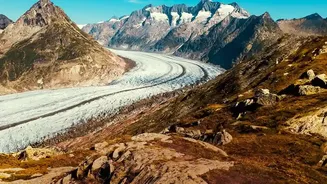
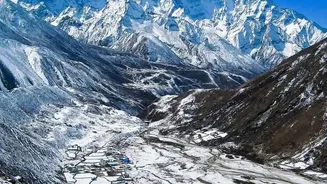
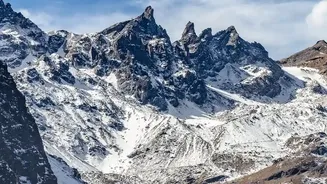
The entire destructive sequence is often initiated by an event known as an ice avalanche or glacial collapse. High in the Himalayas, glaciers perched on steep slopes can become unstable. A massive chunk of ice—sometimes hundreds of metres wide—can break off and plummet thousands of feet into the valley below. The seismic energy from such a collapse can be so immense that it is sometimes mistaken for an earthquake. According to geologists who have studied recent events, the impact at the valley floor is like a bomb exploding, pulverising the ice and rock. This initial collapse is the first domino to fall in a rapid and devastating cascade.
A Devastating Chain Reaction
Once the mass of ice and rock crashes into the valley, one of two things often happens. If it lands in a glacial lake—a body of water formed by melting glaciers and dammed by unstable piles of rock and sediment called moraines—it can create a massive displacement wave. This wave can overtop the fragile moraine dam, causing it to breach and release a huge volume of water instantaneously. Alternatively, the sheer kinetic energy of the falling ice can hit loose sediment and soil on the valley floor, liquefying the material and mobilising it into a flow. The falling ice itself can be pulverised into water and debris by the force of the impact. This sudden release of water and liquefied earth begins to rush downstream with incredible speed and power.
Gathering Speed and Power
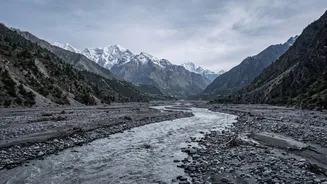
The initial outburst of water is only the beginning. As this torrent rushes down the steep mountain valleys, its erosive power is immense. It picks up everything in its path: soil, sand, gravel, and even massive boulders. This process, known as 'bulking', dramatically increases the volume and density of the flow, transforming it from a flash flood into a thick, destructive debris flow. This slurry can have a volume many times greater than the initial water released. It moves not like water, but as a rolling, churning mass that destroys everything it encounters, which explains the catastrophic damage to infrastructure often seen far downstream from the initial glacier collapse.
The Climate Change Connection
These events are not entirely new, but their frequency and intensity are increasing, and scientists point to climate change as a key factor. The Himalayas are warming at a rate faster than the global average, causing glaciers to melt and retreat rapidly. This retreat makes the glaciers themselves more unstable and prone to collapse. Furthermore, the meltwater leads to the rapid growth of glacial lakes, filling them to dangerous levels and increasing the risk of Glacial Lake Outburst Floods (GLOFs). While not every collapse is directly attributable to climate change, the warming environment creates conditions that make these catastrophic events more likely.
A Cross-Border Threat
The danger from these events does not stop at Nepal's borders. The country's major rivers are fed by these Himalayan glaciers and flow downstream into India, forming the headwaters of the Ganges river basin, a lifeline for hundreds of millions of people. A major debris flow or GLOF in Nepal can have devastating consequences for downstream communities in Indian states like Bihar and Uttar Pradesh. This shared vulnerability underscores the urgent need for cross-border cooperation on early warning systems, disaster risk reduction, and climate change adaptation strategies to protect the millions of people living in the shadow of the world's highest mountains.