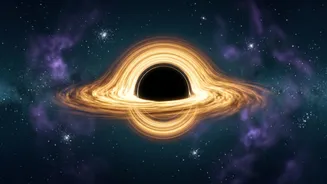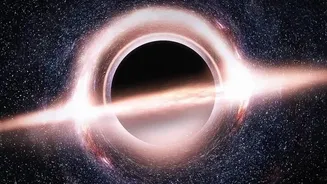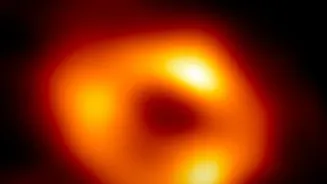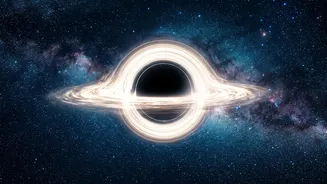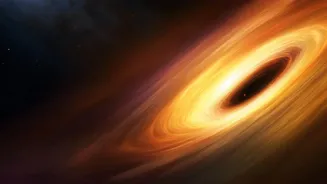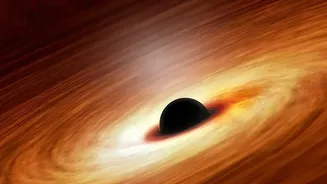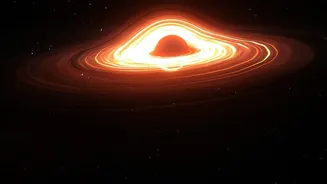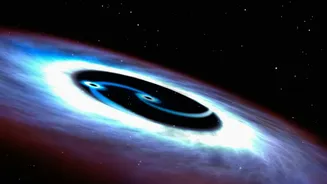





The Milky Way is thought to contain over 10 million black holes, yet we have found fewer than 100. Now, a citizen science project is inviting you to help find the missing multitude, all from the comfort of your home.
The Hunt for the Invisible
Black holes are the ghosts of the cosmos.
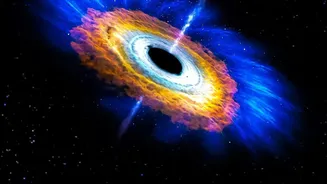
Formed from the collapsed cores of massive stars, their gravitational pull is so immense that nothing, not even light, can escape. This makes them effectively invisible. So, how do you find something you cannot see? Astronomers typically spot 'active' black holes as they feast on nearby gas and stars, which causes the material to heat up and release powerful X-rays. However, most black holes in our galaxy are 'dormant', meaning they are not actively feeding and therefore not giving off these tell-tale emissions. This is where the Black Hole Hunters project comes in, looking for these quiet giants by observing their subtle effects on the space around them.
Using Gravity as a Magnifying Glass
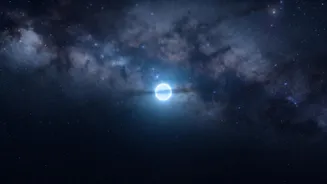
The project relies on a fascinating phenomenon predicted by Einstein called gravitational lensing. A black hole's intense gravity warps the fabric of spacetime, and it can bend and focus light from an object behind it, much like a magnifying glass. Many massive stars exist in pairs, known as binary systems. If one star collapses into a black hole, it remains in orbit with its companion star. When this invisible black hole passes between its companion star and Earth, its gravity magnifies the star's light, causing it to appear briefly and distinctly brighter. This sudden, symmetrical peak in brightness is the signature that volunteers are searching for.
Your Mission: Spot the Pattern
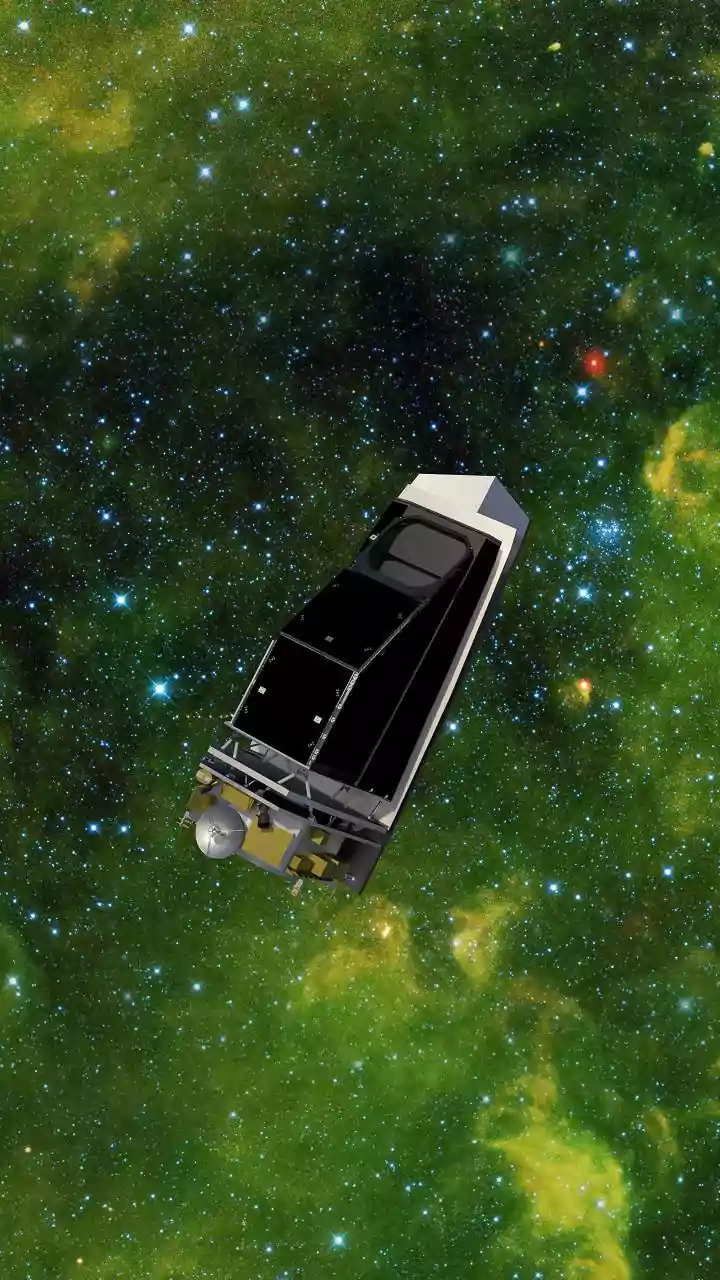
You don’t need a degree in astrophysics to become a black hole hunter; all you need is a computer and a bit of curiosity. The project, hosted on the Zooniverse citizen science platform, asks volunteers to look at graphs called 'light curves'. These graphs plot the brightness of a star over time, using data collected by NASA's Transiting Exoplanet Survey Satellite (TESS). Volunteers are shown examples of the specific symmetrical peak pattern created by a gravitational lensing event and are asked to identify it in the data they review. It’s a task of pattern recognition, something the human eye is often better at than automated algorithms, which can get confused by other stellar variations.
Why Your Clicks Matter
Every classification you make contributes directly to real scientific research. Astronomers believe there should be a huge population of these dormant black holes, but finding the first one in this way is a major challenge. Identifying these objects will provide crucial clues about how massive stars live and die, and how binary systems evolve. By helping to create a shortlist of promising candidates from millions of stars, citizen scientists allow professional astronomers to focus their powerful telescopes for followup observations. This collaboration between the public and scientists dramatically speeds up the pace of discovery. It's a massive task, and researchers at institutions like The Open University and the University of Southampton, who lead the project, say they cannot do it alone.
How to Join the Hunt
Getting started is simple. You can join the effort by visiting the Black Hole Hunters project on the Zooniverse website. The platform provides a quick tutorial to show you exactly what to look for in the light curve graphs. There is no expertise required, and you can contribute as little or as much time as you like. By participating, you join a global community of tens of thousands of volunteers helping to map the hidden parts of our galaxy. You could be the person who spots the evidence for a previously unknown black hole, helping to solve one of the big mysteries of the Milky Way.