






More Than Just Gray: A Technicolor Moon
One of the most immediate and surprising findings came from simple, direct observation. While we see a world of gray from Earth, the Artemis II astronauts documented a much more colorful Moon. During their flyby, the crew reported seeing subtle but distinct
hues of yellow, green, brown, tan, and even blue. Mission Specialist Christina Koch was particularly struck by the Aristarchus Plateau, a volcanic region that appeared to have 'jaundiced yellow' and 'swampy green' colors. These observations, made by astronauts who underwent years of geological training, are more than just travel notes. The varied colors can help scientists map out different types of rocks and minerals across the lunar surface, offering crucial clues to the Moon's volcanic history and geological evolution. It highlights the irreplaceable value of the human eye, which can perceive and interpret subtleties that robotic probes might miss.
Witnessing Cosmic Fireworks
During their transit behind the Moon, the crew experienced a total solar eclipse, creating perfect, dark conditions for another key scientific objective: watching for meteorite impacts. Scientists on Earth were overjoyed when the crew reported seeing five distinct 'pinprick' flashes of light on the lunar surface. These flashes are caused by small rocks, some estimated to be only a few inches wide, hitting the Moon at thousands of miles per hour. While Apollo astronauts had reported similar phenomena, the Artemis II crew may have spotted the faintest flashes ever seen by the human eye. These direct observations from the far side of the Moon provide a rare dataset that is vital for assessing the frequency of small impacts. This is critical knowledge for planning the safety of future lunar habitats and infrastructure.
The Human Element in Deep Space
Beyond observing the Moon, the astronauts themselves were subjects of intense scientific study. A key priority for Artemis II was to understand how the human body reacts to the deep space environment beyond Earth’s protective magnetic field. The crew participated in multiple studies, providing blood and saliva samples to track changes to their immune systems. Wearable sensors monitored their sleep patterns and stress levels, while other experiments tracked how their bodies adapted to radiation exposure. Unlike missions to the International Space Station, the Artemis II crew was exposed to higher levels of cosmic radiation. The data gathered is essential for developing the protocols and countermeasures needed to keep astronauts healthy on the much longer and more demanding missions to the lunar surface and, eventually, to Mars.
Paving the Way for a Lunar Return
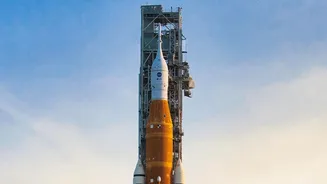
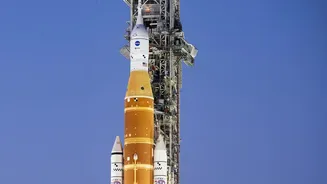
At its heart, Artemis II was a critical flight test for the hardware and procedures that will define the next era of space exploration. The primary mission was to prove that the Orion spacecraft and its life support, navigation, and communication systems could keep a crew safe on a journey around the Moon and back. The astronauts manually piloted the spacecraft and tested its performance, validating that everything was ready for more complex missions ahead. Every piece of data collected, from the performance of the heat shield during reentry to the successful operation of the life support systems, directly informs the next step: Artemis III. The success of this flyby mission provides the confidence and the crucial engineering insights needed to finally land humans back on the lunar surface, this time with a goal of establishing a sustainable presence.