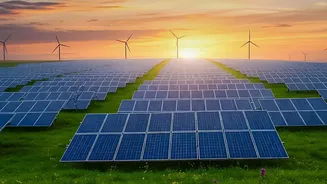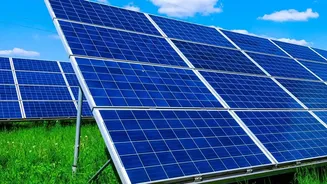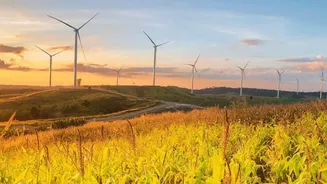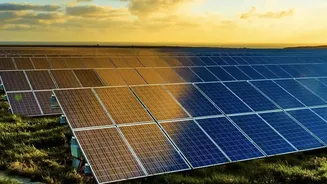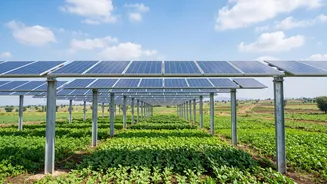




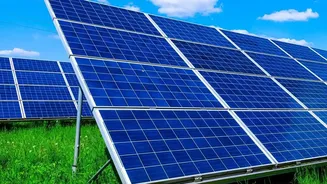
India faces the twin challenge of ensuring food security for its vast population and meeting its ambitious renewable energy targets. Agrivoltaics, the dual use of land for both farming and solar power generation, offers a powerful solution.
A Convergence of Sun, Soil, and an Income Stream
At its core,
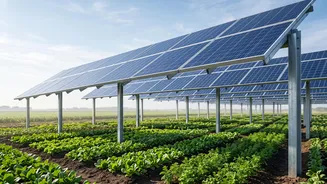
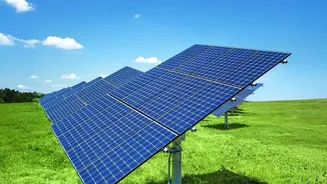
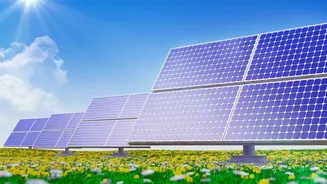
agrivoltaics involves installing solar panels on elevated structures high enough to allow farming activities—like growing crops or grazing livestock—to continue underneath. This innovative approach turns a single plot of land into a dual-revenue generator. Farmers not only earn from their agricultural produce but also from the clean energy generated. The solar panels can offer the added benefit of protecting crops from excessive sun, hail, and reducing water evaporation from the soil, thereby boosting resilience against climate change. For a farmer, this model transforms them from being just a food producer ('Annadata') into an energy producer ('Urjadata') as well, diversifying their income and creating new economic stability in rural areas.
The Government's Green Signal
The push for agrivoltaics is heavily supported by government policy, most notably the Pradhan Mantri Kisan Urja Suraksha evam Utthaan Mahabhiyan (PM-KUSUM) scheme. Launched by the Ministry of New and Renewable Energy, this programme is designed to de-risk the sector and make it attractive for farmers and financiers alike. PM-KUSUM provides substantial subsidies, with farmers often needing to cover only a small fraction of the upfront cost, while the rest is covered by central and state government subsidies and bank loans. The scheme enables farmers to install standalone solar pumps, solarise existing grid-connected pumps, or even lease their land for larger solar projects, selling surplus power to local distribution companies (DISCOMs). This policy framework creates a predictable revenue stream through Power Purchase Agreements (PPAs), a critical factor that gives banks the confidence to lend.
How Financial Institutions Are Responding
With a supportive policy environment, Indian banks and financial institutions are increasingly stepping up to fund these green infrastructure projects. The financing ecosystem includes public sector banks, private banks, and specialized non-bank financial institutions (NBFIs) like the Indian Renewable Energy Development Agency (IREDA) and NABARD. These institutions offer various forms of credit, including term loans for project development. For instance, Germany's development bank KfW has partnered with the State Bank of India (SBI) to provide dedicated credit lines for solar projects. However, financing agrivoltaics is more complex than a standard solar farm loan. Lenders must assess the viability of two distinct operations: energy generation and agriculture. They scrutinize the project's cash flow predictability, the farmer's agricultural track record, and the technology's reliability before approving loans.
Navigating the Financial Hurdles
Despite the momentum, several challenges remain. The high initial capital cost of agrivoltaic systems is a significant barrier for many small and marginal farmers. From a banker's perspective, the lack of standardized and proven agrivoltaic models presents a risk. Each project is unique, depending on the crop, soil type, and solar panel configuration, making risk assessment difficult. Banks are often cautious due to the dual-nature of the revenue stream, which depends on both fluctuating agricultural yields and energy market dynamics. Ensuring that the project remains a viable farming operation and not just a disguised solar park is a key point of due diligence for lenders. Furthermore, creating financing products that are tailored to the specific needs of farmers, who may have irregular income patterns, is an ongoing process.