




The Moon's Brutal Welcome Mat
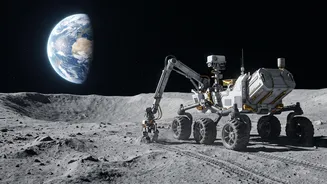
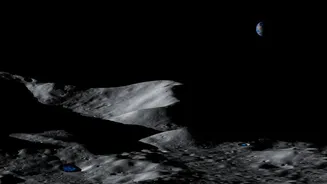
Building a habitat on the Moon isn't like any construction project on Earth. The lunar surface is an environment of extreme challenges that can destroy equipment and endanger human life. Without a protective atmosphere, anything on the surface is exposed
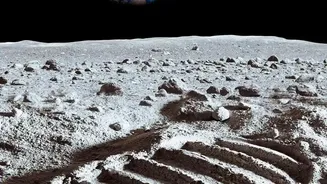
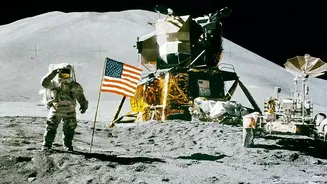
to intense solar and cosmic radiation. Temperatures swing wildly, from a scorching 127°C in sunlight to a frigid -173°C in the dark. The surface is also constantly bombarded by micrometeoroids, tiny particles traveling at incredible speeds. Perhaps the most difficult challenge is the lunar dust, or regolith. This fine, abrasive powder is a remnant of billions of years of micrometeoroid impacts. During the Apollo missions, this electrostatically charged dust clogged mechanisms, obscured visors, caused equipment to overheat, and posed a health hazard to astronauts. Any permanent habitat must be able to withstand all these threats for years, making rigorous testing on Earth an absolute necessity.
Recreating the Lunar Surface on Earth
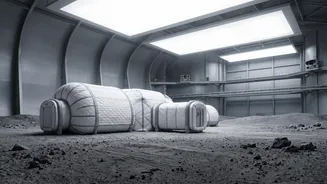
To test technologies for the Moon, scientists create 'analogs' — places on Earth that replicate aspects of the lunar environment. For example, the European Space Agency (ESA) has developed a facility called LUNA at its European Astronaut Centre in Germany. This site features a large hall filled with hundreds of tonnes of simulated lunar soil, made from volcanic powder sourced from Germany's Eifel region. This allows teams to practice drilling, navigating, and testing equipment in a realistic dust-filled environment under simulated lighting conditions. Similarly, NASA has a Lunar Regolith Testbed at its Ames Research Center, which provides a high-fidelity environment for testing hardware designs intended for the Moon's surface. These large-scale sandboxes are critical for understanding how rovers, tools, and construction equipment will perform when they finally reach their destination. By working out the kinks on Earth, space agencies can save precious time and resources during actual missions.
High-Tech Labs and 3D-Printed Shelters
Beyond surface analogs, testing extends to recreating other extreme lunar conditions. Special vacuum chambers are used to simulate the airless environment of the Moon, allowing engineers to see how materials and components hold up. A major area of research is in-situ resource utilization (ISRU), which focuses on using local materials to build structures. Both NASA and the ESA are heavily invested in developing 3D printing technologies that can use lunar regolith as a building material. At labs on Earth, researchers use regolith simulants to 3D print bricks and structural components, testing their strength and durability. Companies like ICON are working with NASA to advance this technology, aiming to one day send robotic printers to the Moon to construct landing pads and habitats before astronauts even arrive. This approach would drastically reduce the amount of material that needs to be launched from Earth, making a sustainable lunar presence more feasible.
Simulating Life in a Lunar World
While materials and structures are one part of the puzzle, the human element is just as critical. Analog missions place crews in isolated, confined habitats for weeks or months to simulate long-duration space missions. These simulations test not only the habitat's life support systems and functionality but also the psychological and social dynamics of the crew. For instance, the Self-Deployable Habitat for Extreme Environments (SHEE) has been used for mission simulations to understand the challenges of living in a confined space. While many of these analogs, like NASA's CHAPEA, are focused on Mars, the lessons learned about crew health, autonomy, and habitat design are directly applicable to future lunar missions. These studies help refine everything from the layout of living quarters to the procedures for daily tasks, ensuring that the final habitats are not just structurally sound but also livable for the people inside them.