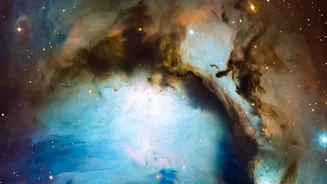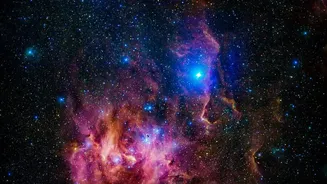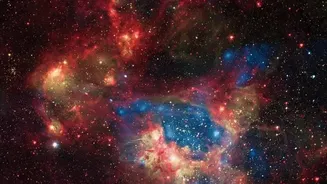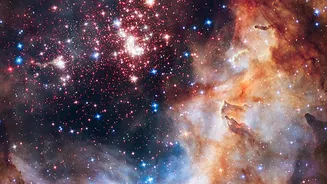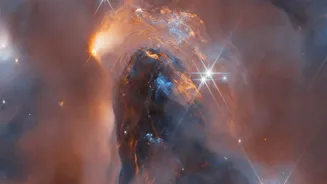

What Are Cosmic Nurseries?
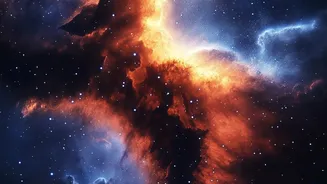
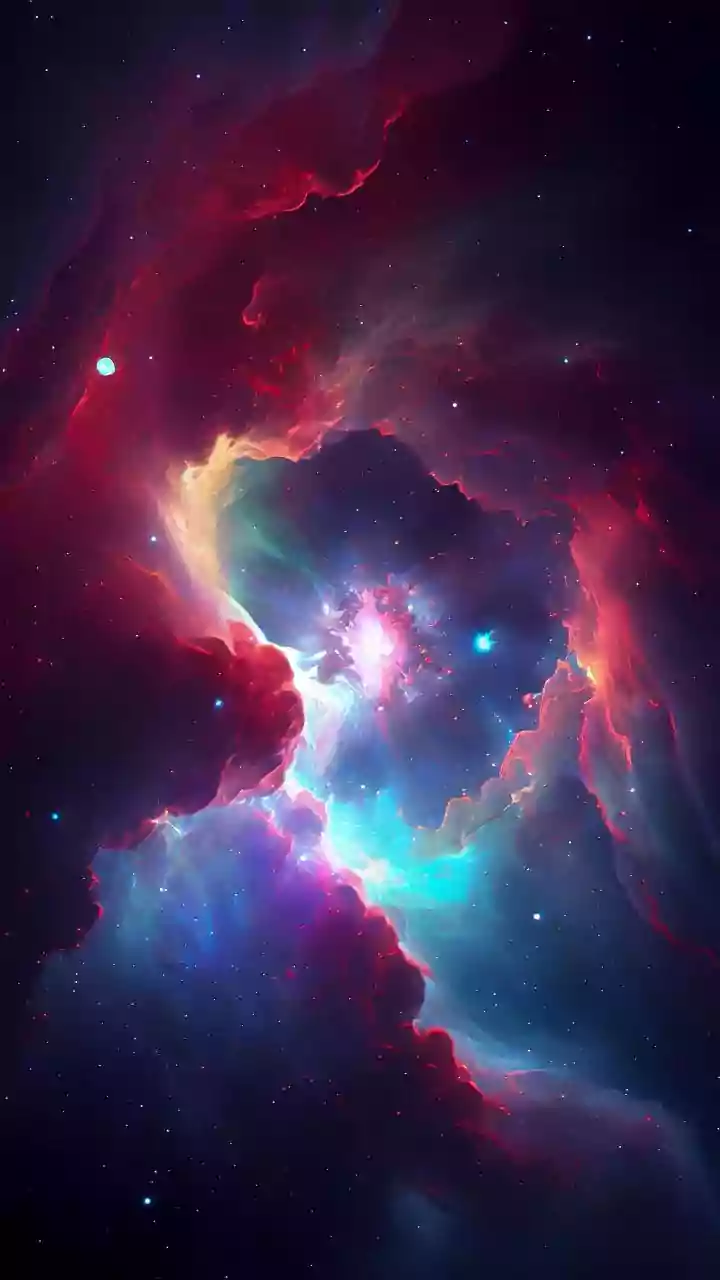
Often called nebulae, cosmic nurseries are immense, cold clouds of gas and dust drifting through space. They are the raw ingredients for star formation. Within these clouds, gravity slowly pulls material together into denser and denser clumps. Over millions
of years, these clumps collapse into cores that heat up and eventually ignite, giving birth to new stars. These nurseries don't just create stars; they are also the birthplace of planetary systems. The process is chaotic and beautiful, with the radiation and powerful winds from newborn stars carving out spectacular cavities and shapes in the surrounding gas. For astronomers, studying these regions is like looking back in time to understand how our own Sun and solar system may have formed.
A Glimpse Inside the Lobster Nebula
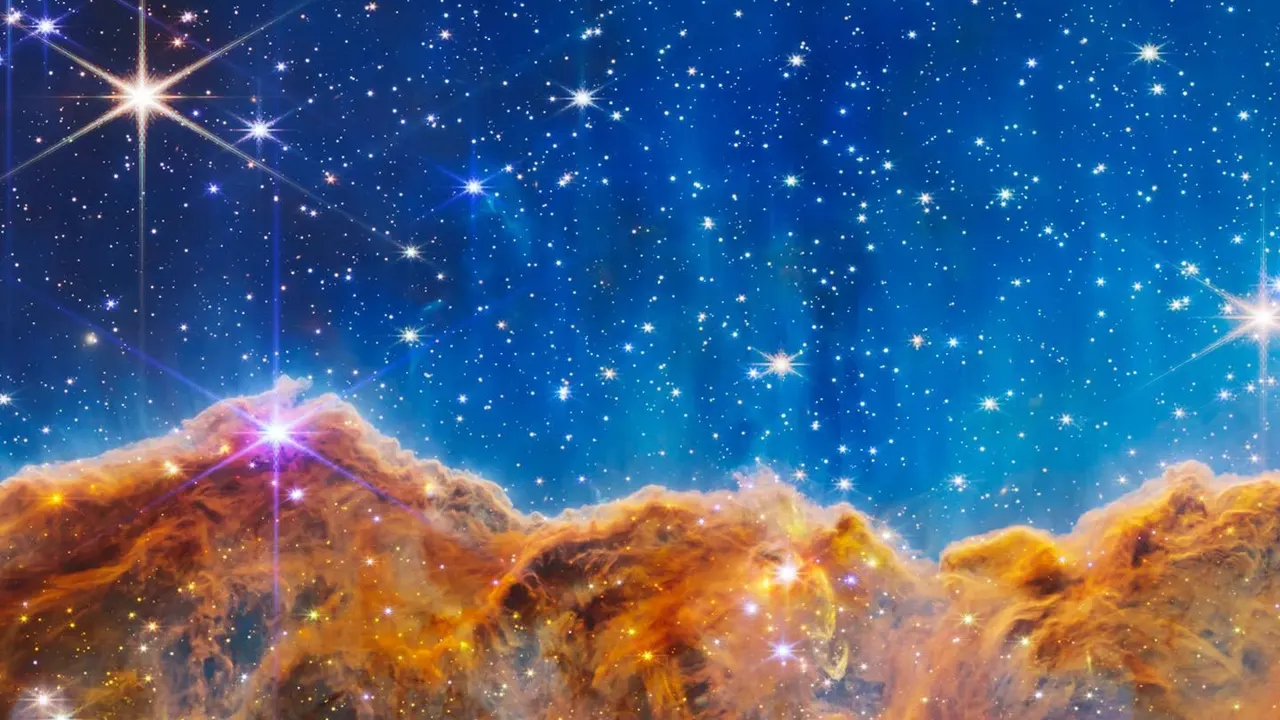
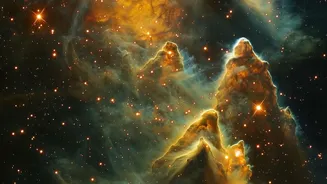
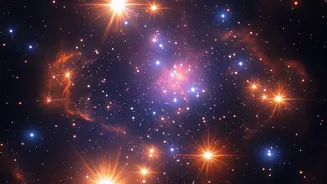
The latest subject of Webb's powerful gaze is Pismis 24, a brilliant young star cluster located about 5,500 light-years away in the heart of the Lobster Nebula. The images reveal a scene that looks like a cosmic mountain range, with jagged peaks of gas and dust sculpted by the intense radiation from massive infant stars. These young, super-hot stars, some with temperatures eight times that of our Sun, are relentlessly eating away at the nebula wall. The result is a sparkling landscape filled with thousands of jewel-like stars of different sizes and colors, offering a rare insight into the birth of the most massive and luminous stars in our galaxy.
The Power of Infrared Vision
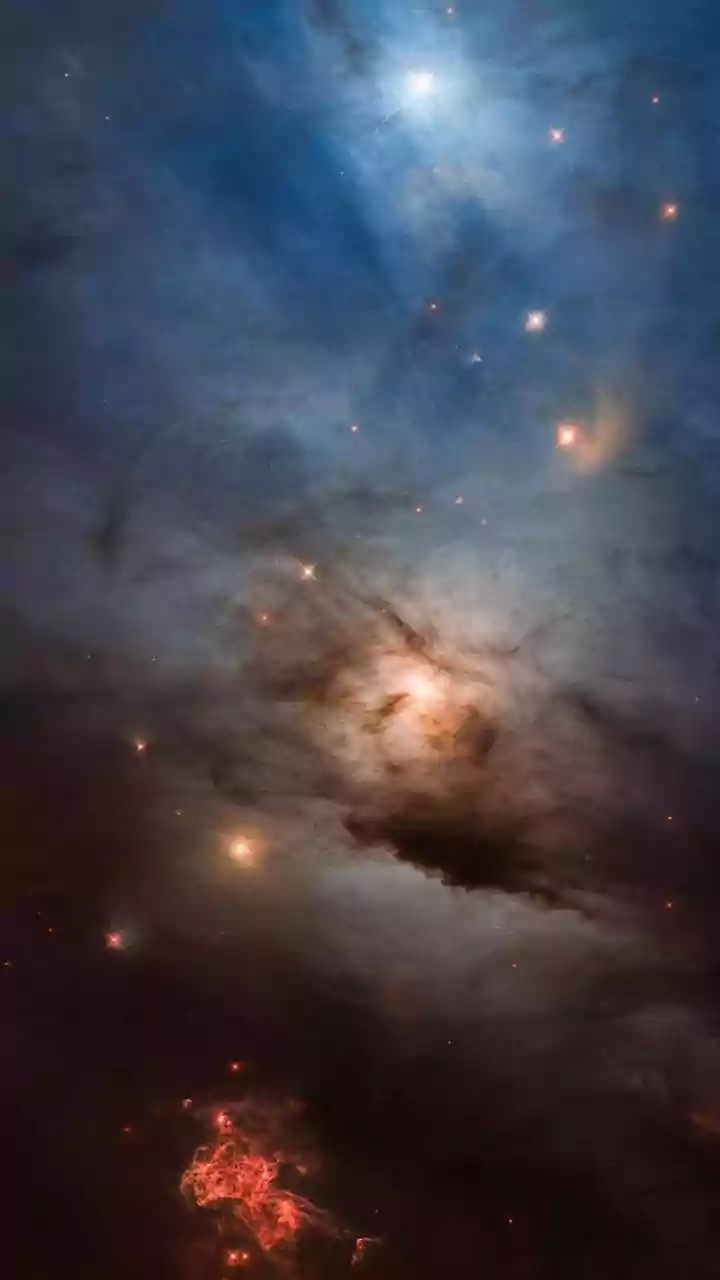
What makes these new images so revolutionary is Webb's ability to see in infrared light. Cosmic nurseries are shrouded in thick dust that acts like a veil, obscuring the view of telescopes that see in visible light, like the Hubble. Webb's Near-Infrared Camera (NIRCam) can pierce through this dust, allowing scientists to see the previously hidden processes of star birth in stunning detail. This capability has allowed astronomers to identify protostars—stars still gathering mass—and even complex organic molecules and water ice within the clouds where planets may one day form. The distinctive six-pointed diffraction spikes seen on the brightest stars in Webb's images are a trademark of the telescope's unique mirror system, highlighting the most massive stars in the cluster.
Rewriting the Story of Star Formation
These detailed observations are doing more than just providing pretty pictures; they are reshaping our understanding of how stars and galaxies evolve. By studying thousands of young star clusters across different galaxies, astronomers using both Webb and Hubble have found that more massive star clusters seem to emerge from their birth clouds much faster. They quickly clear away the surrounding gas and begin to fill their host galaxy with powerful ultraviolet light, a process called "stellar feedback" that influences how and where future generations of stars can form. Each new observation helps astronomers refine their models of star formation, from the smallest protostars to the most gigantic stellar behemoths that shape the cosmos.