






More Than Just a Walk
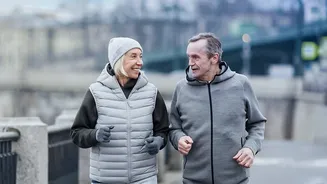
Forget aimless strolling. Social walking clubs are organised, regular gatherings where people meet up to walk together. These aren't competitive races or gruelling hikes, but dedicated spaces for gentle movement and conversation. In cities like Mumbai,
Delhi, and Bangalore, groups organised primarily through social media and community apps are seeing a surge in interest. The premise is simple: show up at a designated time and place and walk with a group of like-minded individuals. Some walks have a theme, like exploring a heritage district or a nature trail, while others are straightforward urban loops. The real draw, as many members attest, is the blend of accessible exercise and effortless socialising. It's a 'third space' that isn’t home or the office, where connections can be made without the pressure of a formal setting.
The Gentle Pull of Low-Impact Fitness
After years of 'no pain, no gain' fitness culture, many young people are actively seeking kinder ways to move their bodies. Walking is the ultimate low-impact exercise, meaning it puts minimal stress on joints and muscles. This makes it accessible to nearly everyone, regardless of their fitness level, and significantly reduces the risk of injury that can come with high-impact workouts. But 'low-impact' doesn't mean 'low-benefit'. Brisk walking elevates the heart rate, helps with weight management, improves flexibility, and builds endurance. Crucially, it also offers profound mental health benefits. Studies have consistently shown that walking, especially in a group or in nature, can reduce stress, anxiety, and symptoms of depression, while boosting mood and self-esteem. It provides a chance to clear one's head and disconnect from screens, an activity many participants describe as a form of active meditation.
Finding a Tribe in the Modern City
Perhaps the most significant driver of this trend is the search for community. Major Indian cities are magnets for young professionals who often relocate for work, leaving behind their traditional support systems. The result can be a profound sense of urban loneliness, a feeling of being isolated despite being surrounded by millions. Workplaces are increasingly competitive and less social, and high-rise apartment living can reduce the spontaneous neighbourhood interactions previous generations took for granted. Walking clubs offer a direct antidote. They create a relaxed environment to meet new people and build genuine friendships. As one member noted, instead of catching up at a cafe, her friends now go for an hour-long walk, turning fitness into a social ritual. This shared activity helps combat the loneliness that studies show is a growing concern, fostering real-life connections that digital interactions often fail to provide.
A Response to a Post-Pandemic World
The rise of walking clubs can also be seen as a direct response to the lingering effects of the pandemic. Lockdowns and remote work shifted life indoors and online, leaving many with a deep-seated desire for outdoor activities and face-to-face interaction. Walking clubs perfectly cater to this. They are typically free, take place outdoors, and are inherently social—ticking all the boxes for a generation re-evaluating its priorities. For Gen Z, wellness is increasingly seen as a holistic concept that integrates physical and mental health with social well-being. This generation often uses fitness as a tool for social connection and identity formation. Walking clubs fit seamlessly into this ethos, offering a sustainable, community-driven approach to health that feels more authentic and less commercial than a traditional gym membership.