


The Gruelling Journey That Was
Until recently, travelling from the national capital to the coastal union territory of Daman was an exercise in patience and logistics. The options were few and far from ideal. The most common method involved a flight to a nearby hub like Mumbai or Surat,
followed by a gruelling road journey. A taxi from Mumbai to Daman, for instance, could take anywhere from three-and-a-half to four-and-a-half hours, depending on the city’s unpredictable traffic. This meant that even after a two-hour flight from Delhi, travellers still had a significant and costly leg of the journey ahead of them. The alternative was a long-haul train, with journeys from Delhi to Vapi, the nearest major railway station to Daman, clocking in at over 15 hours, excluding the final transfer to a hotel. This arduous process effectively wrote off Daman as a quick getaway for anyone based in the NCR, relegating it to a destination for those with ample time to spare.
A Game-Changing Direct Connection
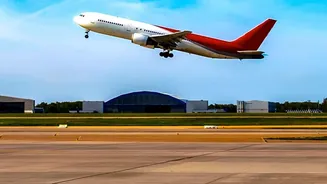
The travel landscape has been completely redrawn with the introduction of direct flights from Delhi's Indira Gandhi International Airport (IGI) to Daman's newly operational NAMO Airport. Operated by Alliance Air, these flights have slashed the air travel component to a mere 2 hours and 50 minutes. According to recent reports, the service currently runs twice a week, on Mondays and Wednesdays. While a flight ticket is more expensive than a second-class train fare, the value proposition is undeniable. This new route is more than just an addition to the flight schedule; it is Daman's first-ever direct air link with the national capital, a strategic move poised to transform access to the region. For Delhi Airport, this marks its 90th domestic destination, further cementing its status as India's largest aviation hub.
The Real Travel Currency: Door-to-Door Time
This new flight forces us to re-evaluate how we measure travel. The real metric isn't just the flight duration but the total 'door-to-door' time. Consider the old way: leaving your home in Delhi, you could easily spend 1.5 hours getting to the airport, 2 hours on check-in and security, 2 hours on the flight to Mumbai, another hour deplaning, and then a 4-hour taxi ride. That's over 10 hours of travel, assuming no delays. Now, compare that to the new reality. The pre-flight and flight times are similar, but the critical difference lies in the destination. Daman's new airport is located conveniently close to the city centre. This means that within minutes of landing, you can be at your hotel, not at the start of another long road trip. The new door-to-door time is nearly halved, with estimates suggesting a total saving of at least 10 hours compared to the train journey. This dramatic reduction in both time and complexity is the true game-changer.
Daman's Weekend Makeover
The impact of this enhanced connectivity is expected to be immediate and significant for Daman. For the first time, this coastal town with its unique Portuguese-era charm, tranquil beaches, and historic forts becomes a viable weekend destination for the millions of people in and around Delhi. Previously a popular getaway for residents of nearby Gujarat and Maharashtra, Daman can now attract a new wave of domestic tourists. This accessibility is a boon not just for leisure travellers but also for business. The region is a major hub for industries like pharmaceuticals, plastics, and engineering. Improved air links will facilitate smoother business travel, potentially boosting investment and economic growth in the Union Territory and the nearby industrial area of Vapi.
Your New Travel Planning Mindset
The Delhi-Daman story offers a valuable lesson for every traveller. When planning your next trip, look beyond the simple flight duration and ticket price. Ask yourself about the total journey. What happens after you land? How far is the airport from your actual destination? Will you need to book a separate, multi-hour taxi or train ride? Sometimes, a slightly more expensive direct flight can save you not only hours of travel but also the stress and hidden costs of a complex multi-leg journey. As regional air connectivity in India improves under schemes like UDAN, more destinations that once seemed remote are now within easy reach. The smart traveller of today will learn to calculate the true cost of their time and convenience, making the 'door-to-door' duration the most important line item on their itinerary.