


In our busy lives, the simple act of letting go can feel like a monumental task. Apanasana, a gentle and accessible yoga pose, offers a profound sense of release, helping to calm the mind and ease the body. Here’s how to do it right.
Understanding Apanasana's Meaning
Apanasana, often called
the 'Knees-to-Chest Pose' or 'Wind-Relieving Pose', is more than just a simple stretch. In Sanskrit, 'Apana' refers to a type of life-force energy (vayu) that governs the downward and outward flow in the body. This energy is responsible for elimination, grounding, and releasing what no longer serves you, both physically and mentally. The pose gets its name from its ability to stimulate this energy. The gentle compression on the abdomen massages the internal organs, particularly the digestive tract, helping to relieve issues like bloating and constipation. By connecting with this grounding force, the pose becomes a tool for physical detoxification and mental calm.
A Step-by-Step Guide to the Pose
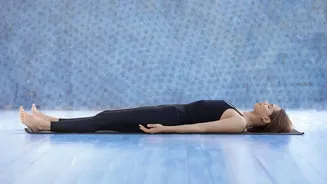
Finding release in Apanasana is about gentle guidance, not force. Follow these steps to practice it safely. First, lie flat on your back on a comfortable surface like a yoga mat. Keep your legs extended and your arms by your sides, taking a moment to relax. On an exhale, slowly bend your knees and draw them toward your chest. Wrap your hands around your shins, just below the knees. If that’s a strain, you can hold the backs of your thighs instead. Keep your shoulders and the back of your head resting comfortably on the floor, tucking your chin slightly to lengthen your neck. It’s important to keep your entire back, especially the lower back and sacrum, pressed gently into the mat. Hold this position for 5 to 10 breaths, or for up to a minute, focusing on slow, even breathing. To come out of the pose, release your grip on an exhale and slowly lower your feet back to the floor.
The Core Benefits of Release
The primary benefit of Apanasana is the gentle release it provides for the lower back. It creates a mild traction that can decompress the lumbar spine, making it an excellent pose for relieving tightness caused by prolonged sitting. The pose also stretches the glutes and hip flexors, improving mobility in these often-tight areas. By massaging the abdominal organs, it aids digestion and can help ease discomfort from gas, bloating, and even menstrual cramps. On a more subtle level, Apanasana activates the parasympathetic nervous system, which helps slow the heart rate and promotes a state of deep relaxation. This makes it a wonderfully calming posture to incorporate into a cool-down, before bed, or anytime you need to feel more grounded.
How to Release Without Straining
The key to a sensible Apanasana is to listen to your body and avoid common mistakes. The most frequent error is pulling the knees too forcefully toward the chest, which can strain the lower back and hips. Let gravity do most of the work; your hands are there to guide, not to yank. Another common tendency is to lift the head, neck, or shoulders off the mat. This creates tension and negates the grounding effect of the pose. Focus on keeping the entire length of your spine, from your tailbone to your head, in contact with the floor. If you feel your hips or buttocks lifting, ease off the pull. The goal is to lengthen the spine, not to curl into a tight ball. Finally, remember to breathe. Holding your breath creates tension throughout the body, so maintain a steady, relaxed breath to deepen the release.
Sensible Modifications for Your Body
Apanasana is highly adaptable. If you have tight hips or are recovering from a lower back injury, start with 'Ardha Apanasana' (Half Knees_to_Chest). Lie on your back, hug just one knee toward your chest, and keep the other leg extended on the floor or bent with the foot flat. This allows for a gentler release on one side at a time. If you feel compression in your abdomen, you can practice with your knees slightly apart, drawing them toward your armpits rather than straight to your chest. For extra support and to reduce any strain, place a folded blanket under your head or hips. If reaching your shins is difficult, a yoga strap looped around your thighs can help you gently guide your legs closer without straining your arms or shoulders.