



India's Billion-Dollar Quantum Bet
In April 2023, the Indian government officially launched its National Quantum Mission (NQM), committing over 60 billion rupees (about $720 million) through 2031 to become a global leader in the field. This isn't just about scientific prestige; it's a strategic
move for economic growth and technological self-reliance. The mission is designed to accelerate research and development across the quantum spectrum, from building powerful quantum computers to designing novel quantum materials. Four specialized thematic hubs have been established at top research institutions to spearhead advancements in computing, communication, sensing, and materials. The goal is clear: to create a robust domestic ecosystem for quantum technologies, fostering everything from startups to a skilled workforce, and secure India's place as a key player in a world on the verge of a quantum revolution.
The Unhackable Dream: Quantum Communication
One of the most critical goals of the NQM is mastering secure quantum communication. Unlike today's encryption, which relies on complex math problems that future quantum computers could potentially solve, quantum communication is based on the laws of physics. The core technology is called Quantum Key Distribution (QKD). In simple terms, QKD uses individual particles of light, or photons, to create a secret key between two parties. The very act of an eavesdropper trying to intercept and measure these photons disturbs their quantum state, immediately alerting the legitimate users that the channel has been compromised. This makes the key distribution theoretically immune to hacking. It's a direct response to the looming threat of "harvest now, decrypt later" attacks, where adversaries steal encrypted data today, waiting for future quantum computers to crack it.
Why Satellites Are the Missing Link
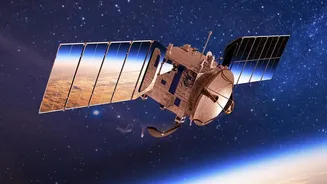
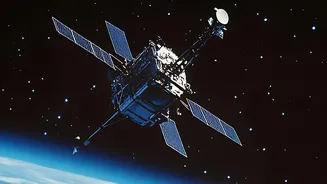
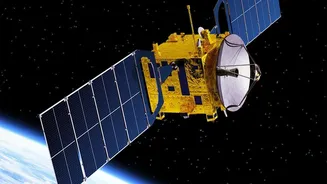
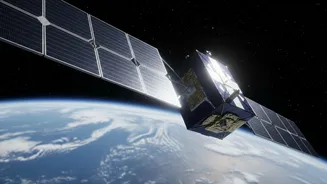
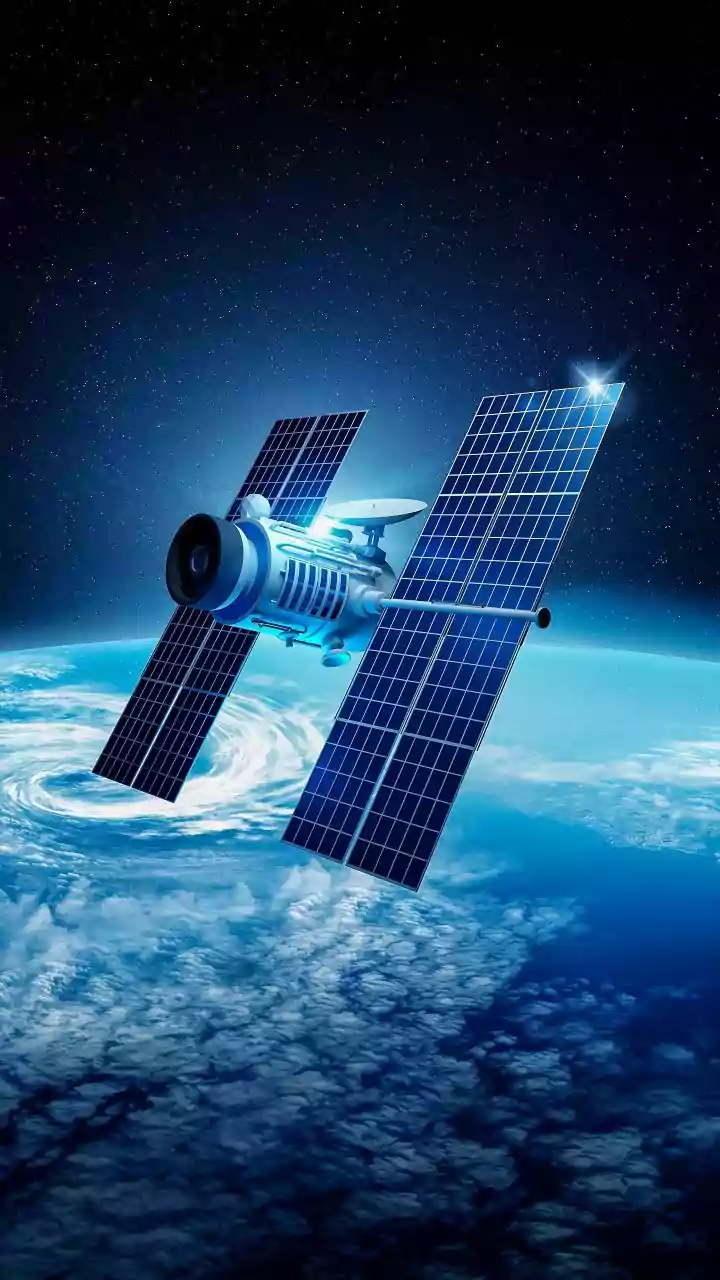
While QKD can be sent through fiber optic cables, it has a significant limitation: distance. The fragile quantum signal degrades over long stretches of fiber, typically limiting secure links to a few hundred kilometers at most. This is where satellites come in. By beaming photons through the vacuum of space, where signal loss is far lower, satellites can connect ground stations thousands of kilometers apart. This technology is the key to creating a truly national—and eventually global—secure communication network. India's quantum mission specifically aims to establish satellite-based secure communication between ground stations up to 2,000 kilometers apart within the country. This would enable unhackable links for critical sectors like defense, finance, and government, securing vital infrastructure against future cyber threats.
The New Global Quantum Race
India's focus on satellite-based QKD places it firmly in a new geopolitical arena. The United States, China, and other nations are also heavily invested in quantum technologies, recognizing their immense strategic value. China has already demonstrated long-distance quantum communication, while the U.S. has focused on various software and satellite-based approaches. India's progress is not just about keeping pace; it's about ensuring it doesn't become dependent on foreign powers for its own national security. By developing sovereign capabilities in quantum communication, India is future-proofing its critical digital infrastructure and positioning itself as a crucial node in the world's next-generation secure networks. This technological self-reliance is seen as vital in a region with complex geopolitical dynamics.