





The Silent Problem of Hidden Hunger
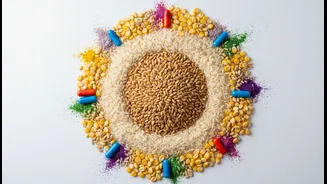
Hidden hunger, or micronutrient deficiency, is a widespread and serious health issue in India. It occurs when the quality of food does not meet nutritional needs, even if the quantity is sufficient to feel full. Diets heavily reliant on staples like rice
and wheat can lack essential vitamins and minerals such as iron, iodine, zinc, and Vitamin A and D. This deficiency is not always visible, but it has profound consequences. It weakens the immune system, impairs physical and cognitive development in children, and increases the risk of chronic diseases. According to NFHS-5 data, a staggering 67% of young children and 57% of women in India are anaemic, largely due to iron deficiency, highlighting the scale of the crisis.
Fortification: A Powerful Tool
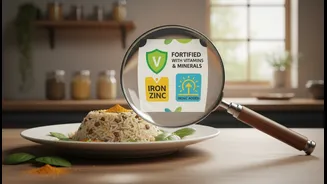
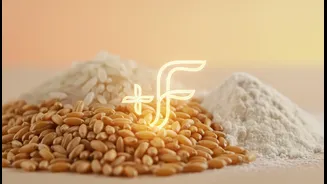
Food fortification is the process of deliberately adding essential micronutrients to staple foods during processing. In India, this strategy is spearheaded by the Food Safety and Standards Authority of India (FSSAI), which has laid out regulations for fortifying foods like salt, milk, oil, wheat flour, and rice. The idea is simple but powerful: if people are already consuming these foods daily, adding nutrients is a cost-effective way to improve public health without requiring drastic changes in dietary habits. You can identify these products by looking for the blue ‘+F’ logo on the packaging, a symbol signifying that the food meets FSSAI's fortification standards.
The Challenge of Label Literacy
For fortification to be truly effective, consumers must be able to make informed choices. This is where label literacy becomes critical. The '+F' logo is a great start, but its impact is limited if a large portion of the population doesn't know what it means or cannot read and understand nutrition labels. While India's overall literacy rate is improving, significant disparities remain, especially between urban and rural areas. More importantly, general literacy does not always translate to 'nutrition literacy'—the ability to obtain, process, and understand basic health information to make appropriate nutrition decisions. Without targeted public awareness campaigns to explain the benefits of fortified foods and how to identify them, the programme risks failing to reach those who need it most.
Avoiding 'Fortification-as-Cure' Myths
A significant danger is the perception of fortified foods as a magic bullet for all nutritional problems. Fortification is a supplement, not a substitute for a balanced and diverse diet. There is a risk that companies may overstate the benefits of their fortified products, leading consumers to believe they are a complete solution. This could discourage the consumption of naturally nutrient-rich foods like fruits, vegetables, and pulses, which are essential for overall health. Furthermore, some critics raise concerns about the potential for 'iron overload' from multiple fortified sources and argue that fortification levels for some nutrients in India are set too low to be effective, pointing to a complex balancing act.
A Holistic Path Forward
Food fortification holds immense potential to improve India's public nutrition landscape, but it cannot succeed in a vacuum. Its success is tied to a multi-pronged approach. First, there needs to be a massive push in public education to improve nutrition and label literacy, explaining what the '+F' symbol means and why a varied diet remains crucial. Second, marketing claims must be strictly regulated to prevent misleading 'fortification-as-cure' narratives. Finally, fortification must be seen as one part of a larger national nutrition strategy that also promotes dietary diversity, supports sustainable agriculture, and ensures access to a wide range of healthy foods for everyone.