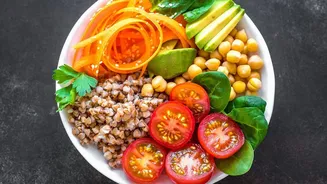







Quinoa and lentils are staples in healthy kitchens, celebrated for their versatility and nutritional punch. But when it comes to carbohydrates, these two powerhouses are not created equal. Let's break down the differences to see which one fits best.
An Introduction to the Contenders
On
the surface, quinoa and lentils seem similar. Both are gluten-free, plant-based, and packed with nutrients. However, they come from different botanical families. Quinoa is technically a seed from the amaranth family, often called a 'pseudocereal' because it's cooked and eaten like a grain. Lentils, on the other hand, are pulses—the edible seeds of a legume plant, putting them in the same family as beans and chickpeas. This fundamental difference is the starting point for their distinct nutritional profiles.
Carbohydrates by the Numbers
If you're tracking carbs, the difference is clear. A 100-gram serving of cooked quinoa contains about 21.3 grams of carbohydrates. In comparison, the same amount of cooked lentils has around 20.1 grams. While this seems like a small difference, it adds up. A full cooked cup of quinoa (185g) has roughly 39 grams of carbs, while a cup of cooked lentils provides a similar amount. However, the story doesn't end with total carbs; the type of carbohydrate is arguably more important.
The All-Important Fibre Factor
This is where lentils really start to shine. Fibre is a type of carbohydrate that your body doesn't digest, which helps with blood sugar control and digestive health. In a 100g serving, lentils pack an impressive 7.9g of dietary fibre, while quinoa contains a more modest 2.8g. That means lentils have more than double the fibre. This high fibre content makes lentils incredibly filling and beneficial for gut health. For those looking to increase their fibre intake, lentils are the clear winner.
Understanding the Glycemic Index
The glycemic index (GI) measures how quickly a food raises blood sugar levels. Both quinoa and lentils are considered low-GI foods, making them excellent choices for sustained energy and blood sugar management. However, lentils have a distinct advantage with a GI value of around 32–37, which is exceptionally low. Quinoa's GI is slightly higher, typically around 50–54. For individuals with diabetes or anyone looking to minimise blood sugar spikes, the lower GI of lentils makes them a superior choice.
The Protein Question
Protein is another key area of comparison. Quinoa is famous for being a 'complete protein', meaning it contains all nine essential amino acids your body can't produce on its own. A 100g serving of cooked quinoa offers about 4.4g of protein. Lentils, while not a complete protein on their own, boast a much higher quantity—about 9g of protein per 100g serving, which is more than double that of quinoa. To get a complete protein, you can simply pair lentils with a whole grain like rice, a classic combination in many Indian dishes.
Vitamins and Minerals: A Nutrient Showdown
Both foods are nutritional powerhouses, but they excel in different areas. Lentils are an outstanding source of folate and iron. A single cup of cooked lentils can provide $90%$ of your daily folate needs. They are also rich in potassium and vitamin B1. Quinoa, on the other hand, is a better source of minerals like magnesium, manganese, and phosphorus. So, your choice might depend on which specific micronutrients you are looking to boost in your diet.