





Why This Trade Deal Matters
A comprehensive trade agreement between India and the United States holds immense promise for both nations. For India, it could mean greater access for its goods and services to the world's largest consumer market, boosting exports in key sectors like
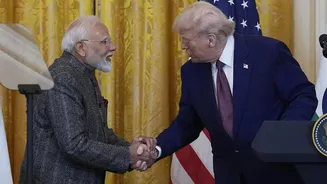
pharmaceuticals, textiles, and technology. For the US, it represents an opportunity to sell more products to India's vast and growing population of over 1.4 billion people. Beyond the economics, a strong trade relationship solidifies the strategic partnership between the two democracies, creating a powerful alliance in the Indo-Pacific region. Despite talks running since early 2025 and a framework agreement being reached in February 2026, progress has stalled, with officials on both sides acknowledging a 'plateau' in negotiations. The latest updates from October 2026 suggest that while leaders claim a deal is 'pretty close', significant hurdles remain.
The Agricultural Tariff Disagreement
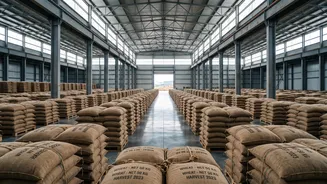
A primary point of friction is agriculture. The US has long argued that India's tariffs on farm products are excessively high, creating an unfair barrier for American farmers. India's average tariff on agricultural imports is around 39%, compared to just 5% in the United States. Washington wants India to lower these duties on products like apples, almonds, dairy, soybean oil, and wheat to allow greater market access. However, New Delhi has historically protected its agricultural sector from free trade agreements. The concern is that opening the market to heavily subsidised American imports could devastate the livelihoods of millions of small-scale Indian farmers who cannot compete. While India has shown willingness to reduce some tariffs as part of an interim deal, the government remains firm on protecting its most vulnerable agricultural communities from a sudden influx of foreign goods.
The Data Localisation Debate
The second major obstacle lies in the digital realm. India has been moving towards rules that require companies to store data on Indian citizens within the country's borders—a policy known as data localisation. The Indian government's perspective is that this is a matter of 'data sovereignty'. Keeping data local is seen as crucial for national security, protecting citizens' privacy, and ensuring Indian law enforcement can access information when needed. The government also views data as a 'new form of wealth' that should be harnessed for the nation's development, including building its own AI capabilities. On the other side, major US technology and financial companies like Google, Amazon, Visa, and Mastercard strongly oppose these rules. They argue that data localisation creates unnecessary costs, complicates global operations, and can increase cybersecurity risks without providing significant benefits. The US government has backed its companies, pushing for the free flow of data across borders in any trade agreement.
Uncertainty and the Path Forward
Complicating matters further is the shifting landscape of US trade policy. Under the Trump administration, tariffs have been used aggressively, and their legal basis has faced court challenges, creating uncertainty for negotiating partners. For India, there is a risk that concessions made today could be undermined by new tariffs imposed tomorrow under a different justification. Recent statements from US Secretary of State Marco Rubio and President Trump in October 2026 suggest a deal is close, with only a 'small number of items' left to resolve. However, these optimistic statements have been made before. Negotiators continue to work behind the scenes to find a compromise that balances US demands for market access with India's need to protect its farmers and maintain control over its digital economy. Finding this middle ground is essential not just for economic gain, but for the long-term health of the Indo-US strategic relationship.