






The Age-Old Challenge at Sea
For India's nearly four million marine fisherfolk, the ocean is both a provider and a place of immense uncertainty. The traditional method of finding fish involves hours of searching, consuming expensive fuel and valuable time with no guarantee of a successful
catch. Fishermen rely on experience and intuition, but this often leads to unproductive voyages, impacting their income and increasing operational costs. The vastness of the sea makes the search for fish shoals akin to finding a needle in a haystack, a daily economic risk for communities that depend on the water for their livelihood.
Reading the Colour of the Sea
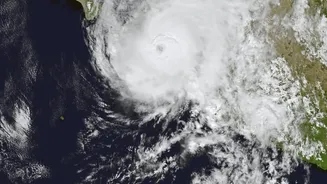
The solution begins not with tracking fish, but with what they eat. The foundation of the marine food web is phytoplankton, microscopic algae that contain chlorophyll. Just like plants on land, these organisms give the water a specific hue. High concentrations of chlorophyll, which occur in areas rich with phytoplankton, subtly change the colour of the ocean. These blooms attract small fish, which in turn attract larger, commercially valuable fish. Therefore, by observing the colour of the ocean from space, scientists can identify areas where fish are likely to congregate. It’s a bit like a weather forecast for fish, predicting where the feeding grounds will be.
ISRO's Eye in the Sky
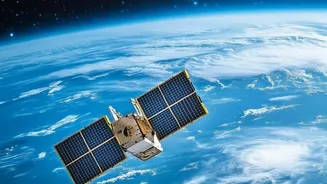
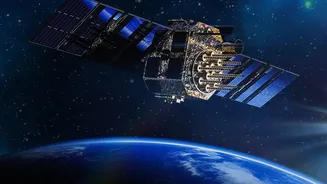
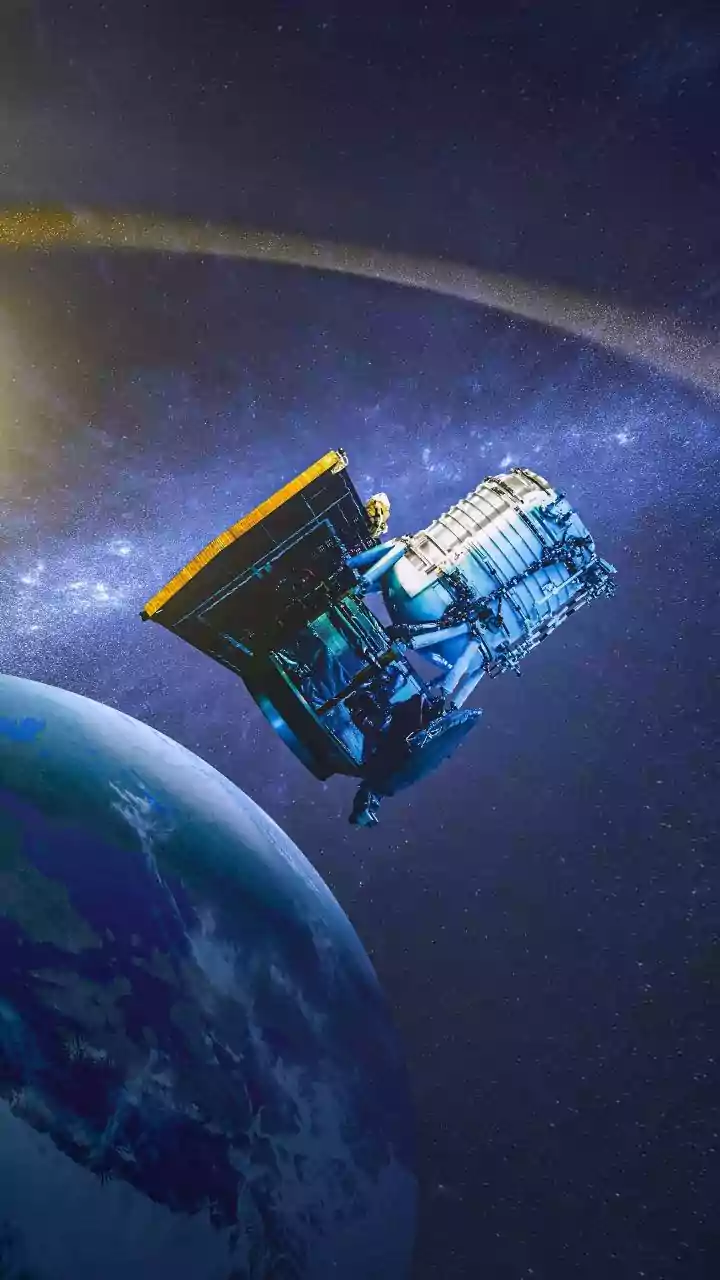
This is where the Indian Space Research Organisation's (ISRO) technology comes into play. The OceanSat series of satellites, such as Oceansat-2 and its successor EOS-06, are equipped with a sophisticated instrument called the Ocean Colour Monitor (OCM). Orbiting hundreds of kilometers above Earth, the OCM is specifically designed to detect these minute variations in ocean colour that are invisible to the naked eye. It measures how sunlight scatters off the sea surface across multiple spectral bands, providing precise data on chlorophyll concentration, sea surface temperature, and other oceanographic parameters that indicate productive biological fronts.
From Data to Directions
Raw satellite data is just the first step. The information captured by OceanSat is transmitted to the Indian National Centre for Ocean Information Services (INCOIS) in Hyderabad. Here, scientists process and analyse the data, combining it with sea surface temperature and wind patterns to generate daily advisories on Potential Fishing Zones (PFZ). These advisories are essentially maps that pinpoint the exact latitude and longitude, depth, and distance from the coast of areas where fish are likely to be abundant. The service provides these updates for hundreds of fish landing centres along the Indian coast.
Putting Technology in Fishermen's Hands
The most critical part of this entire system is ensuring this high-tech information reaches the fishermen in a simple, usable format. INCOIS disseminates the PFZ advisories through a multi-platform approach. This includes a dedicated app called 'Sagar Vani', which provides alerts and information in local languages. The advisories are also sent via SMS, voice messages, and displayed on digital boards at fishing harbours. This ensures that fishermen, whether they have a smartphone or a basic feature phone, can access this vital information before heading out to sea. This seamless connection from a satellite in orbit to a fisherman on his boat is what makes the program truly effective.
A Sea of Change for Livelihoods
The impact on the fishing community has been transformative. Studies and feedback from fishermen have shown that using PFZ advisories can reduce search time by up to 70%. This directly translates into massive savings on fuel—a major operational cost. With targeted information, fishermen increase their catch per trip, boosting their income and profitability. The advisories also enhance safety by providing forecasts on ocean state and wave heights, helping fishermen avoid dangerous conditions. By guiding boats to productive areas, the system helps reduce the pressure on coastal regions, allowing for more sustainable fishing practices. It’s a powerful example of how advanced space technology can deliver tangible benefits to citizens, improving livelihoods and strengthening a vital sector of the Indian economy.