




The Ultimate Safety Net
Sending humans to space is an inherently risky endeavour, and ensuring their safety is the highest priority for the Indian Space Research Organisation (ISRO). The Gaganyaan programme’s upcoming uncrewed safety tests are designed to validate the mission's
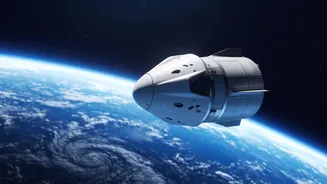
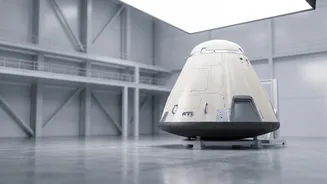
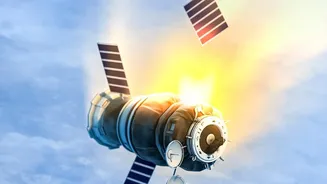
most critical safety feature: the Crew Escape System (CES). Think of it as a highly advanced ejector seat, not for a single pilot, but for the entire crew capsule. In the event of an emergency on the launchpad or during the rocket's ascent, the CES is designed to fire powerful, quick-acting solid motors to pull the crew module and its occupants away from the malfunctioning launch vehicle to a safe distance. These tests are non-negotiable prerequisites to prove the system's reliability before the first crewed flight.
What Do the Abort Tests Simulate?
ISRO has planned a series of meticulous abort missions to test the escape system under different failure conditions. These are not just drills; they are full-scale demonstrations using specially designed test vehicles. The two primary scenarios are a Pad Abort Test (PAT) and an In-flight Abort Test. The PAT, which ISRO first demonstrated successfully in 2018, simulates an emergency while the rocket is still on the launch pad. The in-flight tests are more complex, designed to mimic a failure during ascent. For instance, the TV-D1 mission conducted in October 2023 was designed to trigger an abort at an altitude of around 17 km and a speed of Mach 1.2, which is the point of maximum aerodynamic stress on the rocket. In this scenario, the system must separate the crew module, deploy parachutes, and ensure a safe splashdown in the sea.
A Stepping Stone to Manned Flight
Each successful test is a significant step forward for India's human spaceflight ambitions. These precursor missions are designed to prove the technology and build confidence in the systems that will protect the nation's 'Gaganauts'. The data gathered from nearly 300 sensors during a test flight informs everything from the performance of the escape motors to the deployment sequence of the parachutes and the recovery procedures after splashdown. ISRO plans to conduct several such uncrewed missions before the final crewed launch. This includes at least three uncrewed orbital flights, designated G1, G2, and G3, to test the entire system, including life support and re-entry. The first of these, G1, may carry a humanoid robot named Vyommitra to simulate astronaut functions.
The Road Ahead for Gaganyaan
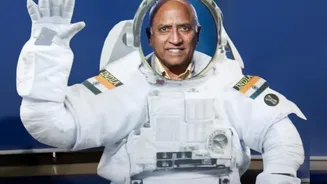
The Gaganyaan project's ultimate goal is to launch a crew of three members into a 400 km orbit for a three-day mission and bring them back safely to Earth. Achieving this will make India the fourth nation in the world to demonstrate independent human spaceflight capability, after the United States, Russia, and China. While original timelines have shifted to ensure every safety aspect is perfected, the program is making steady progress. The development of the human-rated LVM3 rocket, crew training, and environmental control systems are all in advanced stages. The designated astronauts for the mission—Prasanth Balakrishnan Nair, Ajit Krishnan, Angad Pratap, and Shubhanshu Shukla—were announced in early 2024. With successful parachute tests completed as recently as mid-2026, the focus remains squarely on the series of abort tests and uncrewed flights scheduled to precede the historic crewed mission, now anticipated around 2027.