
The Sun’s Invisible Threat
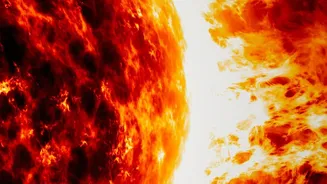
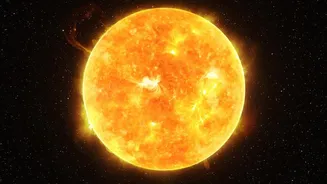
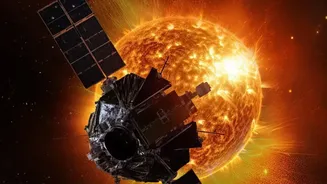
The sun, our life-giving star, has a tempestuous side. It periodically ejects massive clouds of charged particles and magnetic fields in events known as coronal mass ejections (CMEs), or solar storms. While Earth's magnetic field protects us on the ground,
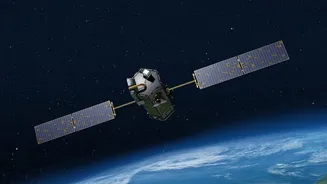
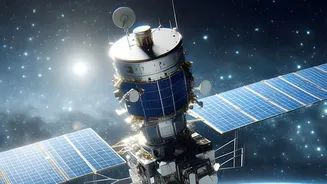
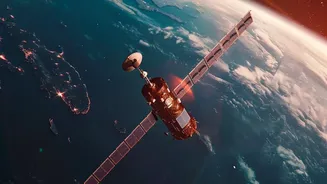
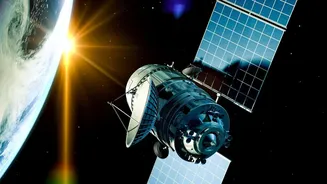
the thousands of satellites orbiting above are on the front lines. These storms can unleash a torrent of high-energy particles that travel at incredible speeds, posing a direct threat to the technology that powers modern life. The consequences of a major solar storm hitting our unprepared satellite infrastructure could be immense, potentially disrupting everything from financial transactions to emergency response systems and costing the global economy trillions.
Satellites in the Firing Line
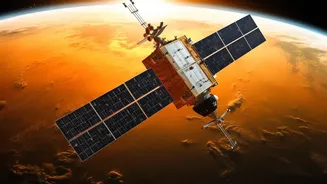
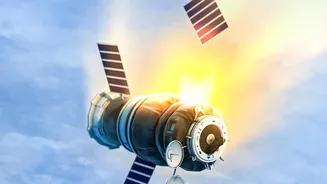
When a solar storm reaches a satellite, it can cause a range of problems. The influx of charged particles can damage sensitive electronics and solar panels, sometimes creating phantom commands or causing total system failure. Another significant issue is increased atmospheric drag. A storm can heat and expand Earth's upper atmosphere, causing satellites in low-Earth orbit (LEO) to slow down and lose altitude more quickly than expected. This can disrupt their predictable orbits, creating a risk of collision and making their positions harder to track. Furthermore, the intense radio noise from a solar flare can interfere with the signals used to communicate with satellites, leading to blackouts in data transmission and GPS inaccuracies.
A Cosmic Alarm Bell System
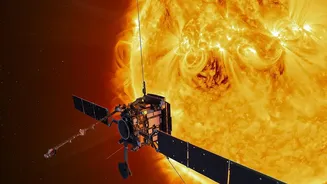
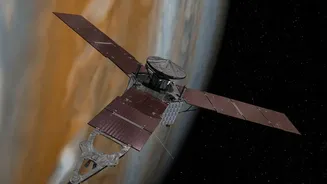
To counter this threat, a global effort led by organizations like the U.S. National Oceanic and Atmospheric Administration's (NOAA) Space Weather Prediction Center (SWPC) provides crucial early warnings. Using a network of ground-based observatories and specialized satellites like the Deep Space Climate Observatory (DSCOVR) and the newer SOLAR-1, forecasters monitor the sun 24/7. These instruments watch for solar flares and CMEs, tracking their speed and trajectory. DSCOVR, positioned about a million miles from Earth, can detect changes in the solar wind about 30 to 60 minutes before it impacts our planet, giving satellite operators a critical window to act. The SOLAR-1 mission, launched in 2025, has further enhanced these capabilities by providing clearer, faster imagery of CMEs, reducing the time it takes for data to reach forecasters from hours to just 30 minutes.
Duck and Cover, Satellite Style
When a solar storm alert is issued, satellite operators don't just hope for the best; they have specific protocols to follow. For many, the first step is to place their satellites into a protective 'safe mode'. This involves shutting down non-essential systems and reorienting the spacecraft to angle its most robust components toward the incoming particle storm, much like turning your back to a strong wind. Operators of large satellite constellations, like those providing global internet, may adjust the orbits of their satellites to minimize exposure to increased atmospheric drag. For communication and navigation services, engineers can anticipate signal degradation and switch to backup systems or adjust frequencies to maintain connectivity. These proactive measures are designed to ensure the hardware survives the storm and can be brought back online quickly once the danger has passed.
Building Resilience for a Connected Future
As our reliance on satellite technology grows, so does the need for even more advanced space weather prediction and mitigation strategies. Engineers are continuously developing more 'radiation-hardened' components that are less susceptible to damage from charged particles. Researchers are also exploring novel ideas, such as a proposed satellite constellation called StormWall that could create a protective magnetic shield for Earth. In addition, predictive models are becoming more sophisticated, allowing for risk-aware data routing that could automatically divert internet traffic through satellites in less-affected orbits during a storm. This combination of hardware improvements, smarter software, and better forecasting is building a more resilient satellite infrastructure.