


Venus: The Hostile Twin Planet
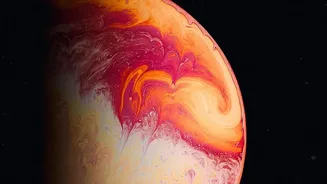
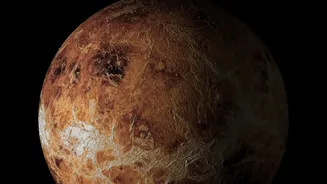
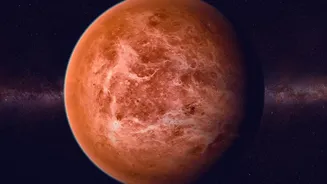
Venus is a planet of extremes. While similar to Earth in size and mass, its environment is a veritable inferno. The surface temperature hovers around a staggering 475°C, hot enough to melt lead, and the atmospheric pressure is over 90 times that of Earth's
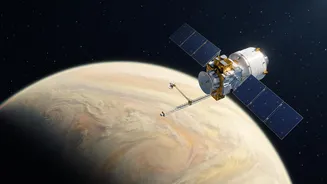
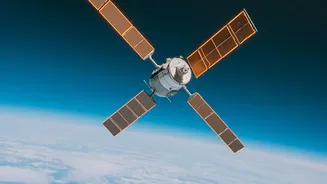
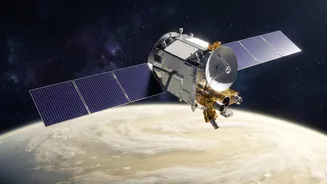
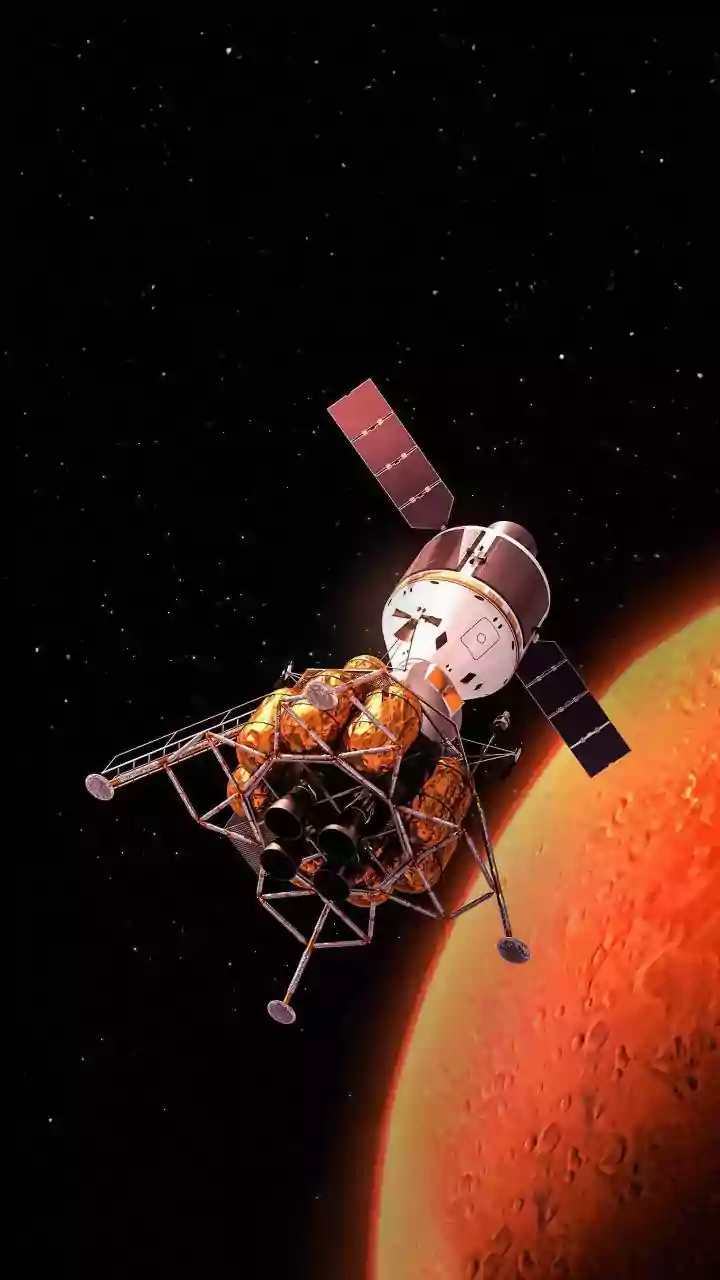
at sea level. The planet is perpetually shrouded in thick, opaque clouds made not of water, but of highly corrosive sulfuric acid. This dense atmosphere, rich in carbon dioxide, has triggered a runaway greenhouse effect, making Venus a crucial case study for understanding planetary climate change. These hellish conditions make exploration incredibly difficult, which is why India's upcoming mission is so significant. Shukrayaan-1 will be an orbiter, studying the planet from a safe distance while its instruments peel back the layers of mystery.
ISRO’s Scientific Toolkit for the Clouds
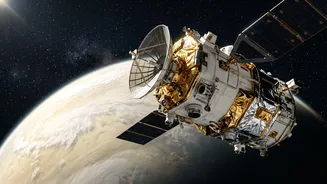
To decode the Venusian atmosphere, ISRO has equipped Shukrayaan-1 with a powerful suite of instruments, some developed in-house and others through international collaboration. The payload, weighing around 100 kg, includes multiple sensors focused on atmospheric chemistry and composition. These include thermal cameras to map temperature variations, cloud monitoring cameras, and various spectrometers designed to analyze the chemical makeup of the atmosphere by studying light at different wavelengths. One key instrument is the Venus InfraRed Atmospheric gases Linker (VIRAL), a collaborative effort between Russia's Roscosmos and France's CNES, which will analyze the composition of the Venusian air. Another is a mass spectrometer, designed to directly identify the molecules present.
Uncovering Clues in the Acid Haze
So, what will these sensors look for? One of the primary goals is to understand the structure, dynamics, and composition of the sulfuric acid clouds. Scientists want to know how these clouds form, how they interact with the intense solar radiation that bombards the planet, and why the atmosphere rotates so much faster than the planet itself—a phenomenon known as 'super-rotation'. The VIRAL instrument, for instance, is capable of detecting trace gases, including phosphine. The contested detection of phosphine in Venus's atmosphere in the past sparked intense debate about the possibility of microbial life floating in the cooler upper cloud layers, and Shukrayaan's data could provide crucial new evidence. The mission will also study how the solar wind interacts with the Venusian ionosphere, providing insights into how the planet lost any water it may have once had.
Beyond the Clouds: Mapping a Hidden World
While atmospheric chemistry is a major focus, Shukrayaan’s sensors will also look beneath the clouds. The orbiter's headline instrument is a high-resolution Synthetic Aperture Radar (SAR), which can pierce the thick cloud cover to map the planet's surface in unprecedented detail. This will allow scientists to search for active volcanoes, lava flows, and other geological features that tell the story of the planet's evolution. In a world-first for Venus exploration, the mission will also carry a ground-penetrating radar to investigate the shallow subsurface, looking for buried structures and layers of rock. This comprehensive approach—studying everything from the upper atmosphere down to the subsurface—makes Shukrayaan one of the most holistic Venus missions ever conceived.
India's Next Interplanetary Leap
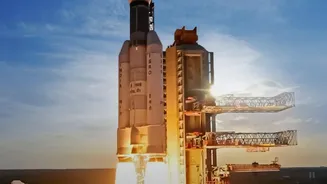
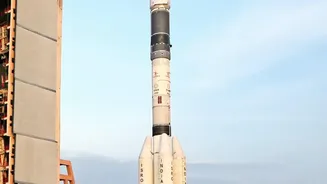
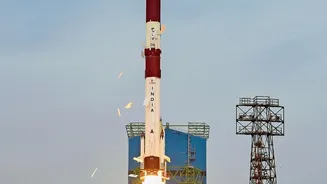
Scheduled for a launch in March 2028 aboard the heavy-lift LVM-3 rocket, Shukrayaan-1 follows in the footsteps of ISRO's highly successful Chandrayaan and Mangalyaan missions. The mission represents a significant step forward in India's technological capabilities, employing advanced techniques like aerobraking—using the friction of Venus's upper atmosphere to adjust its orbit—for the first time on an interplanetary journey. By partnering with space agencies from Sweden, Germany, and Russia, India is also cementing its role as a key player in global space exploration. This mission is not just about understanding Venus; it's a testament to India's growing scientific ambition and its commitment to answering some of the biggest questions in our solar system.