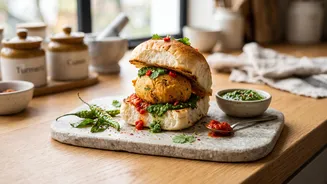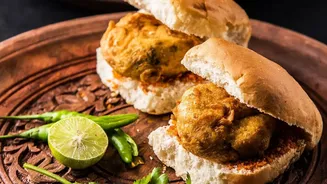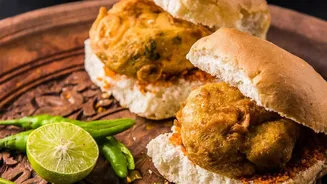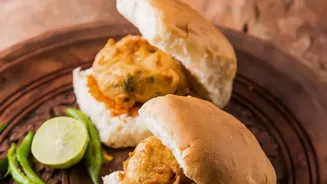





The Unsung Hero: Ladi Pav
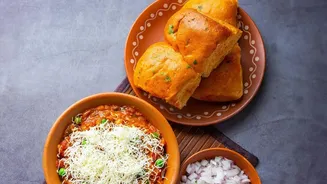
The traditional bread for a vada pav is the ladi pav. The name 'ladi' refers to the way these rolls are baked in a row or 'ladi', fused together in a tray, which gives them their characteristic pull-apart quality with soft, crustless sides. Unlike many
other Indian breads, pav is a leavened bread, soft, pillowy, and slightly sweet. Its primary job is not to steal the show, but to perfectly complement the textures and flavours it holds. The ideal pav is squishy enough to yield to a gentle press, yet resilient enough to spring back. This unique structure makes it the perfect cushion for the crispy, spicy vada and the perfect sponge for the fiery chutneys.
A Slice of Portuguese History
The story of pav is a fascinating piece of India's colonial history. Leavened bread was introduced to the western coast of India, particularly Goa, by the Portuguese in the 16th century. Missing their 'pão' (the Portuguese word for bread), they introduced baking techniques to the locals. However, European yeast wasn't readily available, so resourceful Goan bakers, known as 'poders', used toddy—fermented palm sap—as a leavening agent. This innovation gave the bread a unique, subtly sweet and sour aroma. Over time, as Goan bakers migrated to cities like Mumbai for work, they brought their bread-making skills with them, establishing bakeries and popularising pav among the working class who needed a quick, affordable meal.
What Makes a Perfect Pav?
A great pav is an exercise in balance. Its crust should be thin and light, never hard or crunchy. The inside, or crumb, must be incredibly soft and airy, filled with tiny air pockets. This structure is crucial because it allows the pav to absorb the wet green chutney and the dry garlic chutney without becoming a soggy mess. A good pav has a subtle sweetness that helps to offset the heat from the vada's spices and the accompanying fried green chilli. Made from a simple dough of refined flour (maida), yeast, sugar, salt, and a little fat, its magic lies in the kneading and proofing process which creates that signature pillowy texture.
Variations Beyond the Traditional
While the classic ladi pav remains the gold standard, innovation and necessity have given rise to several variations. In a pinch, some vendors might use standard burger buns. These are often denser and sweeter, which can slightly overwhelm the vada. Sliced white bread is another substitute, though it lacks the structural integrity of pav and can disintegrate quickly under the pressure of the vada and chutneys. More health-conscious options have also emerged, with some establishments offering whole wheat pav, which provides a nuttier flavour and denser texture. Creative culinary minds have even experimented with different carriers altogether, such as serving the vada inside a pita bao, creating a fusion dish that plays on the traditional form.
The Pav's Critical Partnership
Ultimately, the pav is not just bread; it's a key player in a carefully constructed team of ingredients. Its softness contrasts with the crispy exterior of the vada. Its mildness balances the spicy potato filling and pungent chutneys. Its absorbency ensures that every bite is a perfect medley of all the components. Without the specific qualities of the ladi pav, the vada pav would be an entirely different experience. The bread doesn't just hold the snack together physically; it holds it together from a flavour and texture perspective, proving that in this beloved dish, the humble pav is just as important as the vada itself.