







A Galaxy with a Violent Past
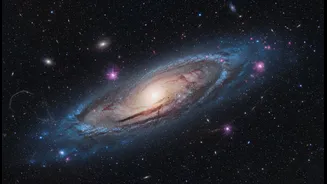
Located a relatively close 11 million light-years away, Centaurus A is anything but a quiet neighbour. It’s known as a peculiar galaxy because of its strange shape, the result of a colossal collision between a large elliptical galaxy and a smaller spiral
galaxy about two billion years ago. This cosmic merger left behind a chaotic legacy: a prominent, dark dust lane that slices across the galaxy's bright centre and an abundance of gas and dust that fuels intense bursts of star formation. At its heart lies a supermassive black hole, 55 million times the mass of our sun, that is actively feeding on the surrounding material and blasting out powerful jets of plasma at nearly half the speed of light. This activity makes it one of the brightest radio sources in our sky and a perfect natural laboratory for studying how black holes and galaxies evolve together.
A Fourth Anniversary of Cosmic Vision
The new images celebrate four years of groundbreaking science from the James Webb Space Telescope (JWST), which began its official operations in July 2022. Since then, its powerful instruments have consistently exceeded expectations, peering deeper into the universe than ever before. For previous telescopes, Centaurus A posed a major challenge. The Hubble Space Telescope's vision was
Inside the Dazzling New Portrait
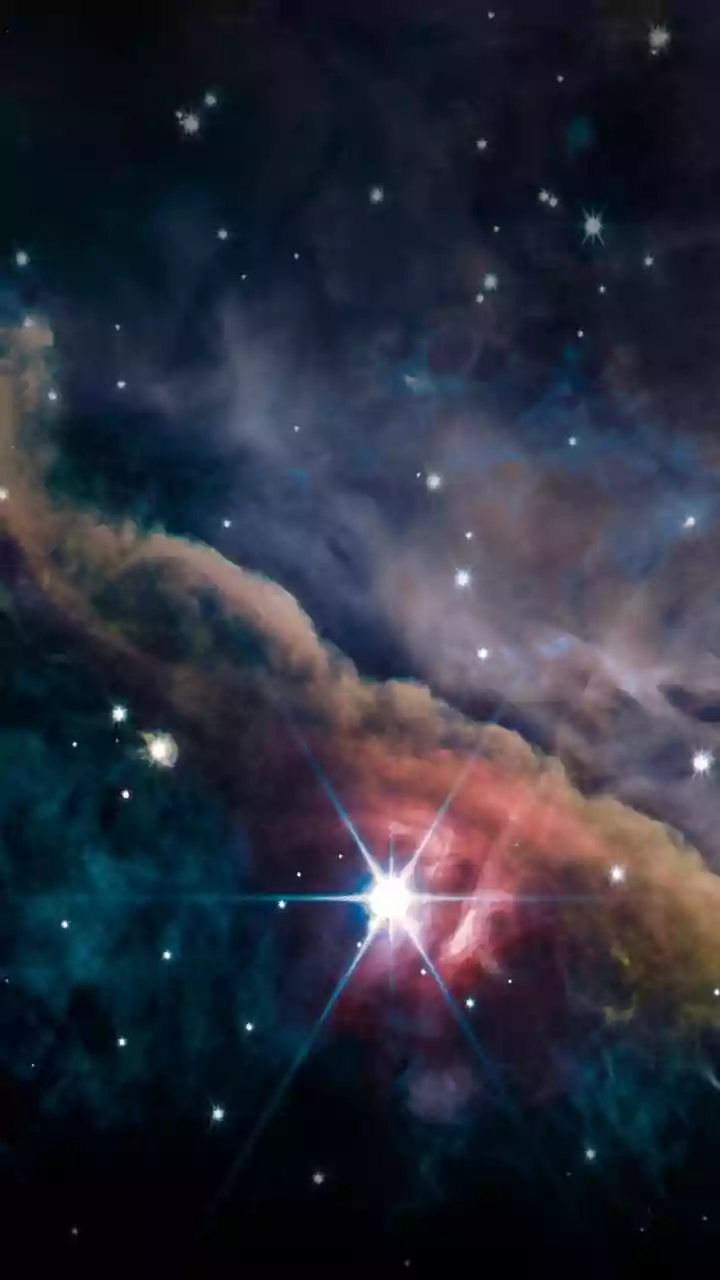
The anniversary image is a composite view from Webb’s Near-Infrared Camera (NIRCam) and Mid-Infrared Instrument (MIRI), and the detail is staggering. What might look like grainy noise in the image is actually a dense field of millions of individual stars, now resolved for the first time. Glowing reddish and purplish dots pinpoint stellar nurseries, where new stars are being born from clouds of gas and dust. Webb's view reveals a warped, parallelogram-shaped disk of gas at the centre, the mangled remains of the galaxy it consumed. Even more intriguing is a faint, S-shaped structure that has never been seen with such clarity. Astronomers are still working to understand what created it and whether the central black hole was involved.
Galactic Archaeology and Future Mysteries
This new portrait is more than just a pretty picture; it’s a form of galactic archaeology. By studying the individual stars, scientists can create a timeline of Centaurus A’s history—from its earliest days to the burst of star formation triggered by its last major collision. The data also sheds light on the complex relationship between a supermassive black hole and its host galaxy. Webb’s observations show how the black hole’s energetic jets can both trigger star birth by compressing gas and quench it by blasting away the raw materials. This new level of detail transforms our understanding of Centaurus A, turning it into a vivid record of cosmic history written in its stars and dust. While answering many questions, it also opens up new ones about the forces that shape galaxies across the universe.