





More Than Just Abstinence
Navratri fasting, or 'vrat', is a spiritual practice of self-discipline and purification. The diet during these nine days is not merely about avoiding certain foods but about embracing a 'sattvic' lifestyle. Derived from the Sanskrit word 'sattva', meaning
purity and harmony, a sattvic diet consists of foods that are light, natural, and calming to the mind and body. The purpose is to detoxify the system, quiet the mind for prayer and meditation, and align the body's energies with the spiritual focus of the festival. Foods considered 'tamasic' (dulling, like onion and garlic) or 'rajasic' (over-stimulating) are avoided to maintain this state of balance and clarity.
The Foundation of the Feast
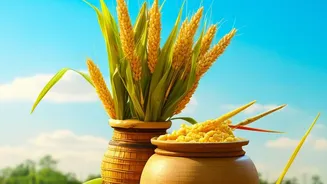
During Navratri, regular grains like wheat and rice are set aside. In their place, a unique group of pseudo-grains and flours takes centre stage. These include kuttu ka atta (buckwheat flour), singhara atta (water chestnut flour), and rajgira (amaranth). These ingredients are not only permitted but are also gluten-free and packed with nutrients, making them lighter on the digestive system. Another key staple is 'samak rice' or barnyard millet, which serves as a substitute for regular rice in dishes like pulao and khichdi. These ancient foods are not arbitrary choices; they are nutrient-dense and provide sustained energy, which is crucial during a fast.
The Humble, Mighty Pearl
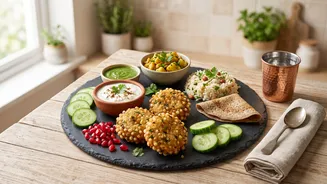
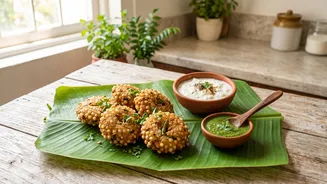
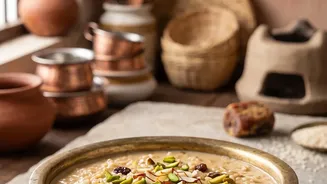
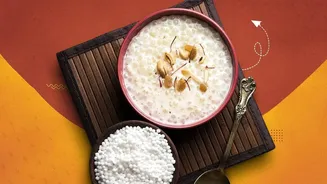
No Navratri menu is complete without sabudana, or tapioca pearls. This versatile ingredient is a powerhouse of carbohydrates, providing a quick energy boost. It appears in many beloved forms, from the savoury Sabudana Khichdi, often mixed with potatoes and peanuts, to the crispy Sabudana Vada. Its ability to be transformed into both savoury meals and sweet puddings (kheer) makes it an indispensable part of the fasting kitchen. The preparation of sabudana dishes is an art in itself, often passed down through generations, with family secrets on how to achieve the perfect non-sticky khichdi or the crispiest vada.
Flavourful and Mindful Choices
The flavour profile of Navratri food is distinct, partly due to the switch from regular table salt to sendha namak (rock salt). Sendha namak is a pure, unprocessed form of salt that is considered more suitable for spiritual practices. The spice palette is also carefully curated. Instead of a complex mix, the focus is on a few key spices like cumin (jeera), black pepper (kali mirch), green chillies, and ginger. These are believed to be cooling and easy to digest, unlike the heat-producing spices that are avoided. For sweetness, refined sugar often gives way to natural alternatives like jaggery and honey.
A Bridge Across Generations
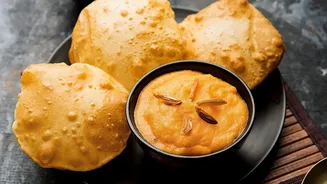
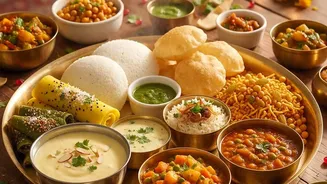
Beyond their spiritual and scientific reasoning, these recipes are culinary heirlooms. Each dish, from a simple plate of jeera aloo to an elaborate kuttu ki puri, carries with it the memory of mothers and grandmothers. The methods of preparation, the specific combination of ingredients, and the very act of cooking these meals connect families to their roots. Fasting practices and recipes may vary by region and even household, reflecting India's diverse cultural landscape, from North Indian thalis to the sundal prepared in the South. In this way, the food of Navratri becomes a living tradition, a delicious thread that ties the past to the present and keeps the customs of the festival alive and vibrant.