

The Effortless Shag
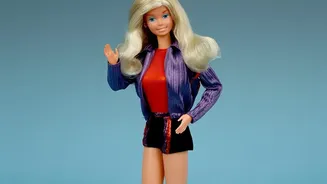
The shag is arguably one of the most quintessential hairstyles of the 1970s, a symbol of rock and roll rebellion and carefree cool. Popularized by stars like Jane Fonda and Joan Jett, this cut is defined by its choppy, textured layers, which are shorter
at the crown and longer towards the bottom. The beauty of the shag is its versatility; it works wonderfully on straight, wavy, or curly hair, adding movement and volume. A modern shag is less about harsh, jagged cuts and more about soft, strategic, and even feathered layers that create an airy, lived-in feel. To style a contemporary shag, let your natural texture lead. For wavy or curly types, scrunching in a texturizing mist and air-drying can be enough to achieve that perfect 'undone' look. If you have straighter hair, a salt spray or dry shampoo can help bring out the layers and add some grit.
Farrah Fawcett's Famous Feathers
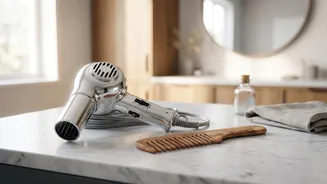
No discussion of '70s hair is complete without mentioning Farrah Fawcett's iconic feathered flip. As a star of 'Charlie's Angels,' her voluminous, windswept style became the most sought-after look of the decade. This style is characterized by mid-to-long hair with soft layers brushed back and away from the face, creating a wing-like effect. To get a modern version of this look, start with a volumizing mousse on damp hair and a good heat protectant. Using a large-barrel curling iron or hot rollers, curl sections of your hair away from your face. The key is to keep the hair flat against the barrel to create a sleek curl. Once the curls have cooled, gently brush them out to create body and bounce, then use your fingers to fluff and shape the feathered layers. Finish with a flexible hairspray to maintain the volume and movement.
The Bold and Natural Afro
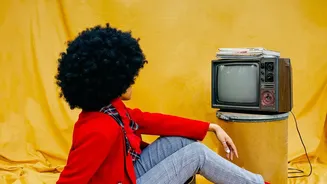
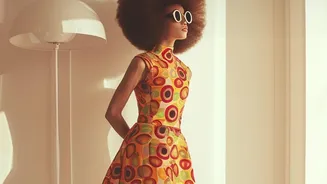
The 1970s was a pivotal time for the natural hair movement, and the Afro became a powerful symbol of Black pride, beauty, and identity. Worn by activists and icons like Diana Ross, the Afro celebrated the beauty of natural, tightly coiled, and curly hair textures. This style is all about volume and a rounded, balanced shape that frames the face. To care for and style a natural Afro, moisture is key. Use hydrating shampoos, conditioners, and leave-in treatments. Styling is typically done on damp hair, using a wide-toothed comb or a hair pick to gently shape and lift the hair at the roots to create that iconic, even silhouette. The era celebrated hair in its natural state, free from chemical straighteners, a sentiment that continues to inspire modern hair journeys today.
Sleek, Straight, and Center-Parted
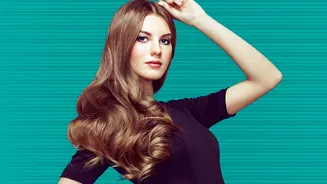
In contrast to the voluminous curls and layers, another defining look of the '70s was long, pin-straight hair with a crisp center part. This style, often called 'Cher hair' after its most famous proponent, was a staple of the hippie and bohemian movements. It's an elegant and simple style that puts the focus on healthy, glossy hair. Achieving this look today is straightforward. Start by creating a precise middle part on damp hair. Apply a smoothing serum or heat protectant before blow-drying your hair straight. For an ultra-sleek finish, go over your hair with a flat iron. A touch of shine serum or hair oil at the end will smooth any flyaways and give you that signature high-gloss look that defined the era.
Chic Curtain Bangs
Curtain bangs were everywhere in the '70s, gracing the faces of stars like Goldie Hawn and Brigitte Bardot. These longer, face-framing bangs are parted down the middle, sweeping to each side like a curtain. They are incredibly flattering because they soften features and can be adapted to almost any hair length or texture, from straight to curly. Today's curtain bangs are just as popular for their effortless, low-maintenance chic. To style them, use a round brush to blow-dry the bangs away from your face, which gives them that signature soft, flicked-out shape. For extra volume, you can use rollers while your hair is still warm. A light mist of texture spray will give them a perfectly lived-in, modern finish.