






The Calorie-Burning Question
When it comes to burning calories, running often has the edge in terms of pure efficiency. An hour of moderate running can burn significantly more calories than an hour of general dancing. For example, a 70 kg person might burn around 689 calories in an hour of running at a steady
pace, compared to about 387 calories from general dancing. However, this isn't the full story. The intensity of the dance matters immensely. A high-energy class like Zumba or Bhangra can burn calories at a rate comparable to a light jog. One study from the University of Brighton even found that certain high-energy dance styles like street dance could burn more calories than running. Ultimately, running is more predictable for calorie expenditure, but an intense dance session can be just as effective.
Impact on Your Joints and Body Weight
This is where dancing has a distinct advantage, especially for individuals carrying extra weight. Running is a high-impact activity. Each stride sends a shock through your joints, particularly your knees, hips, and ankles. For overweight or obese individuals, this repeated impact significantly increases the risk of injuries like runner's knee, shin splints, and stress fractures. Dancing, on the other hand, is generally a lower-impact exercise. While some forms involve jumping, the movements are often more varied and fluid, placing less repetitive stress on any single joint. This makes it a safer starting point for beginners, people with pre-existing joint pain, or those for whom high-impact exercise is a concern. It allows for building fitness and strength without the same level of injury risk.
Muscle Toning and Overall Strength
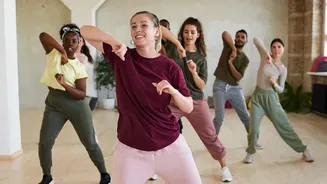
Running is fantastic for building powerful leg muscles, including your quads, hamstrings, and calves. However, it is primarily a lower-body workout. Dancing, by contrast, is a true full-body exercise. It engages your core for stability, your arms for expression and balance, and your back and leg muscles through a wide range of motion. Different dance styles target muscles in unique ways, promoting overall muscle tone, coordination, balance, and flexibility in a way that the repetitive motion of running does not. If your goal is holistic, functional strength and improved coordination, dancing provides a more comprehensive workout.
The Fun Factor and Consistency
The most effective workout is the one you can stick with long-term. For many, this is where dancing shines. The combination of music, social interaction, and creative expression makes it feel less like a chore and more like a fun activity. This enjoyment factor is critical for building a sustainable routine. While some people love the meditative solitude of a long run, others find it monotonous. Dance classes, whether online or in-person, offer a sense of community and motivation that can be a powerful driver for consistency. The mood-boosting benefits of dancing, often compared to a 'runner's high', are well-documented, helping to reduce stress and improve mental well-being.
Making the Right Choice For You
There is no single 'better' option. The right choice is deeply personal and depends on your individual variations. If you are starting your fitness journey, are overweight, or have joint concerns, the lower-impact nature of dancing makes it an excellent and safe choice. If your primary goal is maximum calorie burn in the shortest time and you have no joint issues, running is a highly efficient option. Consider your personality as well. Do you prefer a solitary, goal-oriented activity, or do you thrive in a social, energetic environment? Answering these questions will guide you to the activity that best suits your lifestyle. Many find that a hybrid approach, incorporating both running and dancing into their weekly routine, offers the perfect balance of intense cardio, joint-friendly movement, and fun.